Pages

Showing posts with label Review. Show all posts

Monday, 27 September 2021

Review: The Cast, by Michael Waugh

Michael Waugh - “The Cast”  


Michael Waugh has released his new record entitled “The Cast”. I’ve reviewed his previous albums before, and I've said in the past his albums are pretty much a trademark of quality. They’re all beautifully produced and accompanied by Shane Nicholson. The songs are interesting and heart-wrenching. This fourth album is no different. 

This isn’t trying to sound dismissive. Quite the opposite, in fact. However, it would make for a boring review if that was all you could say about the record. The fact is, with each new release, Michael is in fact becoming braver as a storyteller. Each subsequent album has taken bigger and bolder steps in directions other country performers, nay ANY modern performers, fear to tread. 

 What makes “The Cast” so compelling is that this is, quite simply, “dangerous” music. Dangerous to every bloke, simply because it dares to challenge and question the very core of masculinity we all grew up with. The core beliefs that boys from the 1980s and older all carry with them (I know, because I’m one of them). It dares to point out that all the crap we grew up believing we had to be, in order to be a “real man” is exactly that - crap. These are songs that dare to shoot holes in the facade that we’re all guilty of wearing. 

 And what’s more, songs like “He Taught Me” and “The Cast” also are textbook examples of something that us “real men” are terrified of: being vulnerable. Real men can’t be vulnerable. Boys don’t cry, or some shit. Being vulnerable is when the hunter becomes the hunted. It’s where you become less than you hold yourself to be. 

Michael Waugh’s music reminds me that this model of masculinity needs to change - for the good of men everywhere, our partners, our kids, and for society at large. These songs remind me that I have feelings too - as much as I don’t want to admit that I do. And bloody hell, they don't half hit me deeply. 

Speaking of dangerous, the album opener “Swollen” dares to call us fellas all out for being - complacent at best, ignorant at worst, about our battles with food, the struggle to stay healthy as we age, the battle to lose weight and stupid backhanded jokes we throw at each other when we plump up a bit. “You look like you’ve been in a good paddock, mate”. 

While we’re at it, “Dark” looks at alcohol-fueled blokes and the danger they can be for unsuspecting women on a night out. A big topic to be discussed, and one we try hard to avoid, and one we cannot escape now. 

During the writing and recording process of this album, two of Michael’s biggest influences - his mum and dad - both passed away. There are beautiful tributes to them in the form of “He Taught Me” and “Hold On To The Ones You Love”. “Too Many Drawers”, in honour of his late mother, is made all the more poignant because it features Felicity Urquhart, herself a legend in Australian Country circles, and an artist that was a favourite of Michael’s mum. 

This is an album of music with its heart on its sleeve, and blood and guts on its boots. It’s a rare artist who finds new ways to move me to tears with each new album. It’s almost as if he has looked into my soul at my deepest and darkest memories and fears, grabbed half a dozen of them and turned them into songs powerful enough to tear down the rugged macho shell I’ve spent my entire life building around myself. Come album number 5 in a couple of years time, no doubt he’ll do it all again. But for now, “The Cast” has given me cause to stop, pause and reflect on who I am and what needs to change. If a few more of us can do that as a result of listening to this album, Michael will have changed the world. If only a little bit.

Monday, 16 May 2016

The Triumphant Return of FACEplant

FACEplant, Grrumble and Shuda: Live at the Cambridge Hotel, Newcastle 14/05/2016

Nostalgia is a powerful thing. And there's nothing like a nostalgia gig to remind yourself how old you've become. Looking around the room at my fellow 1990s gig goers, my how we've aged! But all the beer bellies and receding, greying hairlines are not going to get in the way. The vibe in the room is electric and we're all hoping the main act will lift the roof off of this place.

We're gathered here on something of a red-letter occasion for adolescent Gen X Novocastrian gig goers from the 1990s: when FACEplant, the next big thing to follow Silverchair onto the national stage, make their rumoured resurrection a fact. Stories have been going around for years about this night, and finally, it happened.

The night opened with Shuda, a Central Coast band (they laughingly referred to themselves as "out-of-towners", but near enough). Warming up the crowd and fired up about the impending release of their second record, the crowd took to them and gave them some good attention. Pete Davies, combined larynx and 6-string shredder, is a big bloke with a big voice; the guitar in his hands looked almost miniature by comparison. He gave that thing a guttural rumble that let you know you were alive. He donned a King Parrot shirt for the set. However the band he fronts sounded nothing like the Sydney hardcore outfit. More like Shihad-meets-Iron Maiden. If anything, the first couple of songs sounded a little too deferential to their influences. Over the course of their short set they threw in enough stylistic curve balls to keep us guessing.

Grrumble

Aside from FACEplant getting back together, it was also a showcase for one of their contemporaries of the era, the recently reunited Grrumble. Grrumble made a mean sound out of one Les Paul, bass, vox and drums. While they trod a path with a heavy grunge feel, they always added elements of metal to the mix to create something quite interesting. They were a tight unit back in the day and tonight they proved they still had it. They played a crowd pleasing set, including this writer's personal favourite "Justice". Their 1995 EP has been reissued as was available at the Merch stand. Reviews to come later...

FACEplant

FACEplant (uppercase FACE, thank you) finally hit the stage to the sounds of an electronica and sample-heavy audio experiment. A remix of sorts of what turned out to be the opening song when the band slammed in seamlessly into the first chord. 20 years may have passed between gigs but who'd have known? The hair may be a lot shorter, but the band still had it. Their enthusiasm on stage was almost tangible and the packed house loved them for it. In 1994 the band were playing a melodic surf-grunge but by late 1995 they have turned darker into a drop-tuned, Shihad-esque grind. Tonight's set showed the best of both sides. They gave the crowd plenty to sing along to and quite a few tunes some of us hadn't heard - I'm looking forward to hearing them released in the near future. They played all the tracks from the now-near-impossible to find 1995 EP "Upper Case FACE" and taking a few risks with the arrangement on "Eyes", slowing down the tempo and revving up the drama.

FACEplant have made it clear they want to keep going as of now. If the shows are as good as Saturday night, the future looks bright for them. Now, if only they'd dig through the vault and release the vintage recordings for the fans and get some new tracks on the shelves to further the momentum.

Welcome back, lads...

Saturday, 17 October 2015

Cold Chisel - The Perfect Crime


Hot on the heels of a lavish vinyl reissue of their back catalog comes the promised new material from Australian Pub-Rock stalwarts Cold Chisel.

Arriving three years after their last "comeback" album "No Plans", "The Perfect Crime" could almost be a companion piece to the previous album. To the band's credit, they're still pushing the same musical stylings, with songs about the average Aussie bloke and the effects of the human condition on them, delivered with frenetic pace and sung in Barnesy's vodka-battered growl.

But do I detect a lot more of an Alt-Country feel to these new songs? Not an overwhelming one, mind you. Deviating too much from the tried-and-true Chisel formula would upset their constituency too much. Whether it's the more plodding basslines of Phil Small or the rolling snare drum groove that Charley Drayton may have borrowed from a Slim Dusty record or two, I don't know. But it's in there.

Chisel have always been a little bit country and a little bit rock 'n' roll, so it's not a criticism. But after Ryan Adams' turn at covering Taylor Swift he would make an absolute fist of these songs.

The lyrics from the pen of Don Walker again lack the wry humour and wit of their 80s prime. Though far from generic, the observational writing sounds phoned in. And while the band, all across their career, has slipped in an F-bomb occasionally in an album, these days it is getting gratuitous and tawdry. Granted on this album, it's tucked away on track 9 "Shoot The Moon". It was in the opening bars of the "No Plans" album. I just wonder why they they bother. Are they trying to relevant to a younger crowd? Are they trying to appear edgy as they continue to age? It just makes me want to tap Don on the shoulder and tell him that his energies would be better served by shaking his fist while barking at some young people to get off his lawn.

Mossy's guitar playing is on fire and his honey-soaked vocals don't make as much of a presence here as they deserve. On a few songs, Barnesy pulls back to reveal he still has the ability to sing with subtlety (a quality he lacked that ruined many of the pretty songs on "The Last Wave of Summer" in 1998). When he's let off the chain he sounds more the seagull-with-laryngitis we all know him to be.

While the band haven't necessarily tarnished their legacy with this album (they did that well enough on the deplorable title track to "No Plans"), what you have is a record that will please the faithful while not necessarily one to convert the haters.

Take a listen below and make up your own mind:

Monday, 12 October 2015

Review: "Straight Outta Compton"


The recent biopic of the rise of L.A. gangsta-rappers NWA had me thinking.

If art imitates life, what, then has happened to American society for a group like N.W.A and a song like "F*** Tha Police" to exist?

The film does little to answer the question, as I suspected it would. However it does a good job at least of depicting the symptoms of the problem: the underclass of working poor; the allure of crime as a way to escape the aforementioned underclass, police harassment, limited hope and limited opportunity.

So what does one do to get ahead in such an environment? Get a steady job that doesn't cover all your bills, join a criminal gang, or turn to music. Band member of NWA Easy-E in this case, chose both the latter two.

Easy-E is the only one depicted as having associations with crime on any level. If the rest of the group were involved at any point, it was certainly airbrushed out of this version of the story. There's been plenty of media around to discuss the inconsistencies with this account of the events, so I will not go over them here. But let's just say that the victors write history.  Album sales aside, N.W.A.'s legacy is assured, with or without this film.

N.W.A. started at a time whereby rap was a burgeoning style of music in the 1980s. It was party music, devoid of social commentary. Grandmaster Flash touched on it with his anti-drug single "White Lines (Don't Do It)" earlier in the decade, but LL Cool J and Run DMC weren't in the business of promoting causes. And certainly not the Beastie Boys! Public Enemy started to take a more socially conscious approach with the view to empowering and bettering the inner city urban dwellers, in a similar but ultimately more militant way that James Brown or Stevie Wonder had tried a decade earlier.

With that in mind, N.W.A. tried to create a style of "reality rap" not too dissimilar to South Central LA rapper Ice-T. Rapping about life in Compton meant talking about being harassed by police, hassled by street gangs and trying to find some kind of success in your future. And to do so in the most direct and confronting way.

If "reality rap" was the mission, then an ugly reality requires some ugly music. And it certainly is. Hearing N.W.A. for the first time is something that one tends to remember for a long time: it sure as hell is NOT "easy listening" and nor should it be. There is real danger in this music: it is a danger that is "lived in", first hand. There was a real scare that if you were to cross these guys on a bad day, it wouldn't end well  Then of course was the threat of your parents losing their shit at you for buying the music! Despite this, people of all races and creeds lapped it up, because it is sometimes better to be an observer of the action than to be a participant.

"Straight Outta Compton" reaffirms what we've known about the music industry for years: when confronted with ground-breaking music, record labels would rather play it safe and stick with what they know is going to sell: "When you think you've found the next Bon Jovi, call me" one executive remarks during the band's showcase gig. Another one for the Dick Rowe "Beat groups are on the way out, Mr Epstein" file.

That said, N.W.A. established the template for what we now know as Rap music. A lot of teenagers today seem to be unaware of the significance of N.W.A. and the need for this film, despite really wanting to see it. This film depicts a time whereby Rap wasn't mainstream. It wasn't accessible, and it certainly wasn't dangerous as this is. To be fair, if things were different, the members of N.W.A. could've make rap music a la Run DMC and do a fantastic job at it. However they chose to push it closer reality as they knew it, making pieces of art that are still as confronting and as relevant today, even if some of the in-fighting and diss tracks that were created during the ensuing years make them look cartoonish.

With the band having raging parties and getting letters from the FBI, it always makes me wonder if they knew the controversy that went down in Sydney in 1989 when Triple J started playing "F*** Tha Police" on air. That tale is a story for another time...

This is a film that is as forthright and as confronting as the bands music was. You wouldn't expect any less.

Thursday, 26 February 2015

Funkadelic - "First Ya Gotta Shake The Gate" Review

So what do you expect from your favourite iconoclastic band, when they reform after decades to produce a comeback album?

Do you expect them to pick up where they left off, and produce an album that sounds exactly like they did decades ago?

Or, do you expect them to embrace technology and produce something thoroughly contemporary and modern to reflect the sound and the era they now find themselves in?

Or, do you approach it with no pre-conceptions at all from the outset and take the new music as you find it?

Any fan of any band in the situation that Funkadelic find themselves in right now is going to find the third option extremely difficult. We're always going to carry baggage of expectation to the party. We all want a record to be something to be proudly displayed next to their classic works. But is it fair to expect a new album made 33 years after the group's last one to sound like the one they finished with?

If you think it is fair they should sound like something released decades ago, you really haven't considered the nature of the ever-wandering musical troubadour that is George Clinton.

Throughout the entire dual careers of Parliament and Funkadelic, and then his solo career, his sound hasn't been static - it has always changed with the times. Therefore it would be reasonable to expect that the new record would sound quite contemporary, right?

Well, in truth, what you get when you commit to the mammoth 33-track 3-hour plus triple album from Funkadelic is a little of both.

On first listen it is a confused mess of vintage and modern sounds, fused with the characteristic strangeness that marked the classic Funkadelic sound. It borrows heavily on modern hip-hop, with many of the tracks on the first disc sounding like offcuts from a lost Snoop Dog or Dr Dre album. That may not be a bad thing for some - there is nothing inherently wrong with hip-hop in this writer's view. However they seem to take the very worst aspects of hip-hop and ride them into town - leaden grooves that don't swing, reducing women to mere sex objects, horribly pointless usage of the dreaded Autotune function, and a gratuitous overuse of both the n-word and the f-word.

The irony is that Funkadelic heavily influenced Snoop and Dre, and yet Clinton seems to find it a wise thing to compete with them at their level.

There is still a bit of the old school P-Funk groove here, as on "Radio Friendly", but in this instance it appears to use the sound as a way of dismissing its validity; as if to highlight that that the preceding B-Boy/Gangsta style is somehow more artistically legitimate.

It's been mooted that the album has 33 tracks to represent every one of the 33 years that has passed since the release of "The Electric Spanking of War Babies" in 1981. It could also be inspired by the monumental multi-disc studio sets by Prince, such as "Emancipation". Either way, it is like most multi-disc albums and needs an editor. One third of the tracks fall into the 7-minute- plus category, and while P-Funk at their best could hold attention for long stretches in years gone by, most of the long form jams meander in one spot and never develop. The stilted groove the opener "Baby Likes Fonkin' It Up" would be more effective at half its 9:37 length. "Roller Rink" finds a smooth groove but never actually develops or progresses anywhere in the 12 minutes it lasts for. There really isn't any way to justify the inclusion of an irredeemable track like "F****d Up", whose lyrics amount to little more than a repeating of the title for the entirely of its 7:43 running time. "The Mathematics of Love" mines a more gospel-soul feel for an over-long 12-minutes length while churning out some occasionally questionable mathematical metaphors for sex.

George Clinton, throughout his solo career, has always changed his sound in an attempt to remain contemporary. A canny move, favoured by jazz legends like Miles Davis and John Coltrane, it is a clever way to shore up your audience with younger, hipper people as older fans drift off. In some cases he's been successful (see: "If Anybody Gets Funked Up") The difference is that where Miles and Coltrane were ahead of the curve and gaining new fans as they went, "First Ya Gotta Shake The Gate" in parts sounds like a conscious effort not to appease long time Funkadelic fans but to capture a segment of the lucrative hip-hop audience, They're no longer setting the trends, as they were in the 1970s, but rather pandering to existing ones. There is a lot of music to digest here, but like an album such as "Stadium Arcadium" by Red Hot Chili Peppers, itself an overlong multi-disc set, it works for the iPod generation where playlists can be made instantly or an occasional random track played at will. By dropping some tracks and re-sequencing whats left, you can make your own perfect album.

Taken as a whole, it paints a messy picture of some of the worst aspects of modern pop while looking back to some past glories, all framed in a classic P-Funk context. It might break new ground for P-Funk, but next to recent releases by other artists, it doesn't sound all that groundbreaking at all.

As per usual, don't just take my word for it, take a listen yourself below. There is a strong language warning for most of the album, however. Headphones are recommended.

Thursday, 12 February 2015

Underrated Live Albums #3: Pacifier/Shihad - "Live"


Shihad are one of the most successful New Zealand-originated bands, whose success was derailed in America due to a name change and an unfortunate series of world events...

The name "Shihad" is a distortion of the word "Jihad", as used in the 1984 film Dune. However the band members couldn't work out how to spell the word and they ended up with Shihad.

Four albums into their career and they were a multi-platinum success in Australia, but when it came time to break in America with album number five, an unfortunate thing happened...

Two planes hit the twin towers of the World Trade Centre in New York City on September the 11th 2001. These actions were deemed to be part of a holy war by Islamic terrorists known as a Jihad, and and such the name Shihad could not continue to be used in the USA, for obvious reasons.

They changed their name after a successful single from their previous album "The General Electric" known as "Pacifier". It was the favourite song of vocalist Jon Toogood's mother.

In 2004 the band decided to change it back as they wisely decided that Pacifier was a crap name. However, under that moniker, they released a career-spanning live document that stands as one of the greatest live records ever made.

With a fat, gritty sound, an unceasing ensemble energy and a supercharged crowd, the album is the musical equivalent of a proton energy pill.

The song selection hammers home the point that the band were actually quite solid songwriters, something the production on their studios albums does its best to mask. The consistently strong song selection suggests that their best songs were not always singles but also tucked away as deep cuts on albums and EPs.

The only real let down is that Jon Toogood's stage banter is awkward and suggests he's quite fond of using a certain four letter expletive. Despite this, the music is uniformly solid and pounding. The one slow point on the album is towards the end of side two (of the limited vinyl edition) where "The Brightest Star" slows proceedings to a crawl, before launching into a brutal version of "My Mind's Sedate". Their most successful song "Home Again" closes off the album on a high point. The audience sings along at every point and always fills in the words at the band's insistence, especially in "Run" and "Comfort Me".

This is one hell of an album and well worth the listen as an introduction for those that are unfamiliar to the band. This could almost be a greatest hits album considering it cherry-picks the highlights of the band's first ten years...

Take a listen again below.

Friday, 6 February 2015

Underrated Live Albums #1: Crowded House - "Farewell to the World"


On November 24th 1996, a very special event happened on the steps of the Sydney Opera house. Crowded House played their first show in almost 12 months. It was also to be their last show. Forever.

It was also the one show that I attended that I actually did not get to witness. But that is a story for another time...

Crowded House was started by Neil Finn after his previous band, Split Enz, imploded in the wake of their leader Tim Finn leaving the band. Neil, a New Zealand born musician, carried on the Enz for a while before limping to its final conclusion in 1985. Neil then recruited two Melbourne based musicians Nick (brother of Hunters and Collectors vocalist Mark) Seymour on bass and drummer Paul Hester and moved to LA to score a record deal. Starting with the band's stellar 1986 debut, the band released four consistently great albums that all sold well in Australia but sold in ever decreasing quantities in the US. Sales started slow in the UK and Europe but they ended up being one of the most cherished pop bands of the 90s there.

The band were known for their alternately upbeat and moody, introspective music and zany humour on stage. However, the wheels started to fall off the band in 1994 when Paul Hester left the band, citing homesickness (we now know he was battling severe depression at the time, a battle which fatally ended by his own hand in 2005, sadly). The band finished the tour without him and the tried to record a new album, but for some reason the project was aborted after only a handful of tracks were finished.

The band announced they were splitting in May 1996 and then set aside the date of Saturday November 23, 1996 to play a very special final shown on the steps of the Sydney Opera House. It was to be a free concert with donations taken from the crowd to support the Royal Cord Blood Bank at the Sydney Children's Hospital. However on the day of the event, it rained and the event was postponed until the next day. (The band still played for the few thousand people that flew in for the event from around the country and even from overseas that couldn't stay for the postponed show).

Sunday the 24th was a glorious sunny day and Circular Quay was abuzz with energy, far more than it normally was. The opening band that went on stage around 4pm was Brisbane favourites Powderfinger. Followed by fellow Brisbanites Custard, then local heroes You Am I, and then around 7:30pm, the band themselves played what was probably the greatest show of their careers.

Crowded House treated the crowd on that balmy evening to a broad selection of their back catalog, and held the audience in the palm of their hand from go to woe, The DVD and the album cut the between song banter to a minimum, but the chemistry between crowd and band crackles with energy. The crowd's physical acrobatics early on cause Neil to give a safety warning to the otherwise well behaved crowd. He responds to the crowd's chants for some water mid-song. (In "Into Temptation", he changes the opening lyric to "You've opened up your door, I think they need some water...").

The band are clearly having fun on this stage, and during the five song encore, Neil is clearly moved. He doesn't want to leave that stage. During the final song "Don't Dream It's Over", it's pretty clear he doesn't want it to end. He deliberately draws out the ending and there are visible tears from both the audience and the band when it finally ends and they take their bows.

This is a live album that is a document of a special concert that will not be repeated. It was a once in a lifetime show witnessed by over 120,000 people (although some estimates say that the crowd stretching around the Quay towards The Rocks was more like 300,000). Sure the band have reformed and will probably farewell the world again at some stage, but this was a truly special event. This was the event where a lot of people around the world who'd became disinterested in the band's declining fortunes after the "Together Alone" LP, realised just how special a band they were ceasing to be. This writer included. This made it all the more bittersweet.

The CD release does the right thing and includes every song they played that night. Anything else would have ruined the experience. This album wasn't issued shortly after the show. It was only issued on the 10th anniversary of the gig in 2006. Either way, it is a spectacular document of a special night. It is a live album that deserves to be in the Parthenon of great live albums.

Take a listen this most beautiful live album below. Enjoy

Friday, 30 January 2015

Bargain Bin Review #1: Monster Magnet

HI Folks, we're back on deck after the summer holidays.

You gotta love the post Christmas sales, with heaps of cheap music available. Here's a quick review of an album I scored on the cheap.


It wouldn't be a long bow to draw to suggest that Monster Magnet bridged the gap between the Grunge explosion of the early 1990s and the Post-Grunge period of the start of the new Millennium, that gave us horrible bands like Nickelback, Creed, Default, and Staind.

I'd heard a few of their songs during the 90s, but paid them scant attention. They peddled a type of stoner rock that borrowed heavily from Black Sabbath, not too dissimilar to Kyuss and label-mates Soundgarden who were their peers. Unlike the aforementioned bands, Monster Magnet churn out a watered down, paint-by-numbers sound that tries too hard to justify its own existence. Lyrically they try too hard to have you believe they're really stoner rockers, as if constantly mentioning weed and pills is going to prove they're legit. They play guitar riffs that lack personality but are overdubbed to be pummeling. They have a vocalist in the form of Dave Wyndorf who is neither melodic nor memorable.

In other words, the perfect template, albeit watered down somewhat, for Nickelback and their similarly uninspired peers.

So are there any virtues to this release? Firstly, the term "Greatest Hits" is loosely applied, in this writer's view. The band never had anything like a chart hit, except a couple of tracks on the Billboard Modern Rock chart. This album collects album tracks, singles that were issued that scored radio play around the tracks, such as the deplorable "Space Lord" that commercial rock radio in Sydney used to play incessantly. It also collects four b-sides and compilation tracks on disc 2, as well as a CD-extra part that is played in a PC with a stack of the bands videos.

Most of the tracks on this album sound like a band trying to be in the same league as Kyuss and falling way short of the mark. Writing lyrics about taking pills or "driving a tractor on the drug farm" sound like a band trying to prove they're in the same league as the cool kids.

The b-sides, although few, are somewhat interesting, but the Black Sabbath cover among them is horrendous. Pretty much anything off the first 6 Sabbath albums featuring Ozzy Osbourne is bomb-proof: in the hands of any halfway competent garage band they still sound great. Taking a straight forward track like "Into The Void", opening it with a bizarre psychosis-induced rant about dinosaurs in Vietnam which drags on for almost two whole minutes before the song kicks in. Ending with another bizarre and heavily expletive laden rant, the mix contains way too many overdubs and additions that turn it into a long and very ugly 8 minutes - it's a monumental catastrophe of a track.

Highlights include radio favourites "Dopes to Infinity", "Powertrip" and "Negasonic Teenage Warhead" as well as "Silver Future" and "Black Balloons".

Take a listen below and you decide for yourself. I reckon you'd be better off spending your money on a Soundgarden album instead.

Tuesday, 2 December 2014

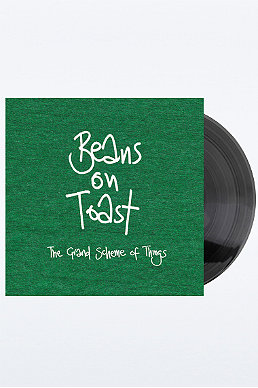
New Music: Beans on Toast - "The Grand Scheme of Things"

What we have here is the sixth annual release from Beans on Toast, released yesterday. He seems to be as regular as clockwork, releasing an album every year in late November or early December. Yet again, the British anti-folk singer has delivered another set of tunes in his own inimitable style.

For those who are unfamiliar with Jay (aka Beans on Toast)'s work, imagine a scruffier (if that's at all possible) early-era Billy Bragg-styled singer songwriter who is no less passionate but far more pointed and acerbic. If folk music is designed to be left-leaning, Jay profoundly rattles the cages of conservatism such as to completely offend and turn away anybody who can't see past the end of their own opinions. He's a folk singer who is passionate about what he does, stands up for what he believes in - and if he finds himself to be wrong he stands up and admits his failings. He simply calls it as he sees it.

He makes no bones about his own perceived lack of talent, and I admire that. But that's precisely the charm of this, and what folk music is all about. It is music of the people. A simple music that doesn't require huge amounts of technical skill, but gets the message out to those who want to (and probably a lot more who should and need to) hear it.

I've been following Jay's music for a while now, starting with the mammoth 50-track debut album "Standing on a Chair". Jay and I don't see eye-to-eye on certain issues, particularly around tobacco and other drug use (although I'm very glad he's given up all the substances now). However there is a noticeable conviction in what he sings about, as well as a wicked sense of humour.

The latest album "The Grand Scheme of Things" gives us more of what Jay does best: one man, a guitar, and delivering equal amounts of vitriol and sentimentality with plenty of fire in the belly. Certain tracks on the album deviate from the folk base and incorporate country elements similar to those on the second album "Writing On The Wall". He even dabbles in a type of off-the-wall, New Orleans Trad Jazz on "Nola Honeymoon".

The targets of Jay's anger this time around are as deserving as ever: Inhumane chicken farming, the UK Independent Party (UKIP), Young people's inability to connect with nature, the vacuousness of war, inner city gentrification. However, probably his most disturbing tendency of late is to take a shot at those who won't give him a chance. Like the Glastonbury festival on his last LP "Giving Everything", this time he takes aim at the insular mainstream Country Music fraternity in Nashville on the elegantly named song "F*** You Nashville". It goes without saying that, while one can understand his frustrations, writing a song like that isn't going to make anybody change their minds about him.

Mixed in with that is some beautifully written and passionate songs dedicated to mateship across generations ("Flying Clothes Line"), the joys of home cooking ("Lizzy's Cooking"), being a DIY performer ("Folk Singer"), and the excited anticipation of the new year ahead ("NYE").

Speaking of "NYE", in the songs dying seconds Jay sings "Welcome to the last verse of the album, I'd be amazed if anybody got this far...".

For the record, I did. And it was fun, too. It was no more or less than what I'd expected.

This is not a record laden with studio polish. It is rough round the edges, like I imagine Jay Toast himself to be. Through the murk you get a raw earnestness and passion all too rare in modern music.
Be warned that Jay's sharp tongue means that this isn't a family listening album, although there are noticeably fewer choice words on this album than on the previous ones. And as mentioned earlier, anyone on the right wing of the political debate should be prepared to be shocked and offended too. But bring an open mind to the issues discussed within and there is plenty to be gained from a few listens.

Recommended. Be challenged and inspired.

Thursday, 20 November 2014

Countdown: Do Yourself a Favour


Countdown: Do Yourself a Favour
ABC1, concludes Sunday 23/11/2014 at 7:40pm.

For those not in the know, Countdown was THE pop culture show to be part of in the 1970s and 1980s in Australia. If you were in a band, you wanted to be on it. If you were of an age where you could work the controls of the television and you were into music, you absolutely had to watch it, and then you debated endlessly the merits (or lack thereof) of the bands on that week. They gave the first television exposure to AC/DC, ABBA, Rose Tattoo, Skyhooks, Iggy Pop, Cold Chisel and thousands of other bands and artists.

The lynchpin of this program was a bloke forever known with a girl's name, Ian "Molly" Meldrum". He started with the program as a talent co-ordinator, selecting the acts to appear every week. But after a while, he was thrust into the spotlight as the presenter. On screen he was bumbling, incoherent and random, with his hilariously incompetent interview style that really has to be seen to believed.

It is the kind of spontaneous, semi-live television that is rarely attempted anymore. Its style has been attempted many times in the intervening years but rarely has anything matched up to it (although the Dylan Lewis-hosted "Recovery" in the late 1990s came close).

It was a program that was not only a reflection of the culture of the day, but it had a great effect in altering it. It led Australians to take their own talent seriously, by having it beamed into homes around the nation every Sunday night at 6pm. It gave exposure to a lot of great bands that really deserved to get noticed, and a lot of acts who probably didn't. Dictating the taste wasn't the objective, but rather reflect it back to Australia, and occasionally shape it. It shone a spotlight on the world of music that Commercial television and radio were missing out on. If a band was on Countdown, invariably their sales went up the following week, and commercial radio were basically forced as a result to play the record soon after.

Putting aside the nostalgia for a moment, the one thing that sticks out about this program is how much the world and music in general has changed. Even for pop stars in the 1970s, live performance was an important part of what they did. And not the large stadium sized events either. They needed to be able to present themselves to a small, localised audience and come across successfully. So a lot of Countdown stuff was mimed is irrelevant - stage presence was the key.

Not only that, music has so many things going on that it would be extremely difficult to nail it all in a single one hour slot every week. Countdown had a focus on the mainstream and top 40, but it allowed space for those on the margins and the fringes, such as La Femme, Painters and Dockers, Iggy Pop and (at the time) AC/DC. There's so much going on in music right now that i imagine it would be extremely difficult to capture the feel and excitement of what is going on.

Teenagers are also discovering music under their own steam these days anyway. There is also so many other things demanding their attention that there is every chance that a one hour program of this type would appeal to them in the way that Countdown did for teenagers in the 70s and 80s. A countdown styled program may not be the best way for young people to hear new music. Conversely, there are a hell of a lot of new bands out there who would benefit from the kind of national TV exposure that a show like Countdown would bring.

For all the sentimentality for a long finished show, the celebration of Countdown, in my view, is wholly necessary because it shows a portrait of a period when innovative TV programming was encouraged and that local music and culture was highly valued. Many bands have Countdown to thank for their success, although many like Radio Birdman, Midnight Oil, Nick Cave and Richard Clapton all avoided it like the plague and it did nothing to hurt their careers.

I look forward to seeing the next installment next Sunday.

Do yourself a favour and tune in.

Thursday, 16 October 2014

The Complete Works of The New Pornographers


14 years is a long time in the life of a supergroup. And how many supergroups can you think of that survive for a decent length of time before collapsing under the weight of the members' collective egos?

Hailing from Canada, the New Pornographers have always resolved to leave the egos at the door and to come together to make the best music they can. They gather the tag "supergroup" largely because the three principle members have careers elsewhere: Carl Newman has a solo career as well as playing in the band Zumpano; Dan Bejar is in Destroyer and Neko Case is an acclaimed singer songwriter. The band have recently issued album #6, "Brill Bruisers", but here at TSATF HQ we thought we'd look back on their entire back catalog - not just because the contents of which are quite brilliant, but also as an introduction to the uninitiated.

"Mass Romantic" (2000)


An auspicious, if tepid start. The album shows hints of greatness but the total was less than the sum of the parts in this one.
Highlights include: "Mass Romantic", "Fake Headlines", "Slow Descent into Alcoholism" and "Letter To An Occupant".

"Electric Version" (2002)


This is the moment when things came together for this unusual collective. The songs are strong, the performances spirited, and the members sound like they are comfortable with each other now.
Highlights include: "The Laws have Changed", "Electric Version", "All For Swinging You Around".

"Twin Cinema" (2005)


Widely regarded as the band's masterpiece, and it's hard to disagree. Track for track it is the strongest record to date and the songs are absolutely top notch. They reward repeated listenings for the simple fact that they continue to reveal new aspects of themselves each time you play them. Brilliant.
Highlights include: pretty much everything on here, but if you must nit-pick then listen to: "Use It", "The Bleeding Heart Show", "Twin Cinema", "Sing Me Spanish Techno", "Jackie, Dressed in Cobras".

"Challengers" (2007)


After the high point of "Twin Cinema", anything was going to feel inferior. "Challengers" isn't so much as inferior, but it is subdued, and not as energetic as its predecessor. Very much the slow burner, it is no less rewarding, but it takes a little more work to wade through.
Highlights include: "Challengers", "My Rights Versus Yours", "All The Things That Go To Make Heaven and Earth", "All The Old Showstopppers".

"Together" (2010)


It was a long wait for this album, but when it dropped, it was the summer album of the year. Bouncy and vibrant, this album is serious fun.
Highlights include: "Crash Years", "Moves", "Sweet Talk, Sweet Talk".

"Brill Bruisers" (2014)


If we thought the wait between albums four and five was long, it was a very long four years before this one hit us in August 2014. This record has plenty of energy, but it is not as immediate. It takes a few listens to hear the hooks in these songs. Once you crack the veneer, you're in - the rewards are rich and plentiful.
Highlights include: "Brill Bruisers", "Born With A Sound", "Fantasy Fools".

Take a listen below to our Hand Picked selection from the entire catalog of The New Pornographers. There's plenty of gems within. Once you've sampled, check out the full albums.

Enjoy! Let us know your favourite of the bands albums in the comments below.

Wednesday, 3 September 2014

The Hoax is Over...


In 1967, Billy Thorpe had an epiphany. He'd worked out his audience was starting to change. No longer were teenage girls screaming themselves hoarse at his gigs. A new breed of music fan was starting to appear at his inner-Sydney residencies. A tougher, hard-drinking, self-medicating type of bloke, brutalized by experiences in an (ultimately) unwinable war in Asia. These guys didn't want to hear Thorpie chirp his way through "Over The Rainbow". These guys were fans of a new, harder sort of music, by performers with strange names like Jimi Hendrix and Cream, with loud guitars, even louder clothes, and wild haircuts.

After declaring bankruptcy in 1968, he decided to try and start again in England, thanks to a lifeline from ex-pat Aussie and former Epstein-protege Robert Stigwood, who was managing Cream and The Bee Gees at the time. He had six weeks of shows booked in Melbourne to complete before he left, but ended up staying for 6 years.

Forming a new band of Aztecs with Paul Wheeler, Warren Morgan, and Lobby Loyde, the band became an extremely loud jamming blues band. He grew his hair long, wore dirty jeans and T-shirts and turned up the amps to deafening levels. Initially, audiences and promoters alike reacted violently, but soon after, the cult of the "Sharpie" was born and the band were embraced by them.

After an initial single issued by Festival in 1969, the band reconvened in September 1970 to cut an album. Rumour has it that the band got completely out of their collective gourds on psychedelics and told the engineer just to keep tapes rolling until they were done. "The Hoax is Over" is the result.

Issued late in 1970, the album sold respectably but didn't set the charts alight.

The original album had four songs over a running time of just over 51 minutes. 3 originals, one cover. The opening track is a cover of the Johnny "Guitar" Watson track "Gangster of Love". In its original form, its duration was around 2 minutes 45 seconds (2:45). When Steve Miller covered it on his LP "Sailor", 1 minute 23. In the hands of the Aztecs on acid, it rolls on for an epic 24 minutes and 30 seconds. Drum solos and manic Lobby Loyde soloing are part and parcel of this, and they completely go to town on this. It's all kinds of awesome. The two short tracks are "Goodbye Baby" and "Truth", clocking out at just over 4 minutes each and break up the tedium. Especially after "Born In Mississippi", a slow blues jam which drags on for a lethargic 19+ minutes.

The album has been out of print since the 1970s and vinyl copies these days are rarer than rocking horse do-do. Most copies that still exist are thrashed to the point of unplayable. If they are in good nick, they sell for well over $100. There was talk of a reissue by Aztec Music but nothing has eventuated as of yet. Here's hoping...

For the time being, take a listen to the album below via YouTube. Enjoy!

Thursday, 24 July 2014

Calling All Astronauts - "Hands Up Who Wants To Die?" EP

So here's the latest from Calling All Astronauts.

"Hands Up, Who Wants to Die?" Cheery imposition, isn't it? And, not surprisingly, I don't see too many hands up either.

What's interesting about this release is also one of the more confusing aspects to it. The contents of the EP are made up of 6 remixes of the eponymous song. Each remix is retitled after the style of music it has been remixed into - "Hands up who Wants EBM?", "Hands Up Who Wants Metal?", "Hands Up Who Wants Dubstep?" and so on. A novel concept, to be sure. But it's confusing because what does the original version sound like? Which version on the EP is actually the original version?

Still, what you have here is a version in one of 6 different styles, playing to the strengths of the band and cleverly using a broad knowledge of music in which to transmute their sound. The result allows the song to be played in different arenas for different purposes - on alternative rock radio, in a goth club, in a warehouse rave party DJ set.

The "Metal" version is probably the closest to the Astronauts signature sound. Chugging guitars, swirling synths and David Bury's strangled-seagull vocal delivery. He tends to oscillate wildly between a man channeling Johnny Cash in goth makeup and someone having their teeth extracted as the numbness wears off. Seriously, it's a very arresting combination, and it's the version that works best in my view. That's not to take anything away from the remixes, each of which have their own unique character and flavour, while staying true to the core elements of the band's sound.

It's an interesting experiment, and one worthy of a serious listen. Get into it below.

Thursday, 5 June 2014

Jaket - Denim EP


Jaket.

Is it a typo? Or something more sinister? Either way, the Grammar police have been onto it.

This is Andrew Crowe's "Jaket". The bad spelling at least ensures his Soundcloud page is the top result in a Google search.

Andrew is a pop musician based on the NSW Central Coast. A recent graduate of the Sydney chapter of the Australian Institute of Music, this is his debut EP, entitled "Denim". This one was crowd-funded through a successful Kickstarter campaign.

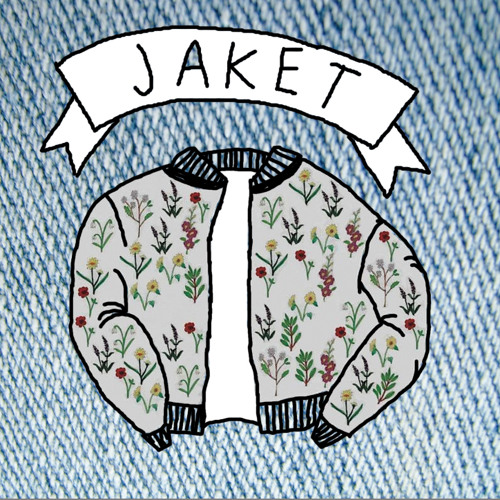
From the outset, it's a striking piece. The CD (remember those?) features a beautiful (faux-) denim-clad digipak cover with hand-drawn cartoonish graphics. It appears simple enough, but what's within is another thing entirely...

Musically, there is a lot to take in. A single listen doesn't do this justice. It takes a few listens to dig through the dense layers of heavily synthesized sounds in order to get to the songs. But, in this reviewers opinion, that's a good thing. It leaves the listener plenty of scope to discover something new with each repeated playing.

Starting off, "Good Man" kicks off with 808-thin drums and gurgling synths, before working its way to a chorus featuring Destx. One thing is for sure, Andrew has selected an amazing supporting cast of female vocalists. Destx has a timbre to her voice that reminds me somewhat of Stevie Nicks. The song itself has a very simple structure, ensuring the song doesn't outstay its welcome. But if he ever gets a band happening to play these songs live, the song has plenty of room for growth and expansion.

Track 2, "Cool Kids" has some strange, pitch-altered vocals to kick things off, adding a retro-futurist vibe to the proceedings. Guest vocalist Elaska's voice floats elegantly above the subtle arrangement. Her involvement is sadly limited by the arrangement, which allows the synths to dominate however.

Track 3, "Super Love" sees Andrew give his own voice a treatment that suggests he's been listening to a lot of Kraftwerk's "Autobahn". A cool idea, but I feel it strips the tune of a compelling melody it so desperately lacks. Guest vocalist Lucy Lowe makes a blink-and-you'll-miss-it appearance.

Track 4, "You See The Sky" has achieved some notoriety on the ABC's digital radio station Triple J Unearthed, picking up more than a few plays and heaps of good reviews. And why shouldn't it? It's a fun summer jam. And Claryssa Tolentino's crystal clear voice sparkles against some twinkly percussive effects throughout.

The jewel in the crown of this record, however is the two-part "Darkness To Sun". Part 1 sees Andrew indulging himself in his beloved synths, creating a piece that wouldn't be out of place on side two of David Bowie's "Heroes" (in fact, it would probably brighten up an otherwise bleak set of songs). Part 2 strips back the synths and lets the music breathe in an arrangement that emphasises space. It gives the vocal line room to shine. It's another worthy summer jam and a great way to end this compelling release.

Andrew has a bright future in music ahead of him. Definitely one to watch, it'll be interesting to see where his music takes him. Bring on the next batch of tunes, Andrew!

Take a listen to the record below and leave a comment telling us what you think. Available on iTunes, Google Play and Bandcamp.

Enjoy!!!


Tuesday, 27 May 2014

Frente! Live


Melbourne folk-popsters Frente! (exclaimation point intentional) have reformed are touring Australia currently behind the 21st Anniversary reissue of their massive-selling first album Marvin - The Album. Our Melbourne correspondent, (who also happens to be my sister) RainbowStar, caught the band live recently and, in her debut post, shares her reflections of the show:

Frente!: 21 years of Marvin

FRI 23 MAY 2014, THE PLAYHOUSE, at THE ARTS CENTRE – MELBOURNE, VIC


It was a sultry autumn night with a slight breeze on the air. The city lights glistening across the river. The Arts Centre foyer was abuzz with chatter. Over the din could be heard exclamations of "I can't believe Frente! is playing tonight" and "can you believe it's been 21 years since Marvin was released?" The excitement was contagious. A colourful audience of 30 and 40-somethings were intrigued by the notion of the somewhat intimate setting of the Playhouse, with comfortable seating and absence of dance floor.

First up was support act, Maples (Gabby Huber of Dead Letter Chorus), with her eclectic mix of, at times, ethereal vocals and pop-driven synth. After a brief intermission, the sounds of Frente! took flight, taking the audience on a journey of memories. One by one, the songs of Marvin – The Album were laid bare in front of an audience transported back in time to the upbeat sounds of old favourites such as ‘Accidentally Kelly Street’ and ‘Ordinary Angels’. The blunt reality of ‘Cuscutlan’ still rings true in light of the current socio-political climate.

The unapologetically organic sound mixed with lyrical depth with equal measure of intensity and quirkiness, synonymous with Frente!, was captured perfectly in the intimacy of the Playhouse. The honesty of Angie Hart’s vocals matched by Simon Austin on guitar, emphatically working through the tracks of Marvin, the local release and the additional tracks of the international release.

Frente! ensured the audience were not stranded alone in the world of Marvin, but rather danced through the journey of time reliving audience requests, such as ‘Horrible’ ‘Sit on my Hands’ and ‘Goodbye Goodguy’ from the 1996 follow-up album Shape. Frente! did not fail to deliver the magic and beauty inherent in Marvin which has captured and inspired the hearts and minds of many.

Monday, 28 April 2014

Queen: "A day at the Races"


QUEEN - A DAY AT THE RACES.

Hi guys, this is my second blog, following my Billy Joel's Greatest hits.

I am aiming to give you an overall view of the album from both what I seen and/or read on videos/DVDs/books. I'll then endeavour to pull apart a three songs and maybe ponder some subject matter and see where that ends us up at. I wanted to do another blog, as I am a beginner while helping out a cool blog spot.
Ok? Let's do it, as Freddie would say!!!

This album follows on from the success of the album preceding, named A Night at the Opera. 
Those of you who are Marx Brothers fans, will know what both "Opera" and "Races" are also Marx Brothers comedies. That fact alone gives a nice edge to these albums. It's easy to take the recordings on board in a slightly theatrical manner. If you are willing to broaden your mind, it might even take that slightly more theatrical quality that Queen might well be regarded at producing, especially at their live shows. As hard core fans recall seeing in the videos of Freddie in leotards. 

The most interesting tidbit I have for you is bearing on the fact that this came after "Opera". 
A Night at the Opera was made at or around a time when the guys, Freddie, Brian, Roger and John were in deep financial debt, with little or no money being given to them by their manager at the time.  The appearance of "Races" heralds a time when Queen were shaking free of the debt and managers leaving band members poor. The music, as the band reflects, has them going on to record music that quietly expressing that the bad times were fading fast into the past and Queen were finally finding their audience, or at least in the beginnings of really establishing themselves for the rest of their career.

A direct evidence of this breaking into the big time can be seen in "Somebody To Love".


Just listen to the vocal harmonies to open! Freddie and Roger cutting the air with top end vocals (Roger was as high in range vocally as Freddie, if not higher) With Brian and John rounding out the rest. Yes, John did sing, we just can't hear him quite as well as the others.

Piano, a drum fill and we are fully into perhaps indeed as Gospel- styled rock piece. With a swing and punch that really gives an all-round richness in sound, instrumentation and open mouthed pit-of-the-stomach depth.

The more I write, the more it becomes obvious just how great this is as a complete song, as the subject is somebody to love. You must have been made of stone if you can't connect with this!

The statement that Queen were finding their stride with this album comes with the place this song found itself in the UK and US charts.

It reached number 2 on UK charts and 13 in the US and, as well as Freddie liking (or loving) Liza Minnelli, he also idolised Aretha Franklin, who is also credited to influencing this track.

"Somebody to Love" is track 6 on CD and first track on B side on the LP.

Jumping back to some hard rock and roll we love about Queen, let's look to "Tie Your Mother Down", opening track to the album.


The full version gives a solid Japanese-styled scale intro including Brian May's studio crafted guitar trick of the eternal musical stairway...then, we get our beloved riff- so familiar to this head banging piece and the head banging starts right when we hear Brian get it going.

With crashing cymbals, bass and snare drum strikes, Roger accents the opening guitar riff with help from downward bass lines and Freddie bringing in a "Ooooh, yeah!" and we're off rocking and rolling.
This is a great party piece, perhaps a clear sign of Queen's solid foothold in the rock genre of the time.
All with touted no synthesisers, which the band loved to exclaim boldly, Freddie sings about taking someone's brother swimming with a brick, yep, and it IS alright!

It's everything we need in a rocking Queen anthem: cutting, multi-fingered guitar solos which includes the sound of a slide. This use of guitar slide, so often found in more blues music guitar solos, gives "Tie your mother down" it's own distinct ingredient. This is Queen showing how much they loved both variety in their production whilst by recording different songs, they explored many different musical styles.
We close with thumps, bumps, more cymbals and guitar high notes and an end guitar chord.

And lastly, let's look at "Teo Torriate", last listed track on both CD and LP.


England and Queen have had close relations with Japan over the years following World War two, if not before. 

We have Freddie's piano, love lyrics he does so well, but most importantly, a two-fold verse in the English language followed with what might be the closest translation in Japanese.

The dialect of Japanese used in this piece is unknown to me, with much of the Japanese used has been unfamiliar to most of the Japanese citizens I have met and sung these words to. The most commonly understood word to any Japanese person I have indeed sung this song to, I have found if  Shizukana "shizukana = silent " or quiet.

As mentioned and found in the opening to track 1("Tie Your Mother Down") we have again, a touch of Japanese or oriental styled musical scale introduced into the music.

I really want reiterate just how much we can see the band's entering into different genres and writing songs in more than one style here. 

Over the years, as we might think, a band grows and moves with the times, styles and trends of the years. It might well be an indication of the art form of music itself in fact reflecting these trends, as art either directly or indirectly attempts.

The song closes with Brian May's guitar elevator once again.

"Teo Torriate" is a really beautiful piece. Lovely, gently vocals accompanying the lyrics with piano and vocal scale giving us that Japanese influence in the choice of scales. The inclusion of those Japanese lyrics plus, when the album was released, the Japanese words,via the fold-out printed lyrics which are located inside the LP, we can learn to sing them with Freddie.

This is such a nice touch and for after we become familiar with the melody of the words, we can add our mastered Japanese lyrics. Cool, huh!

A choir of additional voices leads up to the ending Brian May guitar escalator.

So, in closing I give you the chance to go and look at these and other pieces from A Day At The Races. Take a listen to the album via the Spotify playlist below. If you keep in mind the things that happened to the band during these times, it's easy to understand what helped influenced the album in the writing itself and hopefully enjoy and appreciate this breakthrough album by Queen even the more!

Shalom, friends. Enjoy your music!

Monday, 17 February 2014

INXS on TV: The Verdict

You may remember my recent post about the INXS telemovie "Never Tear Us Apart" where I speculated that it would be less about the music and more about the off-stage antics...

...it turns out I was correct.

Reading three reports on the topic this week, one each from The Sydney Morning Herald, News.com.au and The Guardian, one would think that each of the reviewers were watching a totally different program from another.

The Guardian opines that it "...takes us back the age of bare-chested rock excess, and not much more", while making the obvious point about how uncensored the show supposedly is based on the amount of groupie boob exposure it contains.

The Sydney Morning Herald claims that it was "sex drugs and rock 'n' roll with...a batch of bad wigs" and that it played out like "Home and Away [but] with better music",while News says that the show was "...true event television, powerfully and unflinchingly told". I'm sure that is correct if you like watching soapy dramas.

The sad thing about this production is that it doesn't do anything for the bands legacy. I can't help thinking that INXS will end up with a place in Australian music history like the Doors now possess in American music history: they'll pretty much be known by those with all but a passing interest as "Michael and those other blokes". They will be always regarded not as great tunesmiths, but as the pub band who made more money and scored more drugs and pussy than anybody else.

Ditto the Doors.

Their music will always be tied to its era, dated by [then] contemporary production values intended on making everything sound bigger than anything else, at the expense of restraint.

Ditto the Doors.

They will always be mentioned in the same breath as all the gratuitous debauchery and excess of the period - some of the worst elements of the time - because THAT is how the media and social commentators have seen it and called it. And what is this telemovie doing about it? Nothing - it is doing exactly the same thing: Celebrating the excess and not the reason they got to enjoy it: the music.

I can think of heaps more bands that were way more successful worldwide than INXS back in the day but they are not even regarded with anywhere near the kind of reverence they are. What about Milli Vanilli? They sold way more copies with their one album than any INXS album did. Why aren't they highly regarded anymore? Because the music was shit, and it remains so. INXS's albums may sound dated but the songs are killer. Without the music, there wouldn't be an INXS to make a telemovie about.

Having said that, the Sydney Morning Herald piece rightly says that the whole reason this program exists in the first place is down to the "enduring power of the late Michael Hutchence, the lead signer whose charisma and magnetic stage presence could blow a concert audience clean out of their seats, and whose death in 1997...remains an intriguing...part of the legend."  It's his tabloid-headline-grabbing antics the punters want to see - the music, as many viewers will see it, was a means to an end. This probably explains why it pulled in nearly 2 million domestic viewers on each respective Sunday night.

The death of Michael has been ruled suicide and NOT auto-erotic asphyxiation by the NSW State coroner - a fact that has been disputed by the late singer's family and friends. This issue wasn't tackled all that well in the film, largely because Michael died alone, the details surrounding are sketchy at best and any depiction of it would be purely speculative. It was handled tastefully, however, in my view, it did attempt to build to a climax and yet strangely failed to reach it.

So now they're proclaiming that this is the television hit of the year. It's a big call, considering we're only 6 weeks into the year. It was hugely successful in terms of ratings, substantially less so if it is measured on content. Did it match the hype? Hardly. But at least it got chins wagging, and the remaining members of INXS will get a boost to their retirement funds with back catalog sales going completely apeshit in the last few weeks.

I just hope we don't see a sequel that chronicles the aimless and pointless years in the aftermath of Michael's death, including the awkward choice of Terence Trent D'Arby as a vocalist and their credibility-destroying foray into reality television...the less said on that issue, the better.

Friday, 14 February 2014

Life Coach


One of the best new discoveries I have made in recent weeks is Life Coach, a Washington DC based band that has evolved from another band, indie-rock darlings Trans Am.

The guitarist from Trans Am, Philip Manley, wanted to start a Kraut-rock styled experimental project, heavy on the electronics. He issued one solo album called "Life Coach" and then decided to flesh out a band with live musicians in order to play the music live. What you have is a band that pitches themselves somewhere between ...And You Will Know Us By The Trail Of Dead's experimentalism and Pink Floyd's space-iness, with all the lumbering crunch of Tool.

Their debut album "Alphawaves", released last year on the awesome indie label Thrill Jockey, is 40 minutes of strategically organised noise that is as compelling as it is inviting. The instrumental first half contains so much depth, its layers unveil themselves with repeated listens. Track 5, "Fireball", features a Zeppelin-esque groove, but much, much heavier, with a solo so awesome it'd make Jimmy Page blush.

This is a record that is highly recommended, and well worth listening to a few times, especially to get the full benefit out of it. It requires VOLUME! So play it LOUD!

Enjoy!!

Sunday, 9 February 2014

INXS on TV

Finally the new INXS biopic Mini-series is on tonight. Channel Seven has been flogging the promos for weeks now and it has finally time to show the first part.

There's been a lot of discussion around the place about "will it be any good". Without having seen it, it's supposed to be a biopic, not a documentary - there's a difference.

Biopics, while useful, are not always accurate nor informative. They are designed to tell a story and to entertain an audience, not necessarily to deliver the facts surrounding the story.

The story of INXS is already well documented around the traps anyway, and judging by the promos, the biopic is less about the music and the band, but rather the sordid private life of singer Michael Hutchence that very much became public thanks the scavenging British Tabloid press. It's my great fear that this miniseries will focus on the off-stage turbulence and not on the artistry of the band.

To be fair, the drudgery of overdubbing harmony vocals and in-store appearances is not what makes a good story. The stuff that will hook in the punters is the success, the drugs, the relationships and the sex, all of which distanced Michael from his bandmates, and ultimately finished with his demise.

I'll still watch it, and I'll see if my fears are confirmed.

Sunday, 8 December 2013

Album Review: Billy Joel: The Complete Hits Collection 1973-1997

I'd really like to give you a blog about an artist I listen to a lot, and that is Billy Joel.

I bought his Complete Hits Collection God knows how long ago now, but it would be the most bashed album I have. It's been played through good and hard times and keeps giving even now.

My simple theory is this: get a greatest hits and find songs you like the most, THEN go and buy the album it came from and see where it takes you. It makes you perhaps a selective listener but usually only serious musos will tell you to listen to everything!

I'll give you a few of my faves off this album and some of the knowledge I have acquired from looking into a track. This is a 52 roughly track album, being three CDs worth.

Now, I'll give you two and see how you like it- this IS my first blog :)

1. Scenes from an Italian Restaurant. From "The Stranger", 1977.


This being a piece with more than one theme, much like an ABA form, or ternary form gives you a lot of interesting ideas. Joel has a few songs in his arsenal like this with more than one central theme, musically speaking.

We start and end in an Italian eatery trying to choose your wine. Much like Vienna, it has a European flavor. It sets the scene and gives a grand sense of scene, table, chairs, your lovely lady and wine and it then leads to the main meat of the song- which Joel named fondly during writing as the Ballad of Brenda and Eddie. This is when it really gets going:

"Brenda and Eddie were the popular steadies and the King and the Queen of the prom, riding around with the car top down and the radio on..."

The lyrics give a couple in the heights of youth, plenty of eagerness and tension with everything to gain, who cares about the consequences with the life-like lady holding the purse strings. And it's this that really brings down the pair in the end.

The melody with all Joel's creativity binding with really wonderful lyrics, as per the two lines given above.
It's fun, it's lively as I've just said- youth, vigour and anticipation of a rich future with "...deep pile carpets and a couple of paintings from Seers (a US department store I imagine) a big waterbed that they bought with the bread they had saved for a couple of years." This rhythm has zing! It's got bite, and anyone having moved out and started a live-in relationship knows what this is all about.

If you don't try and learn this lyrics and attempt to sing along, you might as well stop the iPod in your car, lock the vehicle and walk. It's hard not to plus air drum and air piano. If you're a wanna be a muso, a bit of imagination can't hurt!!!

Throw in an accordian, sax, clarinet break a nice band into the mix, and this is full, red-blooded romance, look at life party-style. It brings a very well relatable subject matter: love and love lost and the money you throw at life . Please, grab this live at Yankee stadium, a few years ago now....Joel at his best!

Bring a bottle of rose...this is fun.

2. The Night is Still Young, From: "Greatest Hits Vols I & II", 1985. Not previously released as a single.


In this day and age, being 2013, more couples are meeting and/or marrying, settling down with children at a later stage in life, whether careers, or lifestyles govern them growing up...youth is young and staying young for as long as they see fit. I dunno, what do you think? Where are you these days?

So, Joel opens with the idea: "I'm still young, I have plenty of life in me, what the hell, I love you."

The Wiki people have Joel from the video as man on a business trip, leaving his wife behind. I haven't actually seen this video, so my interpretation is somewhat different from the my hearing what lyrics I can understand.

This song is somewhat dreamy in orchestration I think, It gives you a taste of Joel's old familiar harmonica as per "Piano Man". Simple octave (or two) dubbing of the verses gives an odd feel, more conversational in style. It nearly seems as if it's a near middle age man living with a still-young man's ideals. A pinch of reflection leading to his current position with his woman by his side: he's basically giving her credit for being his wife and as some do, a man who IS in his mid-life, is saying "...got a lot of catching up I gotta do, but the night is still young..."

I'm sure he's not the first or last to feel as if he needs to take stock of his life and state his intent and purpose. There is an accompanying video to go with this with Joel appearing as a lower class worker, blue collar and in his down to earth raggy way- it's easy to feel affection this style of visuals. He also appears driving a lorry where a young man with suitcase jumps on the back. One wonders if he's picturing himself as his lyrics give a hint towards possibly.

This is a song with a contemplative, typical honesty Joel offers-which I really love and respect in this man, in his music and lyrics. Joel is not afraid to put some growl into his voice. Showing again, as I tried to give you the feel for, a young man in an older man's body with the world at his feet- even though he might struggle to bend over to tie his shoelaces- but he's giving it all for his lady.

3. This is the Time, from "The Bridge", 1987.


I really wanted to give you a song off one of two significant albums to me- being The Bridge and Storm Front.

For now, This is the time is a nice life ideal to live by, involving the usual, Joel- type subject matter. He's for all intent and purpose talking to either his lady or if we might think, talking to us.

It's easy to give the love lyrics to his lady and take the lyrics of 'advice' when he neither says need you, or any lyric containing connotations to 'her'. Joel after all seems a very personal a person who, you might imagine, could enjoy giving his advice to anyone close, and if we spend the money, we can glean from his 'ancient heart' and knowledge and ideals.

This, being an album I was given by an uncle, uses all the keyboard electronics typical of 80's music. If you grew up in the era as I did, and some of my close friends, you'll recognise this. In thinking, even early 20's music fiends can easily recognise an 80's song, some with dissent - why I can't fathom! But I'm getting off topic slightly.

As this last review will conclude this blog, I'm sure you won't mind my indulgence- I picked this song because I like it. The first 2 were non sentimental- not so this one!

I think this song is nicely orchestrated, akin to "The Night is Still Young" - but after all, this is what art is all about: telling a story through a sensitive art-form such as music.

It has its crescendos and vice versa- meaning strong points and softer points. The lyrics do drive this piece.

"This is the time to remember, cos it will not last forever"

this sums up life in general.

Now, this actually takes practice and experience to have a sense of appreciation for. If you have not lost, you cannot find comfort. If you are not hungry, you won't appreciate food. If you're not cold, you might not value your clothes, shelter or house. The experience of hardship can indeed give you more value of that when you might have it return.

This might be the central theme to this song. It also has a touch of love involved -

"and these are the times you'll turn back to, and so will I..."

the romantic comes back from Joel again. That usual heart on the sleeve type, giving us his thoughts.

Until next time! Enjoy!