20 Years ago today The Beatles reunited for a mammoth TV retrospective called "The Beatles Anthology" with an accompanying 9LP/6CD Outtakes and rarities compilation to go with it.
To go along with it, they issued two singles, the first of which celebrates its 20th anniversary today. Entitled "Free As a Bird" it was reconstituted from a home cassette recorded demo by John Lennon. The other three assumed "John was away for the weekend" and finished it without him.
They enlisted the help of Electric Light Orchestra (ELO) frontman Jeff Lynne to produce the two singles. Longtime Beatles producer George Martin declined as his hearing was beginning to fail at that point. Lynne was a curious choice of producer. Suggested by George Harrison, as he'd produced his "Cloud Nine" LP and was a member of his group Travelling Wilburys, Jeff had no doubt fulfilled a dream of his by working with the Beatles.
You see, Jeff's work in ELO always took its cues from the Beatles' experiments with orchestral instruments: "Eleanor Rigby", "I Am The Walrus", "A Day In The Life" et al. ELO didn't necessarily succeed in sounding like The Beatles as Jeff may have envisaged. He did, however, succeed in making The Beatles sound like ELO.
You see, everything Jeff is credited as the producer on all sounds the bloody same as ELO. These two singles were no different. That doesn't make them bad. In fact they're quite listenable. It just doesn't make them as idiosyncratic as the rest of the Beatles' catalog. These sound more like footnotes or, more to the point, "afterthoughts" rather than worthy additions to the canon.
The video for "Free as a Bird" was beautifully animated, full of references to the Beatles folklore and history. After the song finishes proper, there's a strange little reprise that has some garbled message from John that has been warped to sound mysterious, and some ukulele playing in the style of George Formby, whom George Harrison was obsessed with at the time and onward in his later years.
As a single release it didn't set the charts alight, but it was perfect fodder for plugging the release of the "Anthology" which was responsible for repositioning the Beatles in the forefront of every music-lovers mind as the premier band of the Rock era, irrespective of how old you were.
Take a look at the video again below:

Showing posts with label British. Show all posts
Showing posts with label British. Show all posts
Sunday, 22 November 2015

Tuesday, 27 October 2015
100 LPs Shortlist #46: Dire Straits - "Brothers In Arms"
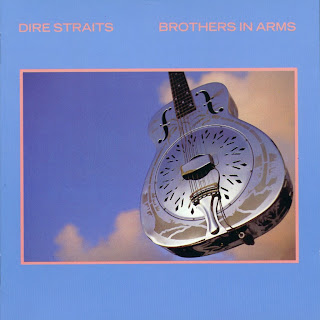
Before we start, let's have a quick show of hands.
Who has played this album to the point where you cannot stand to hear it ever again?
My my, there are a lot of you.
I will confess that I am one of those people who cringe whenever the opening organ phrase of "Walk of Life" appears on the radio, Such is the end product of exposure, self-imposed and external, to one of the most ubiquitous albums of the 1980s.
Now, with the benefit of 30 years of hindsight, the album has additional dimensions to its legacy as a classic album. What's more interesting than the contents of the album's grooves is how it was used as a marketing tool to bring about a paradigm shift in the music industry; how it can be seen as a symbol of the music industry's greed; and how its principle creator isn't a fan of it.
You see, "Brothers In Arms" was used by the music industry, specifically Dire Straits' parent record label Polygram (now Universal Music) to sell and market a new product known as the Compact Disc. Polygram's sub-company Philips, in league with tech giant Sony, had invested millions of dollars in developing a new product that would improve sound quality and create a more durable format than the existing vinyl and cassette formats.
The CD as a format was released in 1982. However, sales were still quite sluggish and so anticipating one of the biggest albums of 1985, "Brothers In Arms" was used as a carrot to lure the consumer into changing their listening habits towards the new technology. This was considered a high-stakes game. In previous years the industry had seen innovations such as consumer grade reel-to-reel tape, 8-track tape, quadraphonic vinyl and AM stereo radio die in the marketplace. With so much gambled on R&D for this new product, commercial failure wasn't an option, nor was a status tag of "novelty".
And so the original album (in Australia at least) was issued on vinyl in a standard, non-gatefold sleeve with a wraparound marketing brochure spruiking the merits of the new CD format. It wasn't going to change the fact that you've already laid out your hard-earned for a vinyl copy, but in the hope that maybe you just might buy something else on CD.
Like any new technology, on first release it was hideously expensive. CD players were twice the price, if not more, than a VHS video recorder and the discs themselves were exorbitant in cost. Single disc CDs in the 1980s were at least $10 more expensive than their vinyl counterparts, and for double albums, they could be as much as $30 dollars dearer (To wit: a copy of Bruce Springsteen's "The River" on vinyl in 1986 was around $16.99 whereby on double CD it was $48).
When vinyl sales dropped to the point necessitating the cessation of production in 1991, consumers were told the price of CDs would drop from the standard $28 dollars. By the end of the decade they were over $30. Despite this, people threw out vinyl and replaced everything on CDs that, in some cases, sounded worse than their old vinyl.
Clearly the marketing worked, but to the detriment of people who bought vinyl. "Brothers in Arms" had a track listing that was identical on CD and vinyl, but the devil was in the details. The CD states that the album is 54 minutes long. On vinyl, the album was almost 11 minutes shorter in length, with four out of the first five tracks considerably shorter than on CD (up to three minutes shorter for "Why Worry"). The argument was that vinyl had time space limitations, when in fact many albums of similar length sound perfectly fine on vinyl ("Dirt" by Alice in Chains being an example). It was a case of corporate dishonesty, less a case of outright lying than not quite telling the entire truth.
Since the sales of the CD version outstripped the vinyl sales, this was used as evidence to move an argument for the discontinuation of vinyl. It was also part of the ploy used in the 1980s for loading up CDs with bonus tracks not available on vinyl. Consumers swallowed it hook, line and sinker. Almost 25 years later, after file-sharing brought the music industry to its knees, vinyl is back on the shelves.
"Brothers in Arms" has been re-issued on vinyl in 2014 as a double LP with the full, unedited mix in the album as CD buyers have known it for the past 30 years. This no doubt aggrieves Mark Knopfler, who, in an BBC radio documentary in the late 1980s, thought the extended outros of the songs were too long and preferred them to be edited out. He also cited "One World" as a song he wouldn't release again if he had the choice.
Hindsight is always 20:20, isn't it? For what it's worth, after the first three songs, the rest of the record is incredibly slow going. Perfect for a very low noise audio format of CD, with all the languid quiet passages. It still features some of the best songs Knopfler has ever written, even if they are slightly too long in parts.
Take another listen below.
Wednesday, 25 February 2015
Punk Night at the Duck's Nuts: The Sequel
And everyone loves a sequel, right?
Well, maybe not in the case of Police Academy XI. However, in this case we'll make an exception.
After my previous post about Attila The Stockbroker and his adventures in Newcastle at a "testicular themed pub" as chronicled in "Punk Night At The Duck's Nuts", he has been in touch with us here at the Sound and The Fury HQ and he has supplied us with a follow-up story about Newcastle, where he returned to play a gig in the city in 2011.
I mentioned in the previous post about seeing an Attila show advertised in Newcastle that I thought about attending...and ultimately didn't. It turns out that this story describes what happened at that very gig...
NEWCASTLE – THE REPLAY, by Attila The Stockbroker.
It’s a Saturday night in Newcastle, New South Wales, eleven years later.
News has filtered through to me that The Duck’s Nuts has apparently changed its name to The Silk Bar.
But far worse news is that the mural of the duck on a surfboard with his testicles hanging out has apparently been painted over.
Robina says, with a twinkle in her eye, ‘Thank God it’s gone!’
I think ‘I’ve brought you on an epic, romantic journey to a town on the other side of the world to show you a mural of a duck on a surfboard with his testicles hanging out - and it’s been painted over. Surely you could be more appreciative of my efforts and sympathetic to my anguish!’
But I don’t actually say that.
I’m playing at the Cambridge Hotel: an enormous venue in a run down area three miles from the city centre.
According to the board outside (the only visible publicity anywhere) there are four bands on the bill.
Actually, there are three bands and a poet.
My friends the Go Set are headlining, then me, then the Sydney Girls’ Choir then the Havelocks.
At the appointed hour for the first band the paying audience is zero.
Even the twenty elderly alcoholics from the Duck’s Nuts would be welcome in this cavernous void.
The Havelocks don’t have locks. (They may well have some on their guitar cases and I’m sure they do on their front doors, but they don’t have any on their heads).
They take to the stage to a combined audience of myself, Robina, and two members of the Sydney Girls’ Choir.
The Havelocks appear to be in their early thirties and sound to me a bit like Crosby, Stills and Nash.
Their friendly singer tells me he is originally from Staines in the UK. I want to ask him why anybody, even someone from Staines, especially someone who presumably loves music,
would emigrate to Newcastle, New South Wales, but I don’t. I think it would seem insensitive.
The Havelocks finish their set. By this time the paying audience has risen to five.
As the next band take the stage I can see a pattern developing. The Havelocks don’t have locks: The Sydney Girls’ Choir aren’t from Sydney, aren’t girls and aren’t a choir. They are four blokes from Woolongong in their early twenties and are an excellent kick-ass rock n roll band in a Kings of Leon meet Dr Feelgood kind of way.
The first thing the singer says is that he is pleased to see so many people there because they played in Newcastle last week and nobody turned up at all. I admire his dedication to the cause.
I join the three-strong moshpit. I have a lovely time. Then it’s my turn.
By this time the audience has soared to about twenty including three Attila fans, one of whom is from Canada. I don’t think either of the other two are from Newcastle.
The void in front of me is aching. It’s monumental. It’s like being at a Crystal Palace home game.
Needless to say, I start with ‘Punk Night at the Duck’s Nuts’ and the sound of surreal irony echoes across the tiled savannah.
One twentieth of the audience suddenly shouts at me. What he shouts is ‘Yabba Yabba’.
I am confused by this at first but soon realize that this is his way of conveying the fact that he is unfamiliar with the concept of the unaccompanied spoken word as a form of live entertainment.
I berate him, gently. He shuts up.
In the middle of my performance The Go Set arrive. They’ve been doing another gig at a birthday party round the corner. I finish with a flourish to the sound of nineteen pairs of hands clapping in a wind tunnel and ask my friends how their gig went. Shithouse, I am informed. There were 200 people there. When the Go Set started playing most of the guests went outside and began dancing to techno. The rest sat in front of them eating and chatting.
Given this, I wonder why they were booked to do the gig in the first place. The people who booked them have promised to turn up here. I hope they will, so I can ask them. But they don’t.
The Go Set play I join them on fiddle and it must be said that the twenty-five people in the audience have a lovely time and are most receptive.
Afterwards, someone apologises for the turnout and says we would have had a better crowd if we had played somewhere else. I agree. They mean somewhere else in Newcastle. I don’t.
The next day as we head out of town we drive past what used to be the Duck’s Nuts and is now the Silk Bar.
The mural of a duck on a surfboard with his testicles hanging out has indeed gone. In his stead there is a grubby silver banner draped on the wall with ‘The Silk Bar’ written on it. The place is now a shabby backpackers’ hostel and poking out of an upstairs window there is something which looks worryingly like the Antipodean equivalent of Joseph Porter’s Sleeping Bag.
Then I notice that one of the pub signs still says ‘The Duck’s Nuts Hotel’. My heart sings.
I ask Robina to take a photo. The angle is wrong, she says. It won’t come out. My heart sinks.
We drive away. Back in Melbourne I recount this tale to my musician friend Rory. ‘John’ he says, earnestly, ‘Newcastle is the rectum of the Australian music scene’.
‘Rory, my old mate’ I say ‘I think you may be right.’
11/4/2011
Reprinted with permission from Attila The Stockbroker, with thanks.
Tuesday, 24 February 2015
Punk Night at the Duck's Nuts

image source: Punky Gibbon
John Blaine is a performer who goes by the rather unusual name of Attila The Stockbroker.
He is a British punk poet, taking his inspiration from the strident political stance of UK punk rockers The Clash. He has made a career from his potent topical ranting for 35 years on the 8th September this year.
He is a frequent visitor to Australia it would seem. I'd only heard of him through the Canonical List of Weird Band Names, a piece of essential reading for those with a twisted sense of humour.
A few years ago, on one of my infrequent visits back to my hometown of Newcastle in New South Wales, I saw a poster advertising a local gig of his, on his 30th Anniversary tour. Intrigued, I thought that if someone or some thing could exist and survive for 30 years on the back of such a ridiculous name, I need to do some research and find out all about it.
Upon further investigation, I found Attila's work to be highly engaging and thought provoking. I began to regret missing that gig in Newcastle.
Attila actually wrote a monologue about my home town, inspired by his first visit there to play a gig at the University, supporting Sydney band The Whitlams (His description of them in this piece is hilarious). The piece is called "Punk Night at the Duck's Nuts". It's a story about a place in a foreign land in strange environs, that just happened to have a pub on a street corner so named for a body part on a male duck.

image source: The Herald
The Duck's Nuts Hotel on the corner of Hunter Street and Steel Street, was known as the Family Hotel for many years before under going a name change to the now famous moniker in the year 2000. As recently as 2013 it has been renamed again to The Silk Hotel. When it was known as The Family, I saw many a lively gig there. It was always a great gig venue, with the tiny front bar packed out regularly. It had a great vibe and the music was usually great.
Although, after I'd left town and the venue changed names, gigs weren't all that flash, according to our man Mr Stockbroker. This tale of a sordid Wednesday night listening to a covers band in this now dodgy little pub is a fascinating and dead-on representation of a city that was all but devastated by the relocation of its main industry - steelmaking - to other parts of the country. This piece (I think) dates back to around the year 2000-1 which was roughly when the BHP Steelworks had shut down and the unemployment rate rocketed. The town was quickly becoming a shadow of its former self when Attila made these observations. Newcastle has slowly regenerated into a more gentrified and welcoming place, but it is lacking the rogue charm it had in years gone by.
Here below is a reading of "Punk Night At The Ducks Nuts", a requiem of sorts for Novacastrians,(i.e. Newcastle people) like myself, everywhere by Attila The Stockbroker.
Thursday, 12 February 2015
Underrated Live Albums #2: Slade - "Slade Alive"

Slade are probably best described as a "band of (and for) the people". Hated by critics, loved by the average Joe record buyer, they wore their working class, northern British roots loudly and proudly on their gawdy glittery sleeves.
Lumped in with the Glitter/Glam Rock movement with Bowie, Marc Bolan and T.Rex and (heaven forbid) Gary Glitter, Slade looked and sounded like none of them (big hats and awful sparkly outfits notwithstanding). Their sound was loud guitars and boot-stomping heavy beats with basic songs (deliberately mis-spelt) delivered in a voice that would strip the paint from an old Holden.
The description above is probably reads like a disaster - a mess of noise and charmless male bravado. And it would be, if it wasn't just so bloody endearing. And fun.
The remarkable thing about this album is that there is a remarkable lack of pretense. The audience love the experience and make the vibe of the show (and this recording) almost tangible.
Slade Alive! was a record that was recorded live to tape without any studio altering. It was done live a purpose built studio in front of 300 fan club members and was a fortune changer much like "Alive!" was for Kiss. Slade's previous few albums flopped and the live album gave them a big hit that they were desperately looking for. The band were already a big live draw, so it was a canny move to capture that on record.
Again, artistry and technique are not matters of contention here. Songwriting prowess is not a feature here. Most of the seven songs are covers, along with two originals never recorded in studio form, but they are done with the same big voiced, stomping feel that drove audiences wild back then. Noddy Holder's vocals are ear splitting but yet it sounds compelling. His charm in conversing with the audience between songs just highlights how much fun the whole experience is.
Slade's fortunes soured in the late 70s as the gimmick wore off. They picked up again in the 80s and tailed off again post 1985 until they split up in the 1990s. This album has been cited as an influence by countless bands, but in recent years this album seems to have gone out of favour with writers and collators of "best of" lists.
The album is not available on Spotify, but it is available as a playlist in YouTube. Take a listen to it again below.
Tuesday, 3 February 2015
Bargain Bin Review #2: Morrissey - "Greatest Hits"

It's not often you see Morrissey albums in bargain bins. But then again, not every Morrissey album could be seen as a throwaway product.
In the grand scheme of things, copious amounts of compilation albums are not uncommon for an artist as prolific as Morrissey. As with his career in the Smiths, he has made many non-album singles and b-sides that are so string that when collated on an LP together, create an album almost (if not more so) as strong as a regular studio release (take "Bona Drag" for example).
But this 2008 compilation album is curious from the perspective that it ignores a great deal of the artist's career, only touching briefly on high spots from the 80s and 90s. It spends most of its capital on singles from his (then) most recent two albums "Ringleader of the Tormentors" and "You Are The Quarry". It takes four songs each from both these albums, three classic singles from the late 1980s, one from the 1990s ("The More You Ignore Me..." from "Vauxhall and I"), one live track from his 2005 live album and two new songs, that turned up later on his follow up LP "Years of Refusal".
As a summary of the consistently great quality of Morrissey's solo output, this is hopelessly slanted in favour of more recent work. It mostly ignores the 1990s and shines a light deliberately and unfairly on his recent work, not quite airbrushing out the older history but possibly to make the elder material look inferior against his latest music.
As a package, the lack of sleeve notes are frustrating and I expect there to be more detail within the cover to learn about the contents, especially as I'm not as familiar with every last record Morrissey has ever made. The photography on the front cover booklet makes Morrissey look almost sanctimonious, and the beefcake shot of his naked butt on the inside back cover with the scrawled pun (based on his 1992 album) "Your arse an' all" is just a little too much to bear (no pun intended).
As an album there is plenty of great music here and it makes a great listen from end to end. However, if you are looking for a thorough and balanced career retrospective this ain't it.
Take a listen for yourself below.
Thursday, 4 December 2014
Vale Ian MacLagan

As time gets on more of those who have shaped our musical thinking and direction start to leave us.
It is with sadness that I report that Small Faces (and later Billy Bragg) keyboardist Ian MacLagan has passed on.
The Small Faces were a band who, along with the Who, closely steered the 1960s British "Mod" movement into legendary status. With a rough-hewn R&B sound they created a number of great singles and a few classic LPs that still hold up well now.
Ian joined the Small Faces at the behest of their manager Don Arden (father of Sharon Osbourne) right before they became famous in 1965 with their single "Whatcha Gonna Do About It".
The band lasted four years until Steve Marriot left and Rod Stewart and Ronnie Wood joined, shortening their name to Faces. The faces released four unimpeachable studio records before calling it a day in 1975. Mac, as he was known to his friends and hardcore fans, then started on a sporadic solo career before doing session work, most notably in albums by Billy Bragg such as "Talking with the Taxman About Poetry".
Mac's playing was always subtle and he never overplayed anything. He was always complimentary to the song, having an uncanny knack of knowing exactly the right note or sound to play at the right spot. His playing on his most famous records can be overlooked but it was a joy to hear.
Vale Ian, you will be missed.
Tuesday, 2 December 2014
New Music: Beans on Toast - "The Grand Scheme of Things"
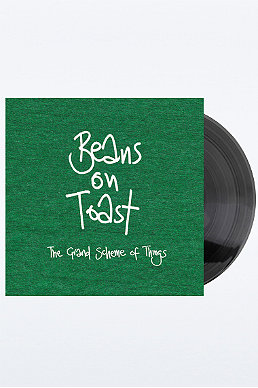
What we have here is the sixth annual release from Beans on Toast, released yesterday. He seems to be as regular as clockwork, releasing an album every year in late November or early December. Yet again, the British anti-folk singer has delivered another set of tunes in his own inimitable style.
For those who are unfamiliar with Jay (aka Beans on Toast)'s work, imagine a scruffier (if that's at all possible) early-era Billy Bragg-styled singer songwriter who is no less passionate but far more pointed and acerbic. If folk music is designed to be left-leaning, Jay profoundly rattles the cages of conservatism such as to completely offend and turn away anybody who can't see past the end of their own opinions. He's a folk singer who is passionate about what he does, stands up for what he believes in - and if he finds himself to be wrong he stands up and admits his failings. He simply calls it as he sees it.
He makes no bones about his own perceived lack of talent, and I admire that. But that's precisely the charm of this, and what folk music is all about. It is music of the people. A simple music that doesn't require huge amounts of technical skill, but gets the message out to those who want to (and probably a lot more who should and need to) hear it.
I've been following Jay's music for a while now, starting with the mammoth 50-track debut album "Standing on a Chair". Jay and I don't see eye-to-eye on certain issues, particularly around tobacco and other drug use (although I'm very glad he's given up all the substances now). However there is a noticeable conviction in what he sings about, as well as a wicked sense of humour.
The latest album "The Grand Scheme of Things" gives us more of what Jay does best: one man, a guitar, and delivering equal amounts of vitriol and sentimentality with plenty of fire in the belly. Certain tracks on the album deviate from the folk base and incorporate country elements similar to those on the second album "Writing On The Wall". He even dabbles in a type of off-the-wall, New Orleans Trad Jazz on "Nola Honeymoon".
The targets of Jay's anger this time around are as deserving as ever: Inhumane chicken farming, the UK Independent Party (UKIP), Young people's inability to connect with nature, the vacuousness of war, inner city gentrification. However, probably his most disturbing tendency of late is to take a shot at those who won't give him a chance. Like the Glastonbury festival on his last LP "Giving Everything", this time he takes aim at the insular mainstream Country Music fraternity in Nashville on the elegantly named song "F*** You Nashville". It goes without saying that, while one can understand his frustrations, writing a song like that isn't going to make anybody change their minds about him.
Mixed in with that is some beautifully written and passionate songs dedicated to mateship across generations ("Flying Clothes Line"), the joys of home cooking ("Lizzy's Cooking"), being a DIY performer ("Folk Singer"), and the excited anticipation of the new year ahead ("NYE").
Speaking of "NYE", in the songs dying seconds Jay sings "Welcome to the last verse of the album, I'd be amazed if anybody got this far...".
For the record, I did. And it was fun, too. It was no more or less than what I'd expected.
For the record, I did. And it was fun, too. It was no more or less than what I'd expected.
This is not a record laden with studio polish. It is rough round the edges, like I imagine Jay Toast himself to be. Through the murk you get a raw earnestness and passion all too rare in modern music.
Be warned that Jay's sharp tongue means that this isn't a family listening album, although there are noticeably fewer choice words on this album than on the previous ones. And as mentioned earlier, anyone on the right wing of the political debate should be prepared to be shocked and offended too. But bring an open mind to the issues discussed within and there is plenty to be gained from a few listens.
Recommended. Be challenged and inspired.
Saturday, 29 November 2014
Ice Sea Dead People split up
Recent favourites of mine Ice, Sea, Dead People have split up. The band had been touring around the UK as support to Traams and many other bands, and out of the blue an announcement came via the band's Facebook page that the band had split.
Starting about 2009, ISDP started with a focus to play loudly, but with an arts focus. They incorporated their music with fine arts and clever visual arts ideas on their records, not least with their 2013 7-inch single release "You Could Be A Model".
The band made a tentative start with the self released LP "Teeth Union" in 2010 but the band nailed their sound in 2013 with a thumping, squalling noise fest befitting its title "If It's Broken, Break It More".
I'm sure being totally independent, touring and releasing your own records in 2014 was a real challenge and probably brought the band members to boiling point. I am, of course, surmising as the band have given no official reason for splitting up. This is a clear example of a band with a unique sound and a unique vision about their art whom I thought deserved a bright future. Alas it's not to be. The band whose name described the plot of the film "Titanic" with the precision of a haiku is now no more.
Go over to their bandcamp page and buy some music. Check out the band's latest blaster of an album below on Spotify.
Tuesday, 23 September 2014
100 LPs shortlist #42: Primal Scream - "Give Out But Don't Give Up"

Primal Scream were darlings of the English music press in 1991, with their soundtrack of the then-burgeoning rave scene "Screamadelica". The album is regarded in the hallowed annals of publications like Mojo and the NME as a masterpiece, capturing the zeitgeist of a brave new underground movement.
So what do you do when you're the darling of the hipper-than-thou music rags, to follow up said masterpiece?
Commit something close to career suicide: release a rock album.
The band had released two indie rock albums in the late 1980s that were quite average sellers. "Screamadelica" saw a huge shift in sound and saw them at the vanguard of a new sound influenced heavily by house music and other forms of European dance music. They became the accessible and visible face of an otherwise hidden, clandestine cultural movement.
When "Give Out but Don't Give Up" landed in stores and journalists desks in 1994, the reception was hostile. The criticism was largely the same. In summary: "Who the hell does Bobby Gillespie think he is, making an album that sounds like a poor imitation of 'Exile on Main Street'?" The NME even went so far to label the band as "dance traitors".
So what is the problem here? The album's biggest crime is that it wasn't "Screamadelica Volume 2". It wasn't anything like the extended heavy dance grooves of its predecessor. There were very few drum machines or synths to be heard.
Mind you, all the tracks here all pack mighty danceable grooves within their structures. The difference is that they are all played on real instruments: acoustic drums, electric guitars and basses and brass. It even features guest vocals from soul singer Deneice Williams and Parliament/Funkadelic leader George Clinton. To further round out the P-Funk connection, the back cover even has a grainy photo of Funkadelic's recently deceased guitarist Eddie Hazel.
If anything, the grooves are not as high energy as what they were previously or as they would become on subsequent albums such as "Vanishing Point" and "XTRMNTR". But that does not mean this is a wasted effort.
The record starts off with the two best and strongest tracks "Jailbird" and "Rocks", both guitar-heavy jams that are just plain good fun, as is "Call on Me" later on. Mr Clinton runs riot on a few tracks, most notably "Funky Jam" and the title track. While the latter is a sexy slow burning groove, the former is a bit of a throwaway, overlong by half and failing to develop the themes, opting to keep them the same.
Not being a huge fan of dance music, the charm of "Screamadelica" has largely been lost on me. While I'm also not a fan of slavish imitations of vintage artists (take Jet for example) the Stones, Faces and P-funk nods on this record are obvious but not derivative. While the middle of the record has a few flat spots, it's still a far better record than the then-recent effort by a more famous band of Faces copyists, "Amorica" by the Black Crowes...
Take a listen to the album below and give us your opinions in the comments section below.
Thursday, 31 July 2014
New Music: Bellowhead - "Revival"

Bellowhead are an 11-piece British folk band that are relatively unknown in these here parts. That said, they are about to celebrate the tenth year of their existence. "Revival" is their fifth album, and the first I've heard. It was suggested from some friends of mine from ol' Blighty. And that's a good thing - otherwise I'd have never listened to this at all.
To give some perspective on their sound, Bellowhead are a band that play traditional English folk tunes, such as sea shanties and work songs, with rollicking arrangements for folk ensemble and an expansive brass section. They play the sometimes ancient tunes with a fire-and-brimstone gusto that leaves one with no doubt about the conviction they have in themselves and their material.
The band mines a similar volume of traditional folk material that classic artists such as Fairport Convention and Steeleye Span used to inhabit. That's where the comparisons with these bands ends, however. Musically, they chart their own course. Imagine a minstrel performance at a quaint little English country Fayre gatecrashed by Tom Waits' drunken "Rain Dogs"-era band. They'll make one hell of a sound and a splendid time will be had by all, really.
From all reports, Bellowhead totally own the stage in a live setting. With an 11 piece band, the sound would be immense. But here's the rub - something about the live vibe is missing on record. The arrangements here are tight, lyrics are sung with confidence and the whole band play their parts with earnestness. However, my initial thoughts were that there is a lot about the Bellowhead experience that is lost on me. Maybe it's because my personal cultural influences are far removed from those of the British, I don't know. I am, however, finding "Revival" more appealing with each subsequent listen. The more you listen, the more things you hear that you didn't hear the first time. But there's something about being in a pub with 500 sweaty punters listening to this music that somehow won't make it onto vinyl...
Look out for the rowdy tunes "Let Union Be", "Let Her Run", "Roll Alabama", the moody "Moon Kittens", and their sublime take on [Fairport Convention guitarist] Richard Thompson's song "I Want To See The Bright Lights Tonight".
I did manage to find the track-by-track commentary that Spotify have to accompany the album. I have sequenced it in amongst the album proper in the playlist below, and it helped me get an idea as to what the band is all about and where the songs came from.
Wednesday, 30 July 2014
Why won't Australians buy British-sounding music?
In a conversation with Laughing Outlaw Records store manager Stuart Coupe some years ago now, he mentioned to me that a radio programmer told him that "Australians don't buy British-sounding music".
A sweeping generalisation, to be sure. But having said that, explain why Radiohead, Adele, Gorillaz and Coldplay continue to sell heaps of records and resonate with listeners here?
On the other side, it goes a long way to explain why The Jam, The Smiths, Cast, The Bluetones, Blur (before they released "Song 2"), The Fratellis, Teenage Fanclub, and any number of great bands from the UK could barely sell a record here.
With the advent of Beatlemania in the 1960s, all any band here wanted to do was sound English. These days it seems to be of detriment to want to sound even remotely like anything coming from the sceptered isle these days.
But why?
From what I've seen in observing the radio industry over many years, Radio programmers seem very quick to program the latest tunes coming from America, but have looked down on and otherwise avoided local talent. Why else would there be a federally legislated local music quota for all radio stations in this country? How else do you explain the stream of bands who needed to break overseas before even being recognised here? Think The Saints, The Go Betweens, The Birthday Party, The Triffids, The Reels, The Vines et al.
Is it because British music is idiosyncratic and sounds too different from the American stuff they cram their daily playlists with? It seems to make no sense.
I think it all has to do with exposure. With the right marketing push and support from the media you could almost sell anything. After all, if One Direction were given no marketing push they'd die in the marketplace too.
What is missing from this equation? is there any logic to this that I am missing? Leave a comment below.
Tuesday, 29 July 2014
100 LPs Shortlist #38: Joe Jackson - "Look Sharp"

"New Wave", "Punk", "New Wave of British Heavy Metal", "New Romantics", "New Wave of New Wave" - all terms thrown around by professional music writers like confettti at a wedding. And they're all largely ridiculous. And do they describe the music and the fashion?
They all become meaningless when trying to describe some of the artists who sprung up at the time most of these labels were invented in the late 1970s. Elvis Costello, Joe Jackson, Ian Dury and Graham Parker all got saddled with at least two of these descriptions when they started but they ended up with a musical legacy that defied the classification.
Joe Jackson's debut was one of the best records that appeared during this period. It's probably one of the best debut records of all time. The songs are short, sharp and very pointed lyrically. The playing is tight, the arrangements spare and the attack is blunt.
Joe demonstrated a great grasp of lyrical directness. This probably best summed up in the sexually frustrated first single "Is She Really Going Out With Him?" with its opening line:
"Pretty women out walking with gorillas down my street..."
It's as hilarious as it probably was accurate when he wrote it.
Joe was originally saddled with the description of one of "British music's angry young men" when this record came out. And to be sure, there's plenty of bile contained within the grooves. His pet subjects on this outing include relationship breakups ("One More Time"), romantic couples affronting his singledom ("Happy Loving Couples", "Fools In Love"), tabloid newspapers ("Sunday Papers"), short-lived cultural fads ("Do The Instant Mash"), the daily grind ("Got The Time") and of course, the aforementioned sexual frustration ("Pretty Girls"). All subjects are handled with his characteristic candor.
It's a great listen from top to bottom. As I was an adult singleton at the time I first heard this album, it resonated profoundly. I just wish the guitars were a little louder in the mix, which would give the songs a lot more bite. Still, the energy in a lot of these songs is at fever pitch.
Anthrax made an inspired choice to take the hardest rocking song on this album "Got The Time" and make it their own in 1990. Ironically, by giving the guitars much more bite. They copy the arrangement so closely that they even include a bass solo in their cover. Hearing this version lead me to seek out Joe's original version, contained herein.
In my view, Joe never bettered this album. Less than 12 months after this release, he released what could arguably be described as "Look Sharp Volume 2", a slightly inferior album called "I'm The Man" before confounding audience and critics expectations with a dub reggae LP "Beat Crazy" in 1980, then a Jump Blues album of Cab Calloway tunes called "Jumping Jive" and then smooth pop on "Night and Day" in 1982.
No wonder the "New Wave" tag didn't sit well with him.
Take a listen and let me know what you think in the comments.
Sunday, 27 July 2014
Sunday Sessions: The Dave Clark Five

One of the forgotten bands of the British Invasion of the 1960s was ironically one of the most popular, for a period - the Dave Clark Five.
The band were apparently part of a music movement that supposedly rivaled Merseybeat, known as the "Tottenham Sound", to delineate that the band were from North London (Were there any other bands part of the Tottenham Scene? No-one seems to remember...). For about five seconds in 1964, they were considered the biggest threat to the Beatles.
The Five were unusual in as much as they had a band leader who was the drummer. As such, Dave Clark would often position himself in front of, or in a straight line alongside, the guitarists. Dave Clark also sang in unison with keyboard player Mike Smith, while the rest of the band sang harmonies. They were also unusual in that Dave Clark also managed the band, produced their records, co-wrote a lot of the hits and owned the rights to the band's master tapes - an unprecedented feat in the 1960s.
Musically the band were tight, with a huge, drum-heavy sound. Dave Clark was a archetypal "caveman" drummer - his playing was extremely simple, on the beat and extremely heavy handed, with very little flourish or embellishment. He was the model of efficiency compared to Keith Moon's frantic whirlwind of arms and hair and sweat.
Musically, the band followed the mold of the Merseybeat bands, churning out short, sharp, punchy pop tunes with the occasional stylistic detour - such as the mild bluebeat/ska feel introduced on "Bits and Pieces" (see below). They had moments when they branched into Cliff Richard-esque syrupy pop on singles like "Everybody Knows", as well as R&B on covers of Chuck Berry's "Reelin' and Rockin'" and the Contours Motown classic "Do You Love Me", the latter a far heavier version than the tepid one done earlier by Brian Poole and the Tremoloes.
The band took a while to go professional. While their first singles and first LP were in the charts, the band members were still working their day jobs. The band only had one #1 hit in the UK, "Glad All Over" in 1964. They has 12 UK top 40 hits. However the band were popular enough to have their own feature film. On the coattails of the Beatles films "Help!" and "A Hard Day's Night" they released a gritty fly-on-the-wall portrayal of the band called "Catch Us If You Can" in 1965.
They were far more popular in the US, playing on US TV more times than any other British band and racking up 17 consecutive top 40 hits. They imploded in 1970 after declining fortunes in the last few years of the 1960s. They failed to both keep up with the new directions in pop music and failed to hold onto their audience. They were also massively inconsistent on LP, failing to produce anything that could be regarded as a classic album. They fell into the standard record company trap of producing LPs simply for the sake of creating product, because they had to. Record companies of the period demanded two LPs a year back then. As such their albums are full of filler. Their British LPs were cannibalised by their US label Epic for a huge series of LPs, issuing as much as four LPs a year in 1965 and 1966.
Still their early singles have a sound that paved the way for the stomping sound of bands like Slade and the Sweet in the next decade. Although, gladly, their cutesy little synchronised dance moves were largely ignored by those who they influenced.
Check out the highlights of the band's work below. Enjoy!
Bits and Pieces:
Glad All Over:
Catch Us If You Can:
Any Way you Want It
Tuesday, 17 June 2014
Tribute Bands
Tribute bands are against my religion.
So why, then, do I intend to go and see one?
It is Gary Mullen and The Works - One Night of Queen. A British tribute band who intend to recreate the stage show of Queen with a singer who won a TV talent quest.
Reading over the sentence above, it fills me with horror. TV talent shows. Tribute band. *shudder*
So what is the problem here? First, let's examine the opposition.
I am opposed to the idea of a tribute band because I feel that a band usually contains talented musicians that, by rights, should be trying to further the cause of popular music by writing their own material and developing their own style. Slavishly imitating another band seems like a cynical marketing ploy, especially when said original band(s) is still performing. Mind you, if I was in a phenomenally successful band and there was a tribute act imitating my work the performance royalties due to me would be welcome, but I would hate to be losing ticket sales to an imitation act.
The case in point was some years ago (mid-1990s I think) where a Cold Chisel tribute band were playing in one suburban pub, while a few doors up on the same street, in another pub Ian Moss was playing. The tribute band show outsold the band's original guitarist gig by a factor of three-to-one. If there was any justice in the world, it would have been the other way around.
So, why have I caved into this? And after all, Queen + Adam Lambert are touring Australia later this year.
Reason #1: Adam Lambert is NOT Freddie Mercury.
How can you replace an icon? Especially one so fundamentally integral to Queen? And even the original bass player, John Deacon, won't tour with them, so really you're only getting half the original band. And also, I'm not a big fan of Lambert's voice. And Gary Mullen has an uncanny vocal similarity to Freddie, which brings me to...
Reason #2: This is as close to seeing Freddie Mercury live as I'm ever going to get in my lifetime.
Queen never toured Australia in a time when I could have seen them, so this will have to do, I guess. Even Peter Freestone, former personal assistant of Freddie, has admitted this that is as close as you will ever get to seeing Fred in the flesh. High praise indeed. http://www.beat.com.au/arts/one-night-queen
Reason #3: It's pure escapism.
And it's nostalgic. This is the reason I think most people would opt for a tribute band as opposed to seeing one or two members of the original act. Sure, they'll both play the same songs, but will the experience be the same?
Reason #4: It's cheaper.
$80 a ticket vs. anywhere from $200-$1200+ for Queen/Adam Lambert.
After Freddie Mercury died, Queen did the right thing and took their time before they decided to go back out on tour with another singer. They did, however, sow the seeds for future tours and records by billing themselves as Queen+ to indicate that there are other people filling the role of frontman. Record releases as far back as 1992's "Five Live" have been billed like that. Queen's 1999 release "Greatest Hits III" had a number of songs that were billed Queen+ because they featured other vocalists, so in a way it was inevitable that they would go back out on tour with someone else behind the microphone.
But again I come back to the question: "How do you replace an icon"? I'm not sure if I could bring myself to see an iconic band with a less-than-iconic substitute singer.
Maybe I should go anyway so I can compare and contrast the imitation with the real thing.
Until next time...
Tuesday, 10 June 2014
Vale Rik Mayall
Yet another icon of Gen-X has shuffled off the mortal coil: Rik Mayall, cast member of the satirical, and bordering on psychotic, comedy group The Young Ones.

A lot of my peers were right into his work in The Young Ones and Bottom. I, for one, missed it all, due to being in the wrong place at the wrong time: being too young to stay up late enough to watch them, and not old enough to convince my parents to let me record them and watch them later.
I did, however, get to hear a lot of his contributions to music (if you could call them that).
In 1986, it was very difficult to escape the ubiquity of the charity single issued by Cliff Richard and the Young Ones, a remake of Cliff's 1959 million seller "Living Doll". It took a rather pallid original and pushed it far over the line into the ridiculous. It went to number 1 in both the UK and Australia. This would have pleased Rik's character in the Young Ones, Rick, no end, being a huge Cliff fan himself.
Like most of the great parody or comedy items we all know and love (i.e. The Blues Brothers, Spinal Tap), these characters got their start in smaller, sketch-based shows. The Young Ones grew out of a revue the guys started called The Comic Strip Presents, before making their way into television. One of their many other character sketches that, beginning in the same sketch show and becoming somewhat famous later on, was Bad News. A garishly bad heavy metal band, trying hard to exhibit genuine authenticity by trading in typical metal stereotypes.
In 1987, Bad News got the gig of a lifetime - making a record for EMI with Queen guitarist Brian May as producer. Rik Mayall starred as the hapless bass player Colin Grigson. Colin always tried to be the voice of reason and usually got mecilessly was put back in his box, usually by Adrian Edmonson's egotistical lead singer Vim Fuego.
The Sydney Morning Herald described Rik as "the King of Crude, the Rumplestiltskin of Rude" in a gushing opinion piece this morning. The Bad News excursion is no exception. It is very difficult to find an excerpt from the record that isn't laden with expletives.
There are two moments from the album that can be mentioned on a family program. Firstly is the band's the eponymous song, complete with solo breaks from each member. Note Vim Fuego's lead guitar solo: it sounds alot like two other famous guitarists, don't you think?
And secondly, the Freddie Mercury-endorsed cover of Queen's magnum opus "Bohemian Rhapsody".
We've seen a lot of pop culture greats leave us this year and I'm sad to commemorate the passing today of yet another one. Vale Mr Mayall, you will be missed. Thanks for your good fun.
Monday, 12 May 2014
New Music: Forest - "Box"
Forest are a band based in Cambridge in the UK. The band are barely out of their teens and are pushing a style not unlike that of The Arctic Monkeys or the Strokes.
There is an adage relating to pop music that goes "Nice Video...shame about the song". That's not really the problem here. The song is interesting enough - it grows more appealing with each subsequent listen. But personally I probably wouldn't have listened a second (and third) time if it wasn't for the amazing stop-motion video. It was made with over 1300 unique Post-it Notes, hand drawn. It is a truly inspiring piece of art.
Check out "Box" by Forest. Here's hoping they come up with some more innovating clips.
Tuesday, 11 February 2014
The Wonder Stuff

What an interesting and strange little band the Wonder Stuff are. But I'm absolutely loving the band's singles collection right now.
In Australia the band are all but regarded as a one-hit wonder, on account of their mega-hit in 1991 with Vic Reeves - a cover of Tommy Roe's classic "Dizzy".
However, the west-Midlands band had an entire back catalog of clever and quirky songs that are well worth reappraising. The band were described as if Hunter S. Thompson were an influence on the Beatles, they may have looked and sounded like the Wonder Stuff. I'm not quite sure that's quite correct, but what gets me is the clever lyrics, sometimes bordering on the obsessive and snarky but not malicious, set against the bouncy music common to the rich British pop cannon.
Try not singing along to these:
It's Yer money I'm After, Baby
The Size of A Cow
Welcome To The Cheap Seats
Enjoy!!!
Monday, 13 January 2014
December 2013 Playlist

This is the last one of the year. Look out for a Best of 2013 playlist coming up in the not-too-distant future. For the moment, here's what you get:
Classics from REM, Bruce Springsteen, Janis Joplin, Frank Zappa, Manfred Mann's Earth Band, Bowling For Soup, Cracker, Bon Jovi and heaps more
Aussie Greats from Choirboys, Declan Kelly, Paul Kelly, Powderfinger, Moving Pictures, iOta, Icehouse, Architecture In Helsinki, The Jezabels, Lurch and Chief
and heaps heaps more.
Check it. Catch you again soon.
Saturday, 7 December 2013
Sunday Sessions: Black Sabbath
During a visit to the University of Technology Sydney (UTS) yesterday, I heard a story about a project a student was working on, which was developing an exo-skeleton, for those who are disabled or who suffer from reduced muscle capabilities.
This exoskeleton fits to the exterior of a person and has sensors, motors that can increase and decrease the amount of torque applied, with the purpose of giving the wearer increased strength.
Does that concept sound familiar to you? It kinda did to me...

...and a suitably heavy guitar riff to match the heavy hardware of the wearer...:
ENJOY!!!
This exoskeleton fits to the exterior of a person and has sensors, motors that can increase and decrease the amount of torque applied, with the purpose of giving the wearer increased strength.
Does that concept sound familiar to you? It kinda did to me...
...and a suitably heavy guitar riff to match the heavy hardware of the wearer...:
ENJOY!!!
Subscribe to:
Posts (Atom)