Pages

Showing posts with label Digest. Show all posts

Sunday, 1 January 2017

2016 Wrap-up

Well, I for one am glad 2016 is done and dusted. It wasn't a great year personally for me, and for those of us who follow the world of music and entertainment, we lost too many great people.

I stopped writing this year because life got in the way, but in retrospect, there would have been too many "Vale" posts to write.

Here's a fairly thorough list of the entertainers we lost in 2016:

  • Robert Stigwood (artist manager for Bee Gees, Eric Clapton, et al)
  • David Bowie
  • Glenn Frey (guitarist/vocalist/songwriter for the Eagles)
  • Alan Rickman (notable for the character "Professor Snape" in the Harry Potter franchise)
  • Bryce Rohde (Aussie Jazz Pianist)
  • Paul Kantner (Guitarist in the Jefferson Airplane)
  • Maurice White (Vocalist from Earth, Wind and Fire)
  • Vanity (of Prince-associated project Vanity 6)
  • Harper Lee (author of the classic "To Kill a Mockingbird")
  • Sir George Martin (producer of many great records, including all of the Beatles catalog)
  • Jon English (Australian Rock star and theatre actor)
  • Keith Emerson (keyboardist of the Nice and Emerson Lake and Palmer)
  • Frank Sinatra Jnr (son of the late crooner Frank Sinatra)
  • Steve Young (outlaw Country singer)
  • Phife Dawg (rapper from A Tribe Called Quest)
  • Dennis Davis (drummer with David Bowie and Stevie Wonder)
  • Merle Haggard (Outlaw country singer)
  • Pete Zorn (multi-instrumentalist with Steeleye Span and Richard Thompson, among others)
  • Prince
  • Billy Paul (American soul singer, whose biggest hit was "Me and Mrs Jones")
  • Muhummad Ali (boxer and media figure)
  • Mac Cocker (Triple J broadcasting pioneer and father of Jarvis Cocker from Pulp)
  • Bernie Worrell (keyboard wizard with Parliament/Funkadelic and Talking Heads)
  • Mac Rice (writer of "Mustang Sally" and Staple Singers' "Respect Yourself")
  • Bud Spencer (a favourite actor of mine, in films like "They Call me Trinity")
  • Scotty Moore (guitarist on all the early Elvis Presley records)
  • Alan Vega (founder of post-punk band Suicide)
  • Sandy Pearlman (manager of Blue Oyster Cult and founder of online download service E-Music)
  • Viola Beach (British band, all members of which died in a car accident)
  • Ronnie Corbett (British Comedian)
  • Rudy Van Gelder (producer of the some of the finest jazz records of the 20th century)
  • Prince Buster (Jamaican Reggae pioneer)
  • Buckwheat Zydeco (accordionist and Zydeco musician)
  • Ross Higgins (his most famous work was as Ted Bullpit in "Kingswood Country")
  • Fergus Miller, aka Bored Nothing (Australian indie Musician)
  • Mode Allison (American jazz pianist)
  • Milt Okun (producer for Warner Bros Records in the 1960s and 1970s)
  • Sharon Jones (American Soul Singer)
  • Hugh McDonald (songwriter and violinist in Redgum)
  • Florence Henderson (best known for her role as Carol Brady in "The Brady Bunch")
  • Ray Columbus (NZ singer in Ray Columbus and the Invaders, famous for their original hit "She's a Mod" in 1964)
  • Wayne Duncan (Daddy Cool)
  • Ross Hannaford (Daddy Cool)
  • Leonard Cohen
  • Greg Lake (bassist in Emerson Lake and Palmer, King Crimson)
  • Alan Thicke (American actor)
  • Rick Parfitt (rhythm guitarist in Status Quo)
  • George Michael (founder of WHAM! and solo artist)
  • Carrie Fisher (best known for her role as Princess Leia in the "Star Wars" franchise)
  • Debbie Reynolds (mother of Carrie Fisher, actress)

Wow. We will miss each and every one of them.

Here's hoping for a better 2017. Happy new year to you all.

Monday, 23 November 2015

How did I miss it?


More and more frequently these days, I'm discovering great music from bands who have just recently broken up, having been toiling away for years under the radar for diminishing returns.

It frustrates me because I've missed them when they were active, the first time around. Especially if they were a local band whom I could have seen playing at a venue close to here. 

But why am I missing out? You see it's one thing to be a Gen X or Gen Y kid who has just discovered Bob Dylan's "Highway 61 Revisited" LP. It's totally another to discover a band last week whose nine year career came to an end 12 months ago. 

My hunch is that this is going to be an ongoing phenomenon for me as the years roll on. My theory as to why is this: 

As you read this right now, whether it is within a day of two of publication or 2 years down the track, at this very moment there is more music available to each of us in the world right now than there is available opportunities to listen to it. At the time of writing, Spotify and iTunes have libraries of 30 million-plus songs, and while they overlap they're not identical. They don't have copies of everything ever recorded (yet). 

There is no way anybody is ever going to be able to listen to all that music.  If you did ever listen to it just once, (factoring in the shortest of Guided by Voices tunes and the longest electric Miles Davis live jams to come up with an average song length of 4.5 minutes) it would take you 256.673 years before you started over at the beginning. 

Couple that with marketing - nobody can possibly be aware of every new release unless one is totally immersing themselves in release schedules and press releases. And even then...

With those statistics, it's almost inevitable I'll miss something along the way. It doesn't mean I'll stop searching for great new music. But it does explain why I will probably continue to have these "why didn't I discover this earlier" moments when it comes to finding new music. 

I just hope the creators of the music don't mind me turning up late to the party...

Wednesday, 25 February 2015

The Curious Phenomenon of the EP


With physical audio formats seemingly disappearing and then reappearing again these days, it can be confusing to work out what exactly is the product an artist is really trying to sell.

It's pretty easy to work out what an album is, or a single, but an EP (extended play) is a format that is ambiguous at best. especially when you introduce the Mini-LP into the mix.

In the earliest part of the 20th century, up until 1948, the single was the dominant format. Two sided 10-inch diameter shellac records, playing at 78 rpm, with one song on each side. At that speed, it confined the playing time to little over 4 minutes per side. Longer pieces, such as classical music needed to be split across multiple records, and as such they would be bundled into large books that resembled a photo album, and they would be called an "album". In the early 1950s these were superceded by a 7-inch 45rpm single.


In 1948 the Long Playing record emerged. 12 inches in diametre, playing at 33rpm and allowing for an average of 20 minutes per side. In America the RIAA stipulated that the maximum amount of material on an LP was 35 minutes (it was revised and expanded later on). It took a while but it soon became the dominant recorded music format.

However, as the LP was considered an artisan product, a luxury item with the price tag to match, record labels came up with cheaper alternatives to shore up their revenue base. They introduced the 10-inch LP, a mini-LP usually carrying 8 songs (4 a side) and a maximum playing time of around 13-15 minutes a side. By the 1960s these were all but obsolete, but during the 1950s these were hugely popular, with Frank Sinatra being one of the most popular selling artists with albums like "Songs for Young Lovers".

With the rock and roll boom, it was originally thought that teenagers only bought singles and not albums, but despite Elvis and the Beatles selling large amounts of albums, they were still expensive, so in Britain they came up with a mid-range product that would be a little more collectable and valuable than the single, but not as expensive as the LP. The Extended Play, or EP for short, was a four song 7-inch record that featured similar style packaging to the LP but at a fraction of the cost. They were given unique titles, similar to albums.


The EP was the same size and speed as the single and compressed the grooves on each side to allow for up to 7.5 minutes a side playing time These were massive selling items in the 1960s but fell out of favour with major labels in the 1970s. Independent labels and punk bands took to the EP in the 1970s and beyond, but the majors confused the issue by starting to release 12-inch equivalents of an EP in the late 1970s and 1980s. These usually contained 5 tracks and ran at around 20 minutes.

Major labels also introduced a new format in the 1980s, the 12-inch "Mini-LP" which was longer than an EP but shorter than an LP, but that also confused the classification of certain albums. For example, Alice In Chains compiled two EPs together in one package on two discs as "Jar of Flies/Sap". "Sap" had 5 tracks (4 listed on the sleeve and label) and ran at less that 20 minutes, while "Jar of Flies" has 7 tracks at lasts for almost 30 minutes. Is one an EP and the other a mini-LP? "Jar of Flies" topped the Billboard Album Chart. Is it regarded as a short LP?

Elvis Presley's first LP had 12 tracks and lasted 25 minutes while Pink Floyd's "Animals" has 5 tracks and has a 40+ minute duration. Is one a mini-LP?

Not exactly. The British Recording Industry classifies the EP as "any record with more than four distinct tracks or with a playing time of more than 25 minutes is classified as an album for sales-chart purposes. If priced as a single, they will not qualify for the main album chart..." as described by the Official Chart Company.

The Recording Industry Association of America (RIAA) defines an EP as "3-5 songs OR under 30 minutes, whereas a single is allowed to contain up to 4 songs."

In this modern age of downloads, the EP still exists in the form of a short release of just 4-5 songs lasting less than 20 minutes, and it still a common release format for young artists who don't yet want to create a longer form piece, and to attract all the scrutiny and analysis that goes with it.

This probably doesn't simplify the matter, however it is not a simple matter to begin with. In my own mind, if the release has 4-6 distinct tracks, lasts around 20-25 minutes and as a unit it has a title unto itself, it is an EP. A single has a lead track that gives the unit its name plus a number of b-sides or bonus songs (sometimes up to 4 or 5, not counting remixes). A mini-LP has 6-7 tracks and lasts up to 30 minutes. An Album has a duration of over 30 minutes and, unless they are long songs, 8 songs or more.


Using this criteria, I don't consider "For The Working Class Man" by Jimmy Barnes as an album, but rather a double 12-inch EP. It is billed on the sleeve as a having 5 new tracks and a "bonus disc" of seven remixes. Both discs total 45 minutes and is a single CD. It charted at #1 on the Australian album chart in spite of this.

Do you have a favourite EP? Tell us below in the comments.

Sunday, 21 December 2014

Guide for Parents Managing their Children's Music Tastes


My kids have finally taken possession of their own music tastes. It's been dormant for a long time and it has just exploded with a vengeance in my house. It has manifested itself in the form of playing the latest tracks on Billboards Hit 100 singles, on MY Spotify account, at full volume. Sitting in the lounge room between two bedrooms at opposite ends of the house, you get similar sounding tunes clashing against each other in stereo, and it leaves very little space for me to play what I want to listen to. When I drive the kids to school I routinely get told to play other music more suited to their taste. It appears to be a rejection of and a reaction against any music that I stand for.

This happens in every household where there are children and parents. At some point or other, kids try to rationalise their tastes and define themselves in some way independent of their parents. You probably did it yourself. I know I did, and it drove my parents nuts.

So if you are being driven nuts by your kids and their music, how do you manage it? Here are a few ideas to manage this phenomenon.

1. Don't critique their music taste.

OK, so I don't necessarily like what the kids are playing music you don't like. Big deal. When our parents were loving the Beatles and the Easybeats, our grandparents thought they were the sole reason for the decline of civilisation.

It's at this point that the generation gap can either be contained or exacerbated. Your kids are going to see you as old and outdated and "uncool" by default, so don't give them any ammunition. My childhood listening experiences were often punctuated by my father poking his head in my room and asking "What's this shit, son?" At that point I knew I was onto a good thing. But on the other side, you are making yourself and your ideas on music instantly redundant should you try.

2. You don't have to like it.

In fact, liking some of their music is to place the kiss of death on it for the kids. And is there anything more ridiculous than a 40 year old bopping along with Nicki Minaj?

3. Engage with your kids and their music.

By now, your kids are not looking for your approval with what they're listening to. But they will still need guidance. Engage with kids and find out what they know about the music they like. Find out why they like it and you'll probably learn something about them in the process.

In my view a lot of modern music, specifically Hip-Hop, still presents a negative stereotype towards women and presents violence as normal and acceptable. If you're child is listening to Eminem or NWA or their ilk, it needs to be a discussion point to talk about these issues. Can they tell the difference between art as fiction and reality? It's one thing for people to talk about in their songs, but is it ok to copy those ideas in the real world? There's also plenty of great hip hop that doesn't trade in these ideas, so can you find some?

Adverse criticism will just drive certain listening habits underground. It's probably better to arm kids with knowledge on issues within lyrics as opposed to banning an artist outright.

4. Good Music is ageless and timeless.

There is a reason why Jimi Hendrix's face is still printed on T-shirts nearly 45 years after his death. There's a reason why Pink Floyd's "Dark Side of the Moon" has just returned towards the top of the US album charts after 41 years. Good music will outlive us all and will always find fresh ears.

I reckon my kids are starting their musical exploration. They're looking for immediate gratification now, and will find the stuff that will stay with them for years to come as they get further into it. They're looking for their Beatles or Pearl Jam - a cultural signifier that will identify them and their generation that will stay with them forever. They haven't found it yet, but they will in time. Within time we will meet in the middle musically, as I have with my father. We don't like the exact same things, but I have found parts of his music that work for me.

5. This is a passing phase.

The Top 40 singles charts are a transient beast. More so now than ever before. Already, I see kids discarding hit singles of 18 months ago as "old" and "unworthy". And let's face it. There's a lot of stuff that my mates and I bought on 7-inch vinyl and cd-single back in the day that we would be embarrassed about now. In 10 years time my kids will be embarrassed to think that they even listened to "The Gummy Bear Song", let alone danced their little backsides off to it.

Out of what they listen to now, the good music will stick, the crap will be consigned to the skip bin of history soon enough.

Have we hit the nail on the head? What other suggestions do you have? Let us know in the comments.

Thursday, 18 September 2014

Silverchair and the tall poppy syndrome

20 years ago Silverchair released "Tomorrow", their debut EP. Faster Louder were reporting that no major label would go near the band based on their demo, before winning a competition jointly run by Triple J and the SBS TV program Nomad in 1994.

A bit of disclosure here. I received a diploma in Sound Engineering from Platinum Studios in Newcastle, as they were known then. As I finished my degree, I remember hearing a demo that had recently been recorded in the studio during what was to be my last visit there. It was the Innocent Criminals, and the guys in the studio were saying how they predicted them to be huge. I was impressed at the time that the band were only 14 - he sounded much older than his years. And so the buzz had started.

They thought the name "Innocent Criminals" sounded a bit childish so they changed it to Silverchair (they should have kept the original one, I reckon). The EP was issued, it hit number one, largely because "Rage played the shit out of it. As did every radio station.". As the writer of the companion piece to the Faster Louder piece above, writes: "...And no one ever got sick of it.". Maybe from her little patch of life on the northern beaches of Sydney, but not in their hometown....

I was 18 and a private guitar tutor in and around Newcastle at the time. At the time, the music was impressive for the fact that the band were all in Year 9 at school, but musically it sounded like every other grunge band to me. I thought "Tomorrow" had a high burn rate, as I was sick of it by about the third or fourth listen. Upon closer inspection, I didn't even think it was that great a tune. I felt it was a pretty budget effort, even for a 13 year old, with lyrics that made no sense and a garden variety riff. And the fact that "Pure Massacre" was a direct lift from a Pearl Jam riff slowed down (it's "Glorified G" for the trainspotters) didn't endear me to them either.

It turns out I was not alone. If Newcastle people are good at anything - besides working hard and drinking hard - is cutting down people who get too successful. Stories became rife among my students that the band would become smug little brats at school, not handing out autographs unless the requestor went to the tuckshop for them a minimum of 10 times, along with a number of just general displays of teenage arrogance. There was even a rumour that their guitar tech had to play the guitar solo on the recording because Daniel couldn't play lead guitar at all. It was all petty, and the validity of these stories cannot be authenticated, but it all fueled the growing hatred of the band.

The backlash was further heightened by the (legitimate) fact that they were booed off stage during a poorly planned opening slot for Pantera at the Newcastle Entertainment Centre on 11 November 1994. Again, not necessarily their fault (I mean seriously, in what lifetime is adding Powderfinger and Daniel John's boys on a Pantera tour ever a good idea?) but it all adds up. The experience so wounded Daniel John's ego that he used to rant about Newy audiences on stage, and at one point I vaguely remember him pledging never to play in town ever again. None of this did anything to endear him to the townspeople.

During this time Newcastle people didn't buy the records in droves. Silverchair fans were laughed at at school. Second hand stores were flooded with copies of "Tomorrow" once this shit hit the fan. In retrospect it was ugly. Very, very ugly.

I was actually shocked at just how profound the influence of "Tomorrow" was. None moreso than when the recent Hottest 100 of the last 20 years on Triple J happened. But then it occurred to me - the young bands of today all were kids when this record first hit the stores. They'd saved up their pocket money to buy the EP, fell in love with music and went out and bought guitars and started their own bands.

Those same kids also gave me heaps of work as a guitar tutor. So while having to teach "Tomorrow" drove me nuts, at least it kept me employed...

Monday, 15 September 2014

On U2 and Apple, Part 2


So, is everybody enjoying their new free U2 album?

We know that plenty of people are well and truly NOT enjoying it. But, more to the point, why is this happening?

I have many questions to ask about the entire thing. Does the CEO of Apple still think U2 are still relevant and popular? If so, I think there needs to be questions asked as to whether he really has the finger on the pulse of popular culture. Aside from that, the $100 million marketing campaign can only be beneficial for both U2 and the new Apple iPhone 6, as well as re-drawing attention to the fact that iTunes actually sells music, and not just apps.

What are U2 getting out of this? They still get paid. The band and their record label would get paid accordingly. And I decry people who claim this is selling out. Who, honestly, would knock back the chance at that kind of money, even if you were rich? What is certain is that while the public, at this stage, don't have to pay money for the album currently, the band were compensated for their work.

On the other side of the coin, their last album, 2009's "No Line on the Horizon", was considered something of a flop, having sold less than 400,000 copies in the UK. This would at least ensure that the record gets put into the hands of music fans everywhere, and setting up the album for big sales when it is released for sale in October.

The Guardian published a debate on the subject with one writer claiming that this stunt devalues, in the mind of some punters, the album as a product that needs to be purchased, and not downloaded illegally via a torrent site. This attitude, to me, is disingenuous, as a lot of people do actually download it to "try before they buy". Streaming services like Spotify can perform a similar function, and thus the copyright owner gets more sales. Either way, artists need to be compensated for their efforts so that they can pay their rent. This stunt is just another way to ensure that U2 get there rent money (as if they need it these days) and the punter gets something for free

However, the outrage from this is very real and it begs the question as to who whether the marketeers really understand their target market. U2 have reportedly sold 150 million records worldwide. With 13 studio albums and a couple of hits compilations, on average that is around 10 million per LP. All the hardcore fans would own each and every one. Factor in the people who don't own the entire back catalog, but own maybe a few albums here and there, you're looking at, conservatively, 30 million people the world over, who would love the idea of a free U2 album. That means that there is a good chance you could pick up a few new fans in the other 470 million, but there would also be a whole heap of people who are going to be royally ticked off by this stunt, or at the very least indifferent to it.

The other side of the coin is that this is a free gift. As the saying goes "never look a gift horse in the mouth". Accept it graciously, and if you don't like it, delete it.

I certainly would, if I owned an iPhone...

Saturday, 13 September 2014

I used to love that band...


In conversation with a colleague of mine recently, he told me that when he mentioned the name of a favourite band of his to a few people, they each responded "I used to be so into that band".

"Used to be into them?" he replied? "So what's changed?"

Does music change in the minds of people over time? Have people become mere consumers of music now, engaging with a band for a while and then discarding them and moving on? If so, what hope is there for the future of current bands?

Have generations Y and Z done away with nostalgia? It could also be that they are still too young for that sort of thing. But there doesn't seem to be a tendency to "look back" and reconnect with art and music history. 

This doesn't bode well for the current crop of artists. Where boomers and Gen X-ers seem happy to shell out for deluxe reissues of albums they already own in the their original configurations, will subsequent generations be inclined to do so? 

Personally I don't understand how, if you were into a band once before, how come you are not now? 

Some bands and artists lose their street cred. For example, once Milli Vanilli were outed as frauds, everybody dropped them like a hot potato. Look at Rolf Harris after his paedophilia conviction. His popularity stocks have plummeted. But those are rare examples. 

Have you ever moved on from a band? Who were they and why?

Cheers

Saturday, 16 August 2014

Nickelback...?

Yesterday I was asked why I hate Nickelback so much. It must be said that what followed was purely my viewpoint and not a definitive article on the merit of the band.

The roots of this start around 1999-2000 when I worked in a Sydney office where the radio was always on, with the dial welded on Triple M - the station for all things rock. At the time Post-Grunge was a "thing". Bands mining this sound were a dime-a-dozen. 3 Doors Down, Stonesour, Staind, Matchbox 20, Live, and a bloody awful but thankfully short-lived band called Default were all given gracious amounts of airtime. Nickelback were also part of this esteemed group.

The problem with these bands is that, after a while, if you shut your eyes and listen you'd think they were all the same band. Such was the lack of personality they all shared. Add into the mix the constant repetition that commercial radio have turned into an art form and you have a recipe for disaster with me. If familiarity breeds contempt, what does ubiquity breed? Pure hatred?

All these years later, a new Nickelback record sounds like an old Nickelback record. As I think their sound was contrived to start with the fact that they haven't evolved their sound in 15 years leads me to think that they have designed and calculated their sound for maximum sales potential. You might think there is nothing wrong with that, and maybe there isn’t. Personally I just don’t think there is any integrity in it, and that is not what I look for in music.

I'm looking for bands and artists who create music as the purest expression of their souls and emotions. I want to hear musicians playing at the peak of their powers, as opposed to creating something that adds up to less of the sum of all the parts. The counter argument is that the players in Nickelback are very talented. I agree, but they don't demonstrate it on their albums. If they're that talented, they are capable of far more than the mediocrity they've shown us already.

Still, Nickelback are resilient enough to ignore the haters. They're rightfully not going to care what I think. And more power to 'em for that.

Again, this is one writers view and not a definitive statement. Like everything else on these pages, it is the start of a discussion. Counter arguments welcome as long as they are tastefully supplied.

Friday, 8 August 2014

In Defense of Radio

Image courtesy of Reunion Radio

Despite the concept looking a little anachronistic in 2014, I still love Radio.

No really, I do. I just think that, in Australia, its content is poorly executed. Mindless bullying pro-conservative talkback presenters, vacuous imported pop music, machismo-driven rock stations are all an issue for me. However there's still a lot of fun to be had in the medium. For example, exciting things are happening in the digital spectrum, with Triple J Unearthed being an amazing station, showing the majors that there's plenty of room for a station playing all Australian unsigned music. And community stations around the place like FBi and East Side Radio in Sydney, and 4ZZZ-FM in Brisbane are doing interesting things in their respective areas.

And if they don't float your boat, look online to a whole range of overseas terrestrial stations that stream online, or dig your way through the massive directory of amateur stations on Live365 or Shoutcast.com.

Radio gets a bad wrap, however, in both the independent media and, occasionally, in these here pages as well. I've been thinking about the criticisms that people have been throwing around, especially towards stations like Triple J and the BBC's Radio 1 to try and see if they have any merit.

Both of these stations have recently been in the news because of the fact that the music is too "teeny-bopper", or playing to an audience much younger than that of the listener making the criticism.

The criticism would carry more weight if the target audience of those stations wasn't aged between 12 and 25. If you were born in the early part of the 1980s, chances are they're not playing anything you like for that very reason.

The selection process for new additions to the station has also come under fire of late, with Radio 1 using all kinds of other-worldly metrics to measure the quality of a band and their work.

There is some merit to the criticism. If you're looking at the number of YouTube views or Twitter followers a band has, before you've even listened to the record, you have to ask what's the point? The BBC is not supposed to be a commercial broadcaster, where I'd imagine these statistics would carry more sway.

But I'd like to ask, whatever happened to listening to a record and determining its value based on whether it is a good song or not? Then again, that in itself is problematic, because in whose opinion is the song a good one?

The problem with this approach is that the band has to do exponentially more work to get noticed. Twitter followers and YouTube views can happen overnight, but only if you pay for them.To my mind, radio exposure is one of the main ways that these numbers can be increased - I'm not sure having the equation the other way around is particularly sensible.

Another common complaint is that radio plays the same songs over and over again. Radio 1 seems to only have a limited number of spots available for new music every fortnight and to my mind it seems to be quite low. Still, what's the reason for it? Is it to enforce repetition and minimise variety?

Maybe, but the fact of it is that that is what we require to get to love a song - repetition.You know that album that you say is your all time favourite? It didn't get that way from a single solitary listen - you didn't play it once, file it away for 20 years and then claim it to be your "life-changing" record. No, you played it, over and over again over a long period of time. And so it has to be with radio.While I have no problem with that, per se, I just find some radio programmers and their song choices questionable.

The other reason for repetition is the logic that listeners don't typically listen to radio for more than 2 or 3 contiguous hours per day. By that logic, theoretically someone listening at 10:30am won't be listening at 2:00pm and therefore playing the same song at both these times most people would be oblivious. That's why the "No repeat work day" is a great idea, to cater for businesses who do have the radio on all day.

So, in an age where the internet is changing the way we discover and consume music, can radio compete? It's certainly trying hard, but will it ever return to be the cultural force it once was?

Who knows...

Wednesday, 30 July 2014

Why won't Australians buy British-sounding music?

In a conversation with Laughing Outlaw Records store manager Stuart Coupe some years ago now, he mentioned to me that a radio programmer told him that "Australians don't buy British-sounding music".

A sweeping generalisation, to be sure. But having said that, explain why Radiohead, Adele, Gorillaz and Coldplay continue to sell heaps of records and resonate with listeners here?

On the other side, it goes a long way to explain why The Jam, The Smiths, Cast, The Bluetones, Blur (before they released "Song 2"), The Fratellis, Teenage Fanclub, and any number of great bands from the UK could barely sell a record here.

With the advent of Beatlemania in the 1960s, all any band here wanted to do was sound English. These days it seems to be of detriment to want to sound even remotely like anything coming from the sceptered isle these days.

But why?

From what I've seen in observing the radio industry over many years, Radio programmers seem very quick to program the latest tunes coming from America, but have looked down on and otherwise avoided local talent. Why else would there be a federally legislated local music quota for all radio stations in this country? How else do you explain the stream of bands who needed to break overseas before even being recognised here? Think The Saints, The Go Betweens, The Birthday Party, The Triffids, The Reels, The Vines et al.

Is it because British music is idiosyncratic and sounds too different from the American stuff they cram their daily playlists with? It seems to make no sense.

I think it all has to do with exposure. With the right marketing push and support from the media you could almost sell anything. After all, if One Direction were given no marketing push they'd die in the marketplace too.

What is missing from this equation? is there any logic to this that I am missing? Leave a comment below.

Friday, 25 July 2014

News Flash! Manager rips off musician

Reports this week are that a conman calling himself Harry O'Connor has shut down his 6 week old Sydney-based touring and booking agency amidst fraud allegations. The musicians who were signed to the label are said to be not out of pocket, however a number of large debts for studio time were about to be assigned to the artists in question, potentially costing them thousands of dollars.

This has become big news in Australia. I'm not sure why, but there haven't been too many of these sorts of stories in the music media lately. The allegations of fraud by this guy are well documented on other music industry websites. The thing is, this isn't the first industry scam, not the will it be the last.

This got me thinking of some of the most famous music industry scams. Band managers and other industry types have a reputation as rip-off merchants. And while that is not true of everyone in the industry, it's not an undeserving reputation.

It has been said that Colonel Tom Parker (not his real name) was siphoning off 50% of Elvis's royalties during the latter half of his career. It may be true that Tom helped Elvis's career and kept him a profitable star, but 50%? seriously?

The Beatles struck gold with Brian Epstein as a manager. Brian looked after the band like his own family, until his own suspicious death in 1967. This left the Beatles quite rudderless. When they wanted to form Apple Corps, the band ran it themselves, and found that money was walking out of the venture at a rate of knots. Mick Jagger recommended his manager Allen Klein to sort things out. McCartney hated the idea and didn't sign the contract, while the other three did.

Klein started off well, negotiating the highest royalty rate in the industry at the time. However it was soon apparent that he screwed both the Stones and the Beatles out of heaps of money, making a mess of the business affairs of both bands. Post Beatles, Klein helped George organise the Concert for Bangladesh. Klein was found guilty in 1979 of having defrauded both the accounts of the Concert for Bangladesh and UNICEF.

The rumour going around, at least according to Eric Burdon, with whom he shared a manager, that Jimi Hendrix was killed off by hired goons set upon him by his then manager Mike Jeffries. And what was his crime? Jimi wanted to find a new manager because he thought he was being ripped off...

Recently, R&B singer Beyonce has dropped her manager, on the grounds he was ripping her off to the tune of millions of dollars. The plot thickens when you realise her manager was actually her dad...

Billy Joel, Chicago, Bob Dylan, Soundgarden, Aerosmith, Leonard Cohen, Bo Diddley and heaps of others have been dudded by their managers as well.

However, probably the worst of them all was Welsh band Badfinger, who got screwed over twice. Firstly, on a number of occasions by Allen Klein as a part of the aforementioned Apple Corps, and then by manager Stan Polley. Stan ensured all money they made was funneled into holding accounts of his own and then doles out proceeds to himself. Between late 1970 and the end of 1971, a financial statement claimed that each band member was paid between $6,000 and $9,000, while the business got a profit of $24,000 and Stan's management commission was $74,000. Go figure.

When the band left Apple to sign with Warner Brothers, there were more money issues between the three parties and lawsuits flew around like confetti. The lack of fair dealing, legal confusion and income held in escrow lead the two main songwriters to commit suicide within 8 years of each other, citing Stan Polley and money problems as a main source of despair.

In the 1960s, in the wake of the Beatlemania explosion, managers and record labels sprung up out of nowhere hoping to cash in and sign what they thought might be the next big thing. Unscrupulous minds took on naive young artists and ripped them off blind. Van Morrison claims his first band Them was never paid. Joan Jett and the band she was in as a teenager The Runaways couldn't get money out of their manager Kim Fowley. Vocal group The Coasters were paid next to nothing through their label and management deals in the late 1950s and early 1960s.

But why?

Largely, I think, because they could. There was a lot of money to go around and those with the know how cleaned up through dodgy deals and trick accounting practices. It was usually the bands, every trusting of these people, who lost out. The manager, with the intimate access to the finances, were usually able to fleece the naive. It's truly sad, but that's how it has been for years.

It is encouraging somewhat to hear from students in Music Industry courses today that lecturers implore future managers to "do the right thing" and look after their artists. They want to get rid of the concept of being rip-off merchants and, quite rightly, the only way that perception will change is when the actual business practices of managers start changing for the better.

Here's hoping things change soon then.....

Tuesday, 17 June 2014

Tribute Bands

Tribute bands are against my religion.

So why, then, do I intend to go and see one?

It is Gary Mullen and The Works - One Night of Queen. A British tribute band who intend to recreate the stage show of Queen with a singer who won a TV talent quest.

Reading over the sentence above, it fills me with horror. TV talent shows. Tribute band. *shudder*

So what is the problem here? First, let's examine the opposition.

I am opposed to the idea of a tribute band because I feel that a band usually contains talented musicians that, by rights, should be trying to further the cause of popular music by writing their own material and developing their own style. Slavishly imitating another band seems like a cynical marketing ploy, especially when said original band(s) is still performing. Mind you, if I was in a phenomenally successful band and there was a tribute act imitating my work the performance royalties due to me would be welcome, but I would hate to be losing ticket sales to an imitation act.

The case in point was some years ago (mid-1990s I think) where a Cold Chisel tribute band were playing in one suburban pub, while a few doors up on the same street, in another pub Ian Moss was playing. The tribute band show outsold the band's original guitarist gig by a factor of three-to-one. If there was any justice in the world, it would have been the other way around.

So, why have I caved into this? And after all, Queen + Adam Lambert are touring Australia later this year.

Reason #1: Adam Lambert is NOT Freddie Mercury.
How can you replace an icon? Especially one so fundamentally integral to Queen? And even the original bass player, John Deacon, won't tour with them, so really you're only getting half the original band. And also, I'm not a big fan of Lambert's voice. And Gary Mullen has an uncanny vocal similarity to Freddie, which brings me to...

Reason #2: This is as close to seeing Freddie Mercury live as I'm ever going to get in my lifetime.
Queen never toured Australia in a time when I could have seen them, so this will have to do, I guess. Even Peter Freestone, former personal assistant of Freddie, has admitted this that is as close as you will ever get to seeing Fred in the flesh. High praise indeed. http://www.beat.com.au/arts/one-night-queen

Reason #3: It's pure escapism.
And it's nostalgic. This is the reason I think most people would opt for a tribute band as opposed to seeing one or two members of the original act. Sure, they'll both play the same songs, but will the experience be the same?

Reason #4: It's cheaper.
$80 a ticket vs. anywhere from $200-$1200+ for Queen/Adam Lambert.

After Freddie Mercury died, Queen did the right thing and took their time before they decided to go back out on tour with another singer. They did, however, sow the seeds for future tours and records by billing themselves as Queen+ to indicate that there are other people filling the role of frontman. Record releases as far back as 1992's "Five Live" have been billed like that. Queen's 1999 release "Greatest Hits III" had a number of songs that were billed Queen+ because they featured other vocalists, so in a way it was inevitable that they would go back out on tour with someone else behind the microphone.

But again I come back to the question: "How do you replace an icon"? I'm not sure if I could bring myself to see an iconic band with a less-than-iconic substitute singer.

Maybe I should go anyway so I can compare and contrast the imitation with the real thing.

Until next time...

Wednesday, 26 March 2014

The Curiosity of the Three-Sided Live Album

What is the point of a three sided live album?

Now I'm not talking about a three sided vinyl album as such. These are becoming more and more common as albums around the 60 minute mark, designed for CD or legit download, are too long to fit on a single LP but are not long enough to properly fill 4 20 minute album sides.

No. I'm talking about the live album with one side of studio material. Why? No really, why do they do it?


They certainly make a disparate listening experience, especially when the album is on CD. Take KISS "Alive II" for example. The KISS Alive! album series was supposed to chronicle live tracks from the preceding three studio albums. It worked for the first "Alive!" album, which sold gazillions of records and made the band superstars. For the sequel, they kind of ran out of live tracks and didn't want to duplicate any from the the first live album. Or the new songs didn't stretch out long enough, like they did on the first album. So they padded out the existing 15 live tracks with 5 studio leftovers: three average originals, an Ace Frehley gem and a dodgy sounding Dave Clark Five cover.

On CD, as you could imagine it is a strange experience listening to CD2, half live, half studio. It kinda kills off the vibe very quickly.


The strange thing is that this is not an isolated incident. Genesis issued a live album specifically for the US market called "Three Sides Live" with recent singles on side 4. They issued the same album in Europe and the colonies, but with extra live tracks on side 4, making the album effectively four sides live. Go figure.


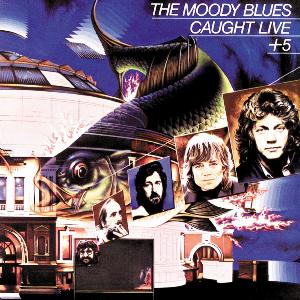
The Moody Blues issued one exactly like this in 1973, "Live +5", ostensibly as a contractual obligation and clearing house before inking a new deal, in advance of the "Octave" LP.


Graham Parker's last album for Vertigo, "The Parkerilla" in 1978 was the same - a contract filler and kiss off to America where he barely sold a record during his career to date. It was originally issued as a three sided live album with a studio version of "Hey Lord (Don't Ask Me Questions)" as the only track on side 4. Vertigo records must have considered that a waste of vinyl as they reissued the album on a single record (stretching the playing time of the single LP to 54 minutes), but not reprinting the sleeve (which still lists the tracks on four sides.)

In the CD era this really doesn't happen anymore...that I know of. With one exception.


You Am I's fifth album, and final one for RooArt "...Saturday Night 'Round Ten" was issued as a single CD with 67 minutes of solid live material, with a bonus CD of studio tracks called "Ignorance and Vodka". That would probably make it a nice "three sides live and one side not" album on vinyl...

The three sided live album seems pointless - a contract filler in an unusual fashion. But is it worth it? In most of these cases (Graham Parker and You Am I exempted) these albums are not really the finest hours of the bands in question. The two albums that work in this format also work perfectly well as a single album - the studio tracks not being necessary. As far as live albums are concerned, none of them are going to end up on a list of the greatest live albums of all time, but then, contract fillers are rarely works that have a great deal of thought applied to them anyway.

Wednesday, 26 February 2014

The Problem with Spotify


It's pretty fair to say that Spotify has revolutionised the way way my family and I listen to music as well discover new music these days.

And never before have I been able to access, listen to and experience such a wide range of music, both new and vintage, so quickly and easily before. It's as simple as reading about a new album or artist in a magazine or online and, within a few clicks, I'm listening to their latest album (Thom Yorke's music notwithstanding).

I've decided that one of the drawbacks of being so heavily involved with Spotify is that while I listen to a heap of music, I rarely go back for a second listen to anything. I am finding that I'm not connecting with the music on the deeper level that I normally would if I had actually bought the album.

This is becoming an issue especially around the end of the year and compiling a best of list. I don't hang around long enough to get into and appreciate an album or an artist anymore. Maybe, but not having invested the time and money into a product as I normally would, I don't have the same listening experience.

I really only noticed this behaviour when I a friend of mine sent me his list of the best albums of 2013 and I realised that, while I have listened to a shitload of music, I couldn't identify and remember half of it. I couldn't even remember the Triple J Hottest 100 winner of 2013, despite the fact that the song had been added to one of my playlists since the middle of the year from when I first played Vance Joy's EP. Go figure.

For this reason I am dedicating some of my listening time to one, maybe two, specific album(s) per week, usually during the commute to and from work: a kind of "album of the week" type scenario. So far this year this plan has worked well and it has seen me listening to (and really getting into and enjoying) the following albums:
  • Spiderbait - Spiderbait
  • Henry Rollins - Get Some Go Again.
  • Even - The Street Press Years
  • Custard - The Essential
  • Life Coach - Alpha waves
  • The Wonder Stuff - The Singles

Eventually I'll get around to reviewing all these albums on the blog, but the idea behind this thinking is to use Spotify to actually engage in music the same way I have for years. It has only come to my attention lately that I haven't actually done that. Who knew?

Have your listening habits changed as a result of using Spotify? Have you discovered some great new music only to find you've forgotten about it just as quickly?

Monday, 17 February 2014

INXS on TV: The Verdict

You may remember my recent post about the INXS telemovie "Never Tear Us Apart" where I speculated that it would be less about the music and more about the off-stage antics...

...it turns out I was correct.

Reading three reports on the topic this week, one each from The Sydney Morning Herald, News.com.au and The Guardian, one would think that each of the reviewers were watching a totally different program from another.

The Guardian opines that it "...takes us back the age of bare-chested rock excess, and not much more", while making the obvious point about how uncensored the show supposedly is based on the amount of groupie boob exposure it contains.

The Sydney Morning Herald claims that it was "sex drugs and rock 'n' roll with...a batch of bad wigs" and that it played out like "Home and Away [but] with better music",while News says that the show was "...true event television, powerfully and unflinchingly told". I'm sure that is correct if you like watching soapy dramas.

The sad thing about this production is that it doesn't do anything for the bands legacy. I can't help thinking that INXS will end up with a place in Australian music history like the Doors now possess in American music history: they'll pretty much be known by those with all but a passing interest as "Michael and those other blokes". They will be always regarded not as great tunesmiths, but as the pub band who made more money and scored more drugs and pussy than anybody else.

Ditto the Doors.

Their music will always be tied to its era, dated by [then] contemporary production values intended on making everything sound bigger than anything else, at the expense of restraint.

Ditto the Doors.

They will always be mentioned in the same breath as all the gratuitous debauchery and excess of the period - some of the worst elements of the time - because THAT is how the media and social commentators have seen it and called it. And what is this telemovie doing about it? Nothing - it is doing exactly the same thing: Celebrating the excess and not the reason they got to enjoy it: the music.

I can think of heaps more bands that were way more successful worldwide than INXS back in the day but they are not even regarded with anywhere near the kind of reverence they are. What about Milli Vanilli? They sold way more copies with their one album than any INXS album did. Why aren't they highly regarded anymore? Because the music was shit, and it remains so. INXS's albums may sound dated but the songs are killer. Without the music, there wouldn't be an INXS to make a telemovie about.

Having said that, the Sydney Morning Herald piece rightly says that the whole reason this program exists in the first place is down to the "enduring power of the late Michael Hutchence, the lead signer whose charisma and magnetic stage presence could blow a concert audience clean out of their seats, and whose death in 1997...remains an intriguing...part of the legend."  It's his tabloid-headline-grabbing antics the punters want to see - the music, as many viewers will see it, was a means to an end. This probably explains why it pulled in nearly 2 million domestic viewers on each respective Sunday night.

The death of Michael has been ruled suicide and NOT auto-erotic asphyxiation by the NSW State coroner - a fact that has been disputed by the late singer's family and friends. This issue wasn't tackled all that well in the film, largely because Michael died alone, the details surrounding are sketchy at best and any depiction of it would be purely speculative. It was handled tastefully, however, in my view, it did attempt to build to a climax and yet strangely failed to reach it.

So now they're proclaiming that this is the television hit of the year. It's a big call, considering we're only 6 weeks into the year. It was hugely successful in terms of ratings, substantially less so if it is measured on content. Did it match the hype? Hardly. But at least it got chins wagging, and the remaining members of INXS will get a boost to their retirement funds with back catalog sales going completely apeshit in the last few weeks.

I just hope we don't see a sequel that chronicles the aimless and pointless years in the aftermath of Michael's death, including the awkward choice of Terence Trent D'Arby as a vocalist and their credibility-destroying foray into reality television...the less said on that issue, the better.

Thursday, 12 December 2013

Whatever happened to Hip-Hop?

With the recent release of Eminem's "The Marshall Mathers LP Part 2", I began to ponder "whatever happened to Hip-Hop"?  Upon listening to the aforementioned album, it's clear that hip-hop as a style of music really hasn't evolved or grown much. Indeed, Eminem hasn't changed his music much either for that matter.

So what happened? Probably nothing that any real hip-hop fans would be concerned about. However, for a style of music so innovative, personally I think its a shame that it appears to not have developed past its adolescence.

Hip-Hop is probably the last recent, genuine innovation in popular music. What started out as an underground phenomenon in the ghettos of New York City, has since gone global. It was genuinely innovative due to the fact that it fused existing recordings (usually old funk, soul, disco, and in some cases Krautrock by the likes of Kraftwerk) played on a pair of turntables, upon which the DJ would create a looped musical backdrop for an MC to rhyme over.

The MC spat out fast, breathless, rhythmic lyrics with mind-boggling precision, filled with street-wise references and clever rhyme schemes. Sure Bob Dylan may have attempted it or even defined the stream-of-consciousness narrative of fast flowing verse in the 1960s (see "Subterranean Homesick Blues" for proof, and he may not have even been the first), but on the streets of New York it was turned into an art-form by Afrika Bambaata, Grandmaster Flash, The Sugarhill Gang and The Rocksteady Crew in the early days.

These artists were street-wise but were very pop-music focussed. A tougher and more aggressive, in some cases socially and politically conscious, style was pioneered by RUN DMC and Public Enemy, with rabble rousing messages of hope and fighting the good fight for better services and rights within society. The Beastie Boys introduced frat-boy fun into the mix. And then...

...from the West Coast of the US, from South Central LA, came Ice-T and NWA, with a gritty, portrait-of-daily-life style music, painting a bleak picture of life on the streets: running and dealing drugs, hustling guns, armed robberies, police brutality, gang turf warfare all peppered with gratuitous references to violent killing and sex, with liberal use of profanity. For a while in the late 80s and early 90s, this music seemed genuinely threatening and people in positions of authority were affronted by it. But for once, music was dangerous again, and therefore exciting.

The problem, as I see it, is not that I'm offended by rap music's gratuity, but rather that this blatant shock tactic has become the rule rather than the exception; the standard by which one should make Hip-Hop. From where I sit, Hip-Hop hasn't evolved from what Ice-T did with "Original Gangster" in 1991. Ice-T made a habit of being violent, profane and sexually explicit in his music before everyone else did and now everyone is still doing that, 20-odd years later. It's almost as if it is a style of music in a state of arrested development.

Maybe, of course, that is entirely the point. As a teenager myself in 1990, listening to NWA on headphones for the first time, it did feel quite subversive to be listening to music that your parents would be righteously pissed off at you listening to. I'm sure, now in 2013, teenagers still feel the same about smuggling home a Kanye West album and hearing the shocking revelations and sensational stories within. Maybe that's why it hasn't changed much in 20 years - because the audience gets younger as older fans move on, and a new generation of teenage boys looking for that record guaranteed to piss off the parents discovers the music.

Even now, NWA is still frighteningly stark and pointed, the subjects spoken about by Obie Trice and his D12 posse are exactly the same as the ones sung on NWA's "Straight Outta Compton" in 1988. But what's probably more interesting is how Hip-Hop has been blended with other styles of music: with Rock (Run DMC and Aerosmith, Public Enemy and Anthrax), and with Jazz (US3, Quincy Jones on his "Back On The Block" LP).

Hip-Hop in Australia and the UK has taken a while to take off, not least because early exponents of the style in these regions were slavish imitators of US artists. Notwithstanding The Streets (UK grime MC Mike Skinner whose work was just plain awful, I thought) artists like Britain's Tinie Tempah are making huge inroads with their own unique British flavoured style.

In Australia, the Hip-Hop scene has flourished underground without much mainstream coverage. For years Aussie MCs have suffered from the cultural cringe: with rap seen as an American style, local types rapping in a Aussie drawl was seen as anachronistic. Mind you, through a hell of a lot of hard work, we've seen the likes of The Hilltop Hoods, Bliss 'n' Eso, The Resin Dogs, Drapht and heaps of others become successful on the festival circuit.  It's been a long time coming, mind you. Locally we haven't taken to Australian hip-hop much before 2006 when Hilltop Hoods' "The Nosebleed Section" became a surprise smash, without falling into the same repetitive trap as (U.S.) West Coast hip-hop has.

What's your view on Hip-hop? Is it still fresh and exciting? Or tired, repetitive and staid? Let us know in the comments below.

Cheers

Monday, 21 October 2013

How to buy Indie label music


The independent record label is a curious beast. They can be both fun and troublesome in equal turns, both for fan and proprietor alike.

By fun, I mean that you can procure some of the most amazing music ever made that, in a lot of cases, has slipped under the radar. By troublesome, I mean you may have great trouble sourcing some of the most amazing music ever made that has slipped under the radar.

Most record labels that we now call "major" labels started out as simple businesses that grew to a monumental size. Some labels start up and are swallowed up by huge multinational companies. Others stay independent but secure deals with majors to press and distribute their product. But the one thing that often distinguishes the independent label from the major label is the fact that the people pressing the records believe in the talent they are supporting. It's not that major labels don't do that, but often the major label is focused more on sales and less about the music, while the ethos of the indie label is usually the other way around.

Indie label releases are usually fewer in number than that of a major label, and often pressed in smaller quantities. Distribution can be somewhat limited as well, meaning that upon original release a record may not have even made it to your local record store. Legendary U.S. indie label SST, home to Black Flag, Husker Du, Minutemen and the early Sonic Youth albums, had major distribution problems. So while critics in major magazines and trade publications were raving about albums like Husker Du's "Zen Arcade", it barely sold any copies because they had major problems getting the records into shops around America. Ditto legendary Memphis band Big Star - their first two records are mandatory listening for any music fan, but they sold poorly due to distribution problems.

In Australia, it was no different. We have had many brilliant labels that sprung up in the major cities; many of whom were also shop-fronts, stocking the records for retail sale and also stocking records by their local peers/competitors.

The roll call of awesome labels in the 1980s include:


Phantom
Red Eye
Citadel
Waterfront
Half a Cow
M-Squared
Aberrant
Hot
Missing Link
Au-go-go
Mushroom/White Label
Rubber
Cleopatra
Able
+1
Savage

among many others. The great thing about these labels is that they often supplied the world with amazingly great music that the major labels thought was uncommercial or that no-one in their right mind would touch. That's why The Saints released their first single independently, and why Radio Birdman formed their own label.

And the Indie label phenomenon hasn't stopped there. There's still plenty of great ones out there: Matador, Elephant Stone, Dischord, Inertia, and hundreds of others. The trick to buying music from an indie label is to try a sampler disc first, which is designed to introduce the listener to the bands and releases on the label. Failing that, take a plunge, buy a single and take a listen. Chances are if you like that one release, you'll love other releases on the same label.

I happened to chance upon a 10-inch EP on a Scandinavian label called Bad Afro about 10 years ago. The band was The Royal Beat Conspiracy. It took a few listens to get into it, but when I did, I loved it. I investigated the label catalog a bit deeper and discovered a heap of great bands on the label, many of whom released some killer 7-inch singles: bands like The Burnouts, The Maggots, Sweatmaster, The Rockets, The Dialtones. It's not that they necessarily sound identical to Royal Beat Conspiracy, but they are like-minded, inasmuch as they play hard-driving guitar-based garage rock.

It often pays to dig a little deeper and to find something unusual. You may find the next big thing, as tiny indie label SubPop found when they signed bands like Soundgarden, Band of Horses, and some bunch calling themselves Nirvana...

Have you ever uncovered a gem of a record on an indie label? What was it and what label was it on? Let us know in the comments below.

Enjoy!

Tuesday, 15 October 2013

The Controversy of Miley

Image source: Cagel Cartoons

The Guardian has been actively discussing this Miley Cyrus thing for a while now and...

Yeah ok, I'll weigh into the debate. Previously I hadn't wanted to, however...

All this controversy over Miley Cyrus twerking, or twonking or whatever the hell it's called, is all a bunch of hot air. And there's too bloody much of it (cue the irony).

It's almost as if society, collectively, is shocked by all this gyrating and sexual innuendo. But here's the thing: it's not like it's a new phenomenon. From the outset, rock and roll has thrived on the relationship (either real or imagined) between music and sex. It's in the music's DNA.

Don't believe me? You can't tell me "Whole Lotta Shakin' Goin' On" is a song about the act of making and serving drinks in a milk bar.

In her younger years, Miley was a star custom made for television. Now, at the age of 20, she's far from burnt out, but is desperate to shake off her past as a squeaky clean, Disney-branded pop-idol. I totally understand why should would want to do that. If you're a creative artist you don't want any future work defined by what you did previously or, in her case, the character she was previously.


Image source: Cagel Cartoons

It's not as though she was the first young star to wantonly break free from the powers that defined her career until now. The Monkees (if you can remember back that far), The Sweet, Tiffany, Christina Aguilera and many others have branched out and had many arguments with the powers that be and/or done outrageous things in order to express themselves as they see fit. It's pretty much the nature of the creative beast.

Eventually, most musicians want to try something different because that's where the muse takes them. Sometimes it can be great, and quite successful (compare the 1960s Status Quo with the post-1969 Quo), sometimes it can be atrocious (Metallica's "Load" anyone?)

Her behaviour is somewhat unbecoming, and probably not something everybody wants to see, granted. Is it out of character for someone her age and in her position? No way. She's not the first woman to get all nekkid as a way to get attention to sell product and to draw a line in the sand between their past and the present: Kylie Minogue, Nikki Webster, Tiffany, Christina Aguilera, Britney Spears and heaps more have all done it before her, and Miley won't be the last, either. Does that make it ok? Not really. But, would her latest record be sitting on top of the charts without this kind of (no pun intended) exposure? Personally, I doubt it.

Any publicity is good publicity. This twerking thing took place a few weeks ago. And look: we're still talking about it. The papers are still debating it. So, who wins out of this? Easy: Miley, and those who make money off her image and her music are the winners. Keep the name in the eye of the public because, as we all know, out of sight means out of mind.

It's sad, in my view, that it has come to this. It's always been said that "Sex sells", but it's depressing that the image is what sells the record, and not the music. The music should be doing the talking, not the associated controversy and all the other crap surrounding it. Have you noticed how the media are all in a fit about what Miley does in the video for her latest single, and not actually what the music sounds like?

And it seems to be only women who need to do that.

For some reason muso blokes don't need to get their gear off when they want to be controversial - not that I want them to any more than I want Miley to. But, men just seem to scream and swear a lot louder than before (see Eminem and Kanye West for example).

A lot of people seem to be worried about the impression our children are making of this. Well, where are their parents? The parents are the ones who should be guiding their kids, talking about these issues and explaining the right ways to behave and how to approach their self worth and image. When they see this kind of stuff, they cannot "un-see" it, so parental guidance is a must in this scenario.

Miley can do whatever the hell she wants, and probably will continue to. She doesn't give a crap what I think. Either way, none of this is going to make me want to buy her records...

Tuesday, 3 September 2013

Microsoft Songsmith...still lives

...and seemingly refuses to die.

The Microsoft Research Labs seemingly do create some fantastic and fascinatingly useful software. They create all kinds of useful stuff for software developers and those who need to do more advanced things on a Windows machine.

Microsoft Songsmith is not one of those great pieces of software.

Well OK, hang on a minute. It is a great idea, in the sense that Communism or the Hindenburg Blimp were great ideas...on paper at least. In practice however, it turns out to be a very different story...

The idea is great - you sing a line or two, select the mood and style of music for your song, and Songsmith will build the music bed for you. It builds the chords and seemingly structures the song for you, based on the limited input you give it.

The idea is great but falls flat when you consider that most people cannot sing in tune. No matter how great a piece of software is, if you can't hold a tune or even pitch to a note, what you'll end up with will sound like someone pushing a grand piano down a flight of stairs.

It's designed for education, to teach how music is put together. Again, a noble premise. But when the music is as vanilla as this? You can edit the chords, that's cool. But I fail to see how this will teach music to anybody with no clue about music to begin with, especially if you don't know what a chord is.

The idea has received a great deal of lampooning on the internet, and almost deservedly so. The results speak for themselves.

Here's what happens when you feed Lemmy from Motorhead's vocals into Songsmith:


Or the Ramones:


Metallica:


...or random pissed bogans with nothing better to do on a Friday night:


Get the free copy, have some fun and share with us the nutty tunes you invent!

ENJOY!

Monday, 2 September 2013

Archive: Use a little English to doctor the spin...

This is an archive piece written and posted on LiveJournal in 2006, albeit slightly edited and re-published in 2013:

Use a little English to doctor the spin...


I was recently fascinated by a comedy series on the Public Relations industry recently called "Absolute Power". Basically, the stars of the show were hired by celebrities to embellish/fabricate facts and rebut/quash rumours and/or start new ones. In other words, they're like a bull with no horns and no genitalia - they just sit there and bulls***.

Recently I have seen a couple of pieces of PR produced verbal diarrhea that have just left me wondering "Who are these people and why do they invent such crap?"

On the inside of the sleeve to "God Save The Smithereens" by The Smithereens is written: "This is the band Buddy Holly died for...". What the hell does that mean? Buddy Holly died needlessly in an accidental plane crash. Thus, in my opinion, making this statement redundant and ridiculous. And the fact that this appeared on their 9th or 10th album makes me wonder why they have even bothered - they don't need to sell the virtues of the band to me. I've been listening to their records since I was 16.

And on a bottle of cheap red wine, have a go at this piece of lexicographical wonderment:

"Featuring the subtle flavours of almond, rose petal and blackberry, this richly textured wine also leaves a smooth, buttery finish."

Isn't it great how you can get all that out of a bunch of crushed grapes stuck in a wooden barrel for a few short weeks?

According to this PR bloke (or lady, we can't be sexist now, can we?), this Merlot, or whatever it was, does everything except mow the lawn. It must be that, in order to be a successful PR person, you have to be able to sell ice to the Eskimos. Lie through your teeth with a straight face and make it convincing.

If that's the case I'd probably starve, because I can't lie straight in bed. I'd be totally useless at it. I'll just stick to teaching, I guess. You can't fool everybody all the time, but it's easy enough to fool a bunch of 8th graders for 50 minutes at a time into thinking that Alegrba is useful....