Pages

Showing posts with label Musicology. Show all posts

Wednesday, 21 May 2014

Best Count-ins in Rock

What are the best count-in intros in rock?

Well it's probably worth explaining exactly what a count-in actually is first. All bands, especially in rehearsals, start off a song by counting to 4. The purpose is to focus the band and to given then a cue when to start playing together. It is also used to give an indication of tempo - how fast to start playing when everybody starts. It is usually the drummer who counts the band in by counting to 4 (for want of a better drummer joke, if they can't do that, they tap their sticks together four times). Having said that, in the Ramones it is the bass player Dee Dee who does the counting in, and oftentimes his count-ins are not of the same tempo of the actual song!!

The count-in is fast becoming an anomaly on records these days as most bands don't actually play live in the studio anymore. Each musician lays down each part of the song one at a time, layer by layer. In this environment, there is no need for a count-in to unify the band. In years gone by, live recording in the studio was common, if only to get the backing tracks recorded, with the other parts layered over the top. The count in would have be used, but in most cases edited out before reaching the mastering stage.


One of the earliest of these count-ins opened the first Beatles album. It's a wonderfully exuberant count-in that, I believe, was left in accidentally. In 1963 it was considered unprofessional to have that sort of thing on a record. However, it added a sense of realism to the album - the human touch. It also indicates that this would be a fun album, and it kicks it off beautifully.

Every now and then you hear then on various tracks, but it's not altogether very common. (For the record we are not counting songs that have sequential numbers as lyrics or count-ins in the middle of songs). Here are some of the best:

"Good Lovin'" - The Young Rascals


On the subject of exuberant count-ins, they don't get much more joyful than this. And in the stereo version, the counting jumps around the room (or the headphone space, depending on how you are listening) courtesy of the placement of the vocals in the stereo spread.

"Taxman" - The Beatles


The opening of the the debut Beatles album may have been joyous, three years later, after touring the world and achieving things most of us only ever dream of, it sounds deflated. Opening their 1966 album "Revolver" with a slamming indictment of the British taxation model, the count-in sounds sinister, smarmy and seedy.

"Incendiary Device" - Johnny Moped


In 1978, with tensions running high between the punk kids and their parents, the count-in on this track sums up the tension beautifully: "1-2-Cut your hair!"

"Used To Love Her" - Guns 'n Roses


This count-in is rather odd. Guitarist Izzy Stradlin' does away with formal counting and just uses rhythmic language (or rather, mild profanity, as is their wont) : "ok...bitchin' fussin' pissin'..."

"Hot Pants" - James Brown


James Brown only gets as far as three in real numbers, but he indicates that things are about to get raunchy and sweaty. "One, Two, ah One Two Three Uh!"

"Living In The Real World" - Blondie


This count-in is indicative of the neurotic paranoia of the lyric, with urgent grunts and a full throated scream of "1!! 2!! 1-2-3-4!!!" from Debbie Harry to kick off the proceedings.

Granted, this is not a complete list. I'm sure there are more. Which ones have we missed? Let us know in the comments below.

Cheers

Tuesday, 13 May 2014

R.E.M. - "What's The Frequency, Kenneth?"

Driving to work this morning, the last song that was played on the stereo was a fairly well known song by REM - "What's The Frequency, Kenneth", from their rather unusual album "Monster" in 1994.

The song is fairly familiar to most. However, what may not be so well known is the rather fascinating inspiration for the song.

In 1986, a journalist and newsreader by the name of Dan Rather, was walking along a New York City street, when he was accosted by two men. One asked the question "Kenneth what is the frequency?" Assuming it was a case of mistaken identity, Rather kept on going and ignored it. However he was pushed to the ground and beaten up; the assailants pausing only to re-ask the question "What's the frequency, Kenneth?" The fight was eventually broken up by two doormen from a nearby apartment block.

The main attacker was arrested in 1997 after shooting a stage hand at NBC television studios. He claimed that television stations were taking control of his brain and monitoring him by eaming signals directly into his head. He felt he could stop them by finding the correct frequency to block them out. The attacker served 10 years of his 25 year sentence...

The song itself, by R.E.M., also tackles looking at youth culture from an older person's perspective, and not understanding it. It also attacks the media's fascination with sensationalizing non-issue stories and glorifying celebrities.

"I can't understand!"

With all that in mind, take a listen again to R.E.M. - "What's The Frequency, Kenneth?"


Friday, 4 April 2014

The Musical History of Adelaide Part 3

Here is the final in our series of amazing talent from Adelaide, South Australia.

Kaleidoscope
Kaleidoscope are NOT the same band as the US psychedelic band of the 1960s. These guys play a kind of noisy, catchy post-grunge with a small degree of feminist leanings in the lyrics. Bassist Kylie Cowling and her partner Craig Lewis have been instrumental in nurturing many bands in the Adelaide area with showcase events like "Show Us Your Riffs" and producing music for other artists in their own studio.


The Superjesus
The Superjesus formed in 1994. They took their name in homage to the many bands who have "Super" and "Jesus" in their name (i.e. Supertramp, Superchunk, Supergrass, The Jesus and Mary Chain, Jesus Lizard, Jesus Jones et al). They had a sound that was equal parts Smashing Pumpkins-esque gutteral rumble and sweet songbird pop, thanks to the layers of overdriven guitars throughout their music, with Sarah McLeod's sweet vocals floating over the top. Their lineup was destabilised after founding member Chris Tennant left in 1999, but then Tim Henwood joined and the band went from strength to strength. But then he left and the band laboured on for a final album as a three piece before calling it a day in 2004.


Testeagles
The Testeagles were a band that fused hip-hop, rap, techno and metal into a furious blend. Known for their fiery live performances, they have been plagued with issues with record labels, resulting in most of the music not actually reaching the general public. Their only LP, "Non Comprehendus", issued in 2000, summed up their sound in the most intense, speaker-damaging fashion, riding the wave of Nu-Metal that was current at the time (and they did it better than most of the better known exponents of that style), but were dropped by their label not long after it was issued. They laboured for the next few years, picking up many shows on the Festival circuit and called it a day in 2008.


Groove Terminator
Groove Terminator is a hip-hop DJ and producer who achieved notoriety in the late 1990s-early 2000s with infectious party jams like "Here Comes Another One". He has also mixed a few Ministry of Sound compilations and is still a highly sought after performer on the club circuit.


The Mark Of Cain
The Mark Of Cain formed in 1984 by two brothers, both ex-Army members, John and Kim Scott. It took the band four years to get their first releases out, on Sydney indie label Phantom, and their popularity was at its peak between 1995 and 2002. Their sound is extremely heavy and aggressive, inspired by combat, with songs like "Battlesick" and "Ill At Ease". They are a ferocious live band, and can count among their fans such rock music heavyweights as Black Flag singer Henry Rollins.


The Audreys
The Audreys are a rootsy folk band formed in 2004. Usually consisting of two core members, lead singer Taasha Coates and guitarist Tristan Goodall, the band is often augmented with a number of session musicians and live players for tours. Their albums are highly rated by critics and they have a solid live following.


The Mad Turks from Istanbul
The Mad Turks from Istanbul started as a power-pop band featuring a young Charles Jenkins (now of Charles Jenkins and the Zhivagos) on vocals. They were signed to Greasy Pop records in 1987. After the release of their first record, Cafe Istanbul in 1988, they relocated to Melbourne and renamed themselves The Mad Turks. After the failure of their second album, "Toast" in 1990, the band split up and regrouped in 1992 under the name Icecream Hands, and went on to be far more successful, with the ARIA nominated album "Sweeter Than The Radio" in 1999.


Hilltop Hoods
Hilltop Hoods are a hip-hop collective from the Adelaide suburb of Eden Hills. They formed in 1991 and comprise of MC Suffa, MC Pressure and DJ Debris. They are now one of the most well known, if not THE most well known, Australian rappers, but they haven't had it easy. It took years for Australians to warm to the sound of Australians rapping in their own accent, with most people only accepting rap music performed by Americans (the nation who actually invented the form). Despite this, in 2006 their album "A Hard Road" was one of the best selling locally produced albums that year. Their last three album releases have shot to the top of the local album charts and they have a voracious live following.


This marks the end of our musical trip to Adelaide. We hope you have enjoyed it.

Next stop, we head west to Perth. See you then.

Tuesday, 1 April 2014

The Musical History of Adelaide Part 2

Welcome to Part Two of our stay in Adelaide during our Rock Around Australia trip.

Paul Kelly
It is beyond difficult to sum up the career and music of Paul Kelly in a short paragraph. However, Adelaide's bard du jour has been making uniquely Australian music for 35 years and he shows no signs of slowing down. He sings in a unique local drawl and his lyrics are fuse Dylan's wit and wordiness with, at times Tom Wait's world-weariness. As Molly Meldrum used to say, "Do yourself a favour" and check out some of his back catalog. Start here:


Cold Chisel
Cold Chisel started life under the name of Orange, and started gigging in Adelaide in 1973 before finally settling (if you could call it that) in Sydney in 1977. Fronted by Scottish-born singer Jimmy Barnes, their sound was shaped by Soul music and the blues, but it developed a tougher, more ragged edge from being in competition nightly on stage with bands like AC/DC and The Angels. The band went on to become one of the biggest selling bands in Australia, selling over 6 million records to a population of 23 million people.


Redgum
Redgum was started by four students of Adelaide's Flinders University in 1975. They have a strong satirical bent to their songs, which generally have a strict folk flavour. The subject matter of their songs often tackles corrupt politicians, unemployment, foreign ownership of Australian assets, consumerism and more. Their biggest hit was the story of two Vietnam Vets (a subject kept very much under the rug at the time) called "I Was Only 19" in 1983. Their second biggest hit is linked below, the playful skewering of youth tourism to Indonesia (as it seemed everybody was doing in 1984), "I've Been To Bali Too". They split in 1986.


Exploding White Mice
Exploding White Mice take their cues from the hard driving punk sound of The Saints and Radio Birdman. They started their career on influential Adelaide indie label Greasy Pop belting out fast three chord originals and covers of 60s instrumental and garage pop hits. They may not be household names in Australia but they made a healthy income from touring in Europe. They called it a day in the mid-1990s.


Swoop
Swoop made a name for themselves by taking the groovy retro funk of Sly and the Family Stone and Parliament/Funkadelic into the grunge era. They worked the groove hard and added some rap for good effect. The band issued the independent debut LP "Thriller" in 1993 before signing with a major label in 1994 to release their heavily funkified sophmore LP "The Woxo Principle". By this time, the rap influence was watered down somewhat, and there were some more sunshine pop and psychedelic influences contained within. The band issued another single in 1997 "Teenage Funkazoid" but since then very little has been heard of them...

Tuesday, 18 March 2014

What the hell is Crabcore?


Music journalists seriously have a case to answer for. Especially ones who write for rags like the NME and Melody Maker. These people who, for some reason, just invent names for styles, scenes or genres of music that they feel need a name.

No longer content to call music "Rock", or "Pop", or "Metal", now there's Death Metal, Hardcore, Extreme Hardcore, Metalcore, Mathrock, Deathcore, Emocore, Screamocore, Grindcore, Nintendocore (yep - apparently that's a thing), Brit-pop, New Wave of New Wave and who knows what else.

The Guardian's music section has an amusing story on music genres that didn't catch on, largely because they were dreamed up by a bunch of half-pissed music journos in a Camden pub.

The funniest one I have heard in a long time was not featured in this article, but is just as random. It is...

...wait for it...

CRABCORE.

Yep - you read that right. Crab. Core. The name is just as stupid as the term "Baggy" was for describing the sound of the Stone Roses. (Baggy came about because in the video for one of the Roses' songs, Ian Brown wore a loose-fitting, or "baggy", shirt. And so a sub-genre was born...)

Crabcore. For those who don't know (which pretty much describes, well, everybody) it is a style of heavy music, not unlike Emo (another contrived and ridiculous genre name) but it is so named because of the way the band members stand and hold their instruments.

(click to enlarge)

That's right - they look like crabs.

Tim Berners-Lee might think the internet is the place to solve everybody's information needs, but when you let the weirdos loose on it, you get crap like this.

The exponent of this earth-shattering genre we will witness plying their trade below is a US band called Attack! Attack!  Note the presence of a rather attractive blonde girl throughout the clip. She seems to have her hands over her ears for most of it. Coincidence? You be the judge.

Ladies and gentlemen, I give you Crabs Crabcore!


Friday, 12 April 2013

Do Anniversaries intend to make us feel old?


Source: www.pefinfo.com

This morning I was reading about the 30th Anniversary of the release of REM's first LP "Murmur" on Consequence of sound.net. Linked to that at the bottom was a list of the 29 albums that are 20 years old this year on Buzzfeed. The one thing about the latter post that grabbed my curiosity was that it said in the introduction "Sorry if this makes you feel totally ancient".

Is that actually the point of these things? When an artist re-releases an album to coincide with the anniversary of its original release, is it designed to elicit nostalgia? Or does it serve to remind us that we are all advancing in years and we haven't been paying attention to that fact?

I think it is interesting to reflect on when albums were released, purely based on the fact that they either reflect the times it was created in or, in some cases, how they were so out of their time compared to other music available at the time. That's why an album like "Astral Weeks" by Van Morrison is an interesting listen, because it sounds nothing anything that was released before it, or like anything else at the time of its release, or like anything released since.

The age of the music never bothers me either. If a record was made 35 years ago, but I hear for the first time today, then it's "new" music to me. If it's good music, I don't care how old it is.

Probably a more pertinent question, and the answer is certainly much more interesting on a social level, is "Where were you when you first heard [insert album name here]?" In many cases, if you weren't even born when an album was released, but the music made some intense impact on you, does it really matter when it was released?

It's something worth thinking about...

Monday, 25 March 2013

Robbie Williams, Suede and Britpop

Robbie Williams has made a name in the music press again recently, allegedly slagging off most of the Britpop bands that emerged around the same time his solo career took off.

He was responding to comments made by Suede singer Brett Anderson, a vocalist with a similar loose tongue when speaking to the press. Robbie listed by name most of the British bands who created vital and amazing music during the 1990s. He seems to forget that they were (and still are) his peers who, with the help of the music press, created a scene that allowed him a place to exist in, and afforded him some credibility that otherwise would not have been afforded to him.

He writes, and I quote:

"ANY QUARTER-DECENT 3 CHORD KNOBHEADS COULD AND DID GET A DEAL IN THE 90'S …"


...and as if your music is soooo much more listenable than that of, say, Kula Shaker and Sleeper, Mr Williams?

Not casting aspersions on the man or his work, but Britpop was a scene that was sorely needed in the 1990s, by all accounts. According to BBC6Music's documentary "Don't Look Back In Anger - The Story of Britpop", in the wake of grunge a wave of pensive, moody adolescent melancholy from America descended over the music world and most Britons just didn't relate to that (ironic given the depressing weather over there). But, at the same time, there seemed to be no vibrant new British music to combat this. The Stone Roses has disappeared, The Happy Mondays were becoming a self-parody, the Rave scene was drying up by the end of 1992 and there seemed to be little more on the horizon.

Enter Robbie Williams and his vapid boy-band Take That. There was a dearth of these awful bands at the time, and they had no credibility in music circles. I Think their lack of cred was due to the manufactured, "designed for mass consumption and to sell millions of copies" appearance they had. Some people like that sort of thing, and that's OK. I, for one, find that music that is calculated for mass success often leaves me feeling cold and empty (more on that in a later post).

Once Robbie was sacked from Take That, he created his own solo career out of some classy and well polished grown-up pop music. It seemed to slot in with the other Britpop bands, and it certainly was marketed as such with other bands of that nature in places outside of Britain. The UK music press actually reviewed his albums favourably and they sold in massive quantities. He was held in similar esteem for a time as his more lauded-indie peers. His performances on stage were stellar, so I'm told. Although, according to CDNow.com he "he invests each track with an energy many of them don't deserve." And quite often, the drug use and his sometimes-delusional egotism seep through in his work.

He seems to forget that the Britpop scene reignited a passion for British music, both at home and around the world. Stacks of amazing records were made; some were rightly celebrated, some were cruelly ignored. Robbie's albums received plenty of respect when they may not have always deserved to. His comments on his blog sound like, to me, as if he is placing himself above others who had worked hard not only to get where they were, but to make British music respectable again. Most of the bands he named did so without an eye on the money, but in the name of creating great music - the money and fame was a bonus. Those bands well and truly achieved their aim with the purest of intentions. What was your motivation, Mr Williams, the money or the music?

In my opinion, I think it was the former. Whatever his reasoning, he needs to remember that Britpop really did him and his solo career a favour. Publicly dissing it in the fashion that he has, he has demonstrated that he really is biting the hand that feeds him.

Further reading:

Brett Anderson from Suede and his original comments that Robbie reacted to

Britpop Band Menswear react to Robbie's criticism

Wednesday, 13 March 2013

Reforms of the Australian Media

This week in Parliament, Senator Stephen Conroy is debating reforms to the Australian Media sector. There has been significant debate around the internet and in the media on a number of key platforms in the Senator's legislation, in particular ownership of media outlets, concentration and reach of media outlets, and local content quotas. Now he seems hell bent on declaring ultimatums to Parliament: accept these reforms verbatim or they'll be dumped.

All of these issues have been something I have been passionate about for some time. I have been a passionate advocate of the media and of media diversity, but I have seen TV and Radio in Australia become completely homogenised and cheapened by tabloid fodder and brainless celebrity-based reality stunts. Local content on TV of any quality has been diminishing in both quality and in volume. Commercial radio objects to being forced to play Australian Music. They also believe their content is king, but the vacuous nature of their so-called "content" is a poor second or third priority to advertising revenue and ratings.

I don't begrudge the media outlets their profits. They need to be making money otherwise they will not survive. But when you see major profits in the hundreds of millions, and sometimes billions, of dollars being reported, it's hard to feel sorry for them. Are they reinvesting that money into local talent or just buying cheap imported product in order to keep the money rolling in? I'd suggest the latter.

It's the job of a government department to ensure that media outlets don't just trample over the competition and that they keep standards of broadcasting and content control intact. The Australian Communications and Media Authority (ACMA) has been charged with the job of regulating the industry but it is more like a toothless tiger when it comes to enforcing the rules. If the Senator's reforms give ACMA more power, that will be a bonus.

Media ownership has been the subject of much here-say and conjecture for a long time. The media outlets claim laws preventing them from concentrating ownership as akin to "censorship". I call "bullshit" on that premise. When you have companies like News Limited who have an obvious right-wing-conservative bias, owning more than one media outlet in a market, you run the risk of having a limiting of opinion and bias in reporting. You need to have a diversity of voices in the media, otherwise people run the risk of assuming what they hear is correct and true, when in fact it may be the opposite.

The relaxing of Australian content quotas in the media is particularly worrying. Australian content provides many people with their livelihood, not to mention the fact that there are so many Australian musicians out there that can't get their music played on commercial radio...or on any radio station for that matter.

Commercial radio has been complaining for years that local content quotas are unfair. Indeed, it was Commercial Radio Australia (CRA) CEO Joan Warner who claims that "Australian's don't make 25% of all the music being released, so why would you want to hear 1 in 4 Australian songs on the radio?" Why? Because once upon a time, radio played music on air. And, as we have a vibrant local music scene in this country, why wouldn't you play something locally produced? To say that Australians don't make that much music, then how do you explain the 31,000+ artists who have voluntarily submitted their music on the Triple J Unearthed website? For starters, they're just the bands who think they're Triple J worthy. I'm sure there are heaps who may not have bothered because they play styles of music that are more mainstream. For Joan to say "we can't find 1 in 4 Australian songs" is both ignorant and stupid, not to mention ill-informed. Joan's comments are the exact reason why the quotas are in place to begin with: because commercial radio won't play locally produced music. End of story.

I read recently that certain people in the radio industry actually believe that it is not their job to play Australian music, or to play music in general. They begrudge it because they think that Australian record labels and bands have gotten free publicity for too long and that they now should be paying to have their music played. A comment posted on this Radiotoday.com.au story ("Burned you black" by Dan Bradley) says this:

"Anyone in a record compnay ever think they might do what everyone else does and actually buy some radio advertising to sell thier product." (sic)

This maybe a blatant troll. Let's assume it's not for a minute. Without music on radio, what you have? Gratuitous amounts of ranting and raving old farts being abusive to people in between celebrity interviews and constant advertising and product promotions. Even without that, what are you left with? Yep, that's right: advertising. Who in their right mind is going to listen to a station full of ads?

Then Dan Bradley has the gall to claim that "Radio has the responsibility to support Australian music when it suits the format and where the quality is good enough..." Are you serious? There's more good Australian music out there than there is imported stuff. Major commercial stations just can't be bothered to find it and play it. There is a hell of a lot of crap that is imported and flogged on Commercial radio where an Australian song would be 100 times better than it. Like, hello 2Day-FM! Nicki Minaj and Chris Brown is NOT good music! There's a thousand Aussie musicians who can outclass their crap, but instead the vacuous sensationalist stuff gets flogged to death instead of anything of substance.

Sure there's a disproportionate amount of overseas releases compared to local ones, but how about getting radio programmers to look at the local ones first? Would that kill them? Surely, unless local product falls straight into their lap, they won't go and look for it. And it's not like the radio DJs have a hand in playing and breaking new records anymore. They're just the people who get to talk after the song has finished and push a button here and there. No, all music has to be researched by focus groups and the like, so that it all sounds the same.

The amount of product placement on commercial radio is crazy too. Even the Triple M sports broadcasts are unlistenable due to the amount of advertising played mid-stream. Just listen to the football on the weekend to hear the odds from Tom Waterhouse, the Brand W pitch report, the Brand X sideline report, the Brand Y scoreboard, the Brand Z stats, all within seconds of each other. They're all advertisements and they roll off the commentators tongues that fast they hope that the listener both hears it and doesn't get bored of it too. It's completely unnecessary and ridiculous.

The alternatives, thankfully are vibrant. Community radio is thriving with great stations around the country that anyone can listen to via Tunein.comFBI and 2SER in Sydney, 3PBS-FM and 3RRR in Melbourne, 4ZZZ in Brisbane, 6RTR-FM in Perth are all amazing radio stations that are all flying the flag for an alternative voice and great new music that is off the radar. However, with the digital switchover imminent, Community stations just don't have the financial resources to invest in new equipment and new transmission gear. Their future is undetermined at this time and I implore the government, whether the current Labor government or whoever is elected in September 2013 to ensure that all community stations in the country get to switch over to digital with the financial assistance they require.

I just hope that there can be a regulatory body that can deal with offensive idiots like Alan Jones, Vile Kyle and Ray Hadley when they cross the line. I just hope that diversity of voices can continue. I hope that future governments keep their hands off the ABC, steer clear of meddling with its editorial charter, and never ever dream of privatising it. I hope that digital multi-channels on both radio and TV formats cease to be a dumping ground of second-rate material and re-runs shown ad nauseum.

And I hope Australian content is finally given an arena to shine in the mainstream through Australian media outlets.

Further reading:

The Cheaper Than Rubies story on local music quotas.

CRA fighting local music quotas on FasterLouder.com

Let the arguments begin.

Tuesday, 5 March 2013

The Double Album


Are double, or multiple disc, albums a necessary artistic endeavour? Or an exercise in self indulgence?

We're not talking about compilation albums or live albums here. We're talking albums of all new material from working musicians.

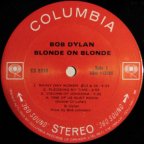
Some of popular music's most highly regarded albums were double albums in their original configurations: Bob Dylan's "Blonde on Blonde", The Clash's "London Calling", Frank Zappa's "Freak Out", Jimi Hendrix's "Electric Ladyland", The Beatles' "White Album" et al. But did they all really need to be doubles? Was every song that great that it needed to be released then and there?

Sure, some albums could really use some judicious editing. I've always felt that Dylan's "Blonde on Blonde" had at least three songs that should have been cut in half. Or if not, side 4 was too short at only one song, 11 minutes long. They could have added some recent non-LP singles to fill up the rest...

Some of these albums achieve greatness through their epic sprawl. The Beatles' 1968 self titled album (otherwise known as "The White Album") probably didn't need to be a double. George Martin begged them to drop some songs from the album. The band were at each other's throats in disagreement during recording. and about the only thing they agreed on was not to edit the album.

Jimi Hendrix's 1968 epic "Electric Ladyland" was the result was an ever creative, ever restless soul who was overflowing with new music. Cream's "Wheels of Fire" LP was also released the same year. It was half studio album, half live album. This would have been great had the live tracks not been so long and tedious.

George Harrison's first post-Beatles solo album was a triple LP entitled "All Things Must Pass" and it was a clearing house full of great songs that he didn't get to record in his day job. There were four sides of great songs but then he goes and spoils it with two further sides of pointless instrumental blues jams. This is one example where a triple album would make a great double.

The Clash were the first punk band to try their hand at the double album with "London Calling". Over the course of 19 songs, not all of them are great, but it's better than their next effort, the triple album "Sandinista!". Only around half the album is worth keeping. It makes up a decent extended length single or even double LP if one was to edit it. Indeed, it was released as a double LP in some locations, but I feel that was because of the manufacturing costs of pressing 3 LPs, and the fact that CBS would have had to have cut their profit on the record in order to release it at a price that people could actually afford.

This was also a problem with Chicago, a larger than life jazz rock band who liked long jams and complex extended suites on their LPs (before they sold out and became a dodgy AM radio pop band). Their first three albums were both doubles, and the band agreed to a royalty cut in order to avoid editing them down to single LPs.

Due to the limitations of the original LP format, multiple discs were necessary as the most you could get on an LP was around 45 minutes. If you wanted more, you could squeeze it out to around 53 minutes, or you could make a double LP. This practice was quite common in Classical and Jazz circles, but then fans of this music were often older and more affluent people who could afford the extra money for the extra packaging. However, it was less common in rock circles as record labels though that Rock was only purchased in small quantities on LP and large volumes on singles.

In the age of the CD, it made it easier to make longer albums without having to include a second CD. The original length for a CD was 74 minutes, although this has been revised and now it is 79:57. This meant that many older double albums could now comfortably fit on one CD (although some were still placed on two CDs for the sake of continuity if they are too long, or at least for the purpose of raking in extra cash). This also meant that many bands took to the longer running time by inflating their albums, in some cases unnecessarily.

The Red Hot Chili Peppers among the first to start the trend in 1991 with "Blood Sugar Sex Magik", a 73-minute album on 1 CD and 2 LPs. Each subsequent LP has been a single CD of no less than 55 minutes, but a double LP in each case. Their 2006 LP "Stadium Arcadium" was a 2CD/4LP set, clocking in at 28 tracks. But it could have easily been an excellent 12 or 13 song single LP with some editing...

It's interesting that certain record labels have made double vinyl LPs out of albums that could have been singles: The first two Oasis LPs were pressed on double vinyl, despite the fact that the longest of them is only 52 minutes. Probably in the interests of preserving audio fidelity, they were pressed up in this fashion, and there was a bonus track on each thrown in for good measure.

The curious phenomenon within this is when a band releases two albums either simultaneously, or in quick succession, that were never intended to be a double/triple album, but are conceptually and graphically linked to each other. Metallica intended for "Load" and "Reload" to be a double album, but the two discs were released 12 months apart. Guns 'n' Roses' "Use Your Illusions I & II" were never intended to be a double album, but are so intertwined with their sound, style and artwork that it is impossible to evaluate (or even listen to) one without the other. Green Day's latest three volume work "Uno! Dos! Tre!" was never intended to be a triple album, but again, each album was released two months apart from each other with similar artwork linking them.

In most of these cases, it is my view that a lot of them could be edited to make them more succinct. Some of them achieve their greatness through their epic sprawl. Although it's hard to imagine The Who's "Quadrophenia" or "The Wall" by Pink Floyd as a single record.

Of course they all could be streamlined into single albums, but then that wouldn't be any fun now, would it? It's easy to go back and revise history, but then it's sometimes better to take the good with the bad. Sometimes ambition outweighs ability resulting in some spectacular disasters, but it's still fun to watch.

Further reading:

"The Indulgent Theoretical Double-album-as-single Fantasy List" by Bonzoboots on Rateyourmusic.com

"The Double Album Diet Plan" by user:Finulanu on Rateyourmusic.com

Thursday, 28 February 2013

100 LPs Shortlist #29a: The Beatles - "Sgt Pepper..."


There's very little to say about The Beatles that hasn't already been said more eloquently somewhere else. The same thought can be applied to their 1967 LP "Sgt Pepper's Lonely Hearts Club Band". But what probably makes this album interesting, before a note has even been heard, is the innovation that this record was.

The Beatles were nothing if not game-changers for the Music industry back in the day.
  • They were the first band to write their own songs, thus becoming one of the first self contained artistic units.
  • They were the first band to insist that all their singles (and thus tracks played on most radio stations) contained original material, not covers of existing songs.
  • They were the first band to insist on choosing their own album art-work.
  • They were the first band to use the LP as an art-form, a statement of intent unto itself, as a means of artistic expression.
  • They were the first band to really extend the basic vocabulary of rock music by introducing new structures and instrumentation to the form.
  • The were the first band to introduce foreign musical ideas into a largely western music.
"Sgt Pepper's Lonely Hearts Club Band" continues on with these innovations, and then takes them further again. It was a record that well and truly broke the mold, for better or for worse, in terms of what a pop record could be and what it could look and sound like.

Let's look at some of its innovations:
  • It was the first single LP to have a gatefold sleeve. Gatefold sleeves were common with double LPs (themselves were not common in rock music at that point).
  • It was the first album really to have the songs join up with each other with no gaps between them: The opening two tracks and the final three tracks on side two had no silence between them.
  • It was one of the first LPs to present the music as a conceptual piece - of a variety show.
  • It was the first rock LP to feature all the lyrics for all the songs on the cover.
  • It was the first LP to have such lavish cover artwork.
  • It was also the first record to have all the bands (or track separation marks) on the vinyl removed, making it difficult to see where the tracks started and ended, effectively forcing you to listen to each side all the way through.
  • A vinyl record with the tracks separated into "bands"
    An unbanded vinyl record.

  • It was the first LP to have a closed loop sound effect played at the end of the run-out groove on side two.


  • Most of these innovations would only be of note to people who have heard the album on vinyl. On CD, most of these things don't actually matter. But for the time, they were major innovations that no-one had actually seen before.

    Of course, all this would amount to nothing if the music was no good. Fortunately, it is brilliant.

    There are not many records, then or now, that start with the sound of an orchestra warming up before a performance. The title track appears twice, and while not one of the Beatles greatest songs, it is perfect for an intro and the outro of the album. The intro segues straight into Ringo's jolly singalong "With a Little Help From My Friends".

    We take a trip (no pun intended) through all the styles the Beatles had attempted before on earlier records, such as Indian classical music ("Within You, Without You"), English-styled Music Hall ("Being for the Benefit of Mr Kite", "When I'm 64"), bouncy pop ("Fixing A Hole"), chamber pop ("She's Leaving Home") and hard rock ("Good Morning, Good Morning").  But the best examples of their attempts at these styles are featured here.

    The whole thing concludes with "A Day In The Life", which somehow managed to fuse three disparate song ideas together and incorporate large scale, avant-garde, free-improvisation in the form of the orchestral climax at the end of the piece. It finishes with the longest sustained E Major chord in the history of recorded music.

    This is a record that is designed to be played from start to finish with no tracks being skipped. And the good thing is, you can do just that without a problem. It is a thrilling journey through numerous styles of music played by a very talented quartet of musicians who were never content to stand still. They were always willing to try new things and push boundaries, and yet still remaining inviting, familiar and listenable.

    Enjoy!

    Note: there are no online streaming sources available for this LP.

    Wednesday, 27 February 2013

    Johnny Cash's birthday

    This is an archive piece written and posted on LiveJournal in 2006, albeit slightly edited and re-published in 2013: 

    In honour of Johnny Cash's 80th birthday, I present part of my review of the Johnny Cash biopic "Walk The Line" from 2006.


    image source: www.johnnycash.com

    "I keep a close watch on this heart of mine...


    ...I keep my eyes wide open all the time
    I keep the ends out for the ties that bind
    Because you're mine..."

    Back again on the subject of the Johnny Cash documentary "Walk The Line" that I recently viewed, I thought that Reese Witherspoon was a fairly convincing June Carter but Joaquin Phoenix's performance left a lot to be desired. Take into account I had just watched "Ray" recently and Jamie Foxx's portrayal of Ray Charles was so realistic he deserved that Oscar he won. I can't really say the same for poor ol' Joaquin. After listening to "Johnny Cash at San Quentin" yesterday it became apparent to me just how far off the mark Joaquin really was:- Sorry mate.

    I think it's so cool that Johnny Cash and the Tennessee Two arrived at their unique sound because they were playing at the limit of their abilities. In short, they couldn't play any better. And while Johnny was once a labelmate of Elvis Presley, Johnny's legacy is way more vital that Elvis's ever was. At least Johnny wrote his own songs...

    Johnny's legacy is unfortunately hampered by the fact that he will forever be tied to the genre of Country music. That is a great shame as his music really was genreless - it was a seamless mix of Gospel, Folk, Blues, Rockabilly AND Country. He crossed genres so seamlessly he created his own sound, and style. He became idiosyncratic, and the words he sang were, in most cases, real. They felt lived in, and he believed in what he sang about and made that known. No wonder his fans are as diverse as Nick Cave and James Hetfield from Metallica.

    Johnny was associated with a movement in music called the "Outlaw" movement. Although in the eyes of most people that title stuck because he sang songs about spending time in jail and various social injustices, oh and killing people too. But that is not in itself correct, although it probably helped. The title was applied to people like Waylon Jennings, Willie Nelson and others because what they did was "outside" the accepted conventions of country music, whose aristocracy is based around the all powerful Nashville music scene and "The Grand Ole Opry". Jim Reeves, Keith Urban, Dolly Parton and Tammy Wynette were/are "Nashville-approved", Johnny Cash, strictly speaking, was not. He, like the others I've mentioned, chose to do things their way and flipped the bird at Nashville. Thus the title "outlaw".


    image source: mirandoenlared.blogspot.com

    And I think popular music on the whole is all the better for it.

    Tuesday, 26 February 2013

    Learning music


    image source: teachingmusic.tumblr.com

    Don't like the music? Well maybe the music is not the problem, but rather YOU might be, according to this story from our friends at Tone Deaf. A new Australian study has attempted to confirm that musical knowledge is not innate but can be learned.

    I've been thinking on this theme for ages and i tend to believe that a little bit of music appreciation 101 would be beneficial to everybody. You don't need to be an expert, but a little bit of knowledge goes a long way. It does appear that, even though most of us learn music to some degree in high school, we forget it as soon as it is over. The great shame of that is that is one of the most valuable skills you can take with you throughout your life.

    Years ago, albums came with lots of sleeve notes that informed you of some of the ideas concepts at work in the music on the record. Jazz and classical records have been doing it for years and still do. Pop records started to include them and then after about 1970, the practice was to including more photos of the band and much less text. My guess is that on pop records, the sleeve notes were not much more than PR spin conjured up by someone in the band's organisation. Some record companies even became quite opportunistic and added heaps of text plugging other LPs by other artists on the back covers of their LPs. But in hindsight, it probably wouldn't have hurt to have kept something of substance there.

    If I'm listening to a piece of music I've never heard before, and i just can't get into it, I'll research a bit about the piece or the artist on The All Music Guide or Wikipedia and that often helps me to get some context behind the music and it helps me to make sense of it a bit more. In a lot of cases, the music you hear for the first time may be years old, and therefore you are quite removed from the hype and the spin of the time. All you have is the music in the grooves of the record. But if that doesn't make sense, I need to dig a little deeper to find out more information. In some cases, merely listening to an album over and over again doesn't help matters.


    image source: lyrics.wikia.com

    A case in point: "Trout Mask Replica" by Captain Beefheart and his Magic Band. This is a tough album to listen to, but it is routinely cited as one of the greatest LPs of all time - that was the premise upon which I was motivated to buy the album. Listening to the album over and over again will soften the initial shock of hearing the music for the first time, but it still doesn't make much sense until you read up on the history of the band, the history of the Captain and some of Lester Bangs' writings about the album. Then, you get an idea of what the Captain was trying to achieve with this music, and then the music makes some semblance (notice I said some, not complete) of sense.  Before long, you appreciate the record for the true piece of genius that it really is.

    So, a little bit of knowledge beyond the everyday is not a bad thing when it comes to music.  We can't all be experts, and not everybody needs to be.  Besides, you learn it in school, why not use it?  It can make listening to music a much more rewarding experience.  Learn the rules, and then develop an appreciation for they way they can be used, and the ways they can be broken too!  In an ideal world, this would assist in helping to remove the snobbish elitism than music fans tend to harbor.

    Then again, it could make it worse...