Pages

Showing posts with label Gunners. Show all posts

Wednesday, 8 September 2021

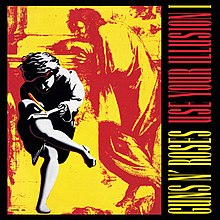
Guns n' Roses' Use Your Illusion at 30

September 17, 2021 marks 30 years since Guns ‘N’ Roses made the most audacious step of their career up to that point, and released two new albums of all new material on the same day - Use Your Illusion 1 and Use Your Illusion 2.

Guns and Roses sprung up out of the LA hard rock and metal scene, lumped in with bands like Motley Crue and Poison, with their long hair and leather clothes. However, GnR were far more street-wise and dirty. Their image was less about being made up and coiffured; theirs was “lived in” - from the squalor and grime of the city’s seedy underbelly. This made them far more threatening to the parents of suburban middle American teens, and it meant that their records sold by the truckload. Their debut album “Appetite for Destruction” was a slow burner upon release in 1987, but when the now-iconic ballad “Sweet Child O’Mine” was released after the record was in stores for almost a year, the band’s success took off like a rocket.

In Australia, Guns n Roses were the preserve of the metalhead community. At the time, the cool surfie kids at my high school didn’t listen to that sort of music - they were all into Midnight Oil and INXS. Only the socially awkward types who wore black jeans and flannelette shirts listened to heavy metal. “Appetite for Destruction” was the album I played at low volume or in headphones, lest my mum heard the swearing in it, and confiscated the tape.

Something happened between the release of “Appetite...” and “Use Your Illusion..” though. There seemed to be a cross pollination of the tastes of each of the sub-groups at school and all of a sudden the surfies are now listening to Metallica. This meant that expectation for a new GnR album, which felt like forever since their last album, was at fever pitch.

When the Use Your Illusion albums were released in 1991, it seemed like an over-correction of sorts. The band essentially copped out on a proper followup to “Appetite for Destruction” with what really amounts to little more than a double EP - a reissue of their debut “Live *?@! Like a Suicide” on side 1 with 4 new acoustic songs on side 2, a record called “G’n’R Lies”.

What we were treated to, after nearly three years of hype, rumour and scuttlebutt, was 150 minutes of new music, which also included a couple of songs that were drip fed to the public as part of film soundtracks (“Knockin’ on Heaven’s Door” was in Days of Thunder, while “You Could Be Mine” was the signature tune attached to Terminator 2: Judgement Day). They were never intended as a double album, however their titles and artwork almost beg you to treat them as one complete piece.

Collectively, the two albums run the gamut of styles, from pounding punk rock, to country, blues, sneering vitriol, multi-part epics, heartfelt ballads, and an ill-advised attempt at rap music. No fewer than six tracks clock in at over 7 minutes long, the longest being “Coma” at over 10 minutes long, which comes complete with a defibrillator solo.

Most record stores were offering deals and discounts to customers to buy both records together, as my local store did and therefore, upon release, both albums hit the top of the ARIA album charts at the same time. Although, there is only room for one title at the #1 spot, and so UYI 2 scored that spot, with UYI 1 at number 2. For the next 18 months, both albums were rarely out of the Australian top 50 album charts, although Use Your Illusion 1 seemed to hang around longer.

Thirty years on, with the band about to tour Australia again in November (pandemic permitting), have the albums stood the test of time?

History shows us that being self indulgent enough to release two very long albums in one go at that point was a bad idea - with grunge just around the corner, waiting to consign the pomposity of hair metal into the past. That said, what we’re left with is a collection of songs that, when taken together, are as wild and as careering an experience as any of the classic double albums like The Beatles’ “The White Album” or Fleetwood Mac’s “Tusk”. In its own way, like those albums, some songs deserve to be removed, some edited.

There is still no forgiving vocalist Axl Rose’s rant against rock journalists, abusing them by name in “Get In The Ring”. There was no need for the alternate lyric version of “Don’t Cry” on UYI 2 when the original version is perfectly decent. The subtle beauty of Bob Dylan’s “Knockin’ on Heaven’s Door” didn’t need to be bludgeoned to death with Axl’s heavy handed arrangement of it, and times have changed now such that the misogyny of “Back off Bitch” really doesn’t belong here anymore.

The risks the band takes are, more often than not, rewarding. The sprawling, multipart suites of “November Rain” and “Estranged” are still beautiful; the 10 minute total-recall-nightmare of a drug overdose “Coma” is still chilling; and “Civil War” is still poignant. They still sound most at home on the pounding rockers, like “Right Next Door To Hell”, “Shotgun Blues”, “Double Talkin’ Jive”, “Pretty Tied Up”, “Locomotive”, “You Could Be Mine”. Axl’s breathless savagery on “Garden of Eden” is every bit as bracing now as it was then.

Most surprising however, is how comfortable they sound being bluesy and occasionally vulnerable. When Axl relaxes the reins a bit, and lets Izzy Stradlin and Duff McKagan a bit of room to play, you get outstanding tracks like “Dust and Bones” and “14 Years”. When Rose lets his guard down we get songs like “Dead Horse” and “Yesterdays” which show a gift for melody which he is rarely given credit for.

If one is to take the two albums as a unified whole, across 8 sides of vinyl as my copy is, the whole thing runs out of steam on UYI 2, where it feels like things like the overlong country rock experiment “Breakdown” were just thrown in just to make up the numbers. Was a cover of Paul McCartney’s “Live and Let Die” truly necessary? What was the point of the 86-second closing track “My World” where Axl tries on his best Ice T impression and comes off sounding like sour milk?

It is revisionist of me to try and edit these albums down to a single album. There’s more wheat than chaff on this record. However it's up to each listener to determine that. We have Spotify and Apple Music now, we can all make our own playlist of the highlights and make our own perfect version of the album. As it stands, its a perfect example of the decadence and excess of the time, just before it all came crashing down.

Oh well, whatever, nevermind…

Wednesday, 21 May 2014

Best Count-ins in Rock

What are the best count-in intros in rock?

Well it's probably worth explaining exactly what a count-in actually is first. All bands, especially in rehearsals, start off a song by counting to 4. The purpose is to focus the band and to given then a cue when to start playing together. It is also used to give an indication of tempo - how fast to start playing when everybody starts. It is usually the drummer who counts the band in by counting to 4 (for want of a better drummer joke, if they can't do that, they tap their sticks together four times). Having said that, in the Ramones it is the bass player Dee Dee who does the counting in, and oftentimes his count-ins are not of the same tempo of the actual song!!

The count-in is fast becoming an anomaly on records these days as most bands don't actually play live in the studio anymore. Each musician lays down each part of the song one at a time, layer by layer. In this environment, there is no need for a count-in to unify the band. In years gone by, live recording in the studio was common, if only to get the backing tracks recorded, with the other parts layered over the top. The count in would have be used, but in most cases edited out before reaching the mastering stage.


One of the earliest of these count-ins opened the first Beatles album. It's a wonderfully exuberant count-in that, I believe, was left in accidentally. In 1963 it was considered unprofessional to have that sort of thing on a record. However, it added a sense of realism to the album - the human touch. It also indicates that this would be a fun album, and it kicks it off beautifully.

Every now and then you hear then on various tracks, but it's not altogether very common. (For the record we are not counting songs that have sequential numbers as lyrics or count-ins in the middle of songs). Here are some of the best:

"Good Lovin'" - The Young Rascals


On the subject of exuberant count-ins, they don't get much more joyful than this. And in the stereo version, the counting jumps around the room (or the headphone space, depending on how you are listening) courtesy of the placement of the vocals in the stereo spread.

"Taxman" - The Beatles


The opening of the the debut Beatles album may have been joyous, three years later, after touring the world and achieving things most of us only ever dream of, it sounds deflated. Opening their 1966 album "Revolver" with a slamming indictment of the British taxation model, the count-in sounds sinister, smarmy and seedy.

"Incendiary Device" - Johnny Moped


In 1978, with tensions running high between the punk kids and their parents, the count-in on this track sums up the tension beautifully: "1-2-Cut your hair!"

"Used To Love Her" - Guns 'n Roses


This count-in is rather odd. Guitarist Izzy Stradlin' does away with formal counting and just uses rhythmic language (or rather, mild profanity, as is their wont) : "ok...bitchin' fussin' pissin'..."

"Hot Pants" - James Brown


James Brown only gets as far as three in real numbers, but he indicates that things are about to get raunchy and sweaty. "One, Two, ah One Two Three Uh!"

"Living In The Real World" - Blondie


This count-in is indicative of the neurotic paranoia of the lyric, with urgent grunts and a full throated scream of "1!! 2!! 1-2-3-4!!!" from Debbie Harry to kick off the proceedings.

Granted, this is not a complete list. I'm sure there are more. Which ones have we missed? Let us know in the comments below.

Cheers

Wednesday, 6 March 2013

100 LPs Shortlist #30: Guns n' Roses - "Use Your Illusion 1 & 2"


...continued from previous:

In September 1991 the new Gunner's album was released.  In fact, it was not one album, but two.  A double album? Ahh, no.  Two separate albums.  Both of them titled Use Your Illusion. 1 and 2, for good measure.

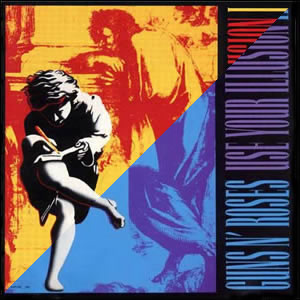
Herein lies the issue.  These were apparently never designed to be a double album.  But, the band created so much music that it felt it had to be released.  To confuse the issue further, they were named the same, and had the same artwork on the cover, albeit colour shaded differently to highlight the difference.  Another spanner in the works came from the fact that, while on CD both albums were single discs, on vinyl (the format this writer purchased them on) they were both two vinyl records each!

Steven Thomas Erlwhine, in the AllMusic Guide writes (rather accurately in this writer's opinion):

"The "difficult second album" is one of the perennial rock & roll clichés, but few second albums ever were as difficult as Use Your Illusion. Not really conceived as a double album but impossible to separate as individual works, Use Your Illusion is a shining example of a suddenly successful band getting it all wrong and letting its ambitions run wild."

And here's the funny thing.  On the previous release, "G'n'R Lies", singer Axl Rose had made a notorious name for himself as a homophobic xenophobe on the scurrilous song "One in a Million".  And yet, his ambitions led him to think he could create music based on the grandeur of Queen or "Yellow Brick Road"-era Elton John.  While there are moments here where the band sound as raw and as dangerous as The Clash, then on the next song they churn out an epic not unlike Elton's "Madman Across The Water".  It was all conflicted, confused and contradictory.  Clearly the band threw everything they had at this project and emerged with one hell of a mess.

The three songs that most people had heard prior to the release of the albums were all on Use Your Illusion 11 , so although both records technically topped the charts simultaneously, II sold more initially, and therefore was printed as the chart topper for the week.  However Use Your Illusion 1 stayed on the charts much much longer.

To say that the band got their ambitions mixed up with their capabilities is an understatement.  However, this writer does not begrudge them of it.  They tried hard, and while parts of it are now quite embarrassing, there is a lot of value in here.  30 songs in over 150 minutes is a lot to digest in one sitting, and with no less than 6 tracks clocking in at over 7 minutes, it can feel like tough going.  But there's plenty of chunky guitar riffs, complex arrangements and, of course, great songs.  Let's pick the highlights:

If you want to bang your head and mosh, try "Right Next Door To Hell", "Perfect Crime", "Garden of Eden", "Don't Damn Me", "Shotgun Blues", "Pretty Tied Up", "Locomotive" and "You Could Be Mine"

If you want introspection, play "Estranged", "Yesterdays", "14 Years", "Dead Horse",

If you want dark and moody, you want "The Garden", "So Fine", "Bad Obsession", "Double Talking Jive"

If you want tearjerkers, "Don't Cry (Original), "November Rain", "Knocking on Heaven's Door".

If you want epic, take "Coma", and "Civil War" for a start.

Use Your Illusion 1 starts off formidably with a thumping rocker.  Indeed, the faster, heavier numbers are largely constrained to this album, with only two massive epics padding it out - the psychotic 10-minute "Coma" and the epic ballad "November Rain", which clocks out just shy of 9 minutes.  Slash is all over these two albums with his heavy crunching riffs and wild solos, but his flamenco outro on "Double Talkin' Jive" rates a special mention.

The band get's even grander and stranger on Use Your Illusion II.  They overextends themselves on "Breakdown" - it's a muddy concept for a song that makes little sense and drags on for a full 7 minutes.  Dylan's once subtle and humble meeting with the grim reaper "Knockin' on Heaven's Door" becomes a terrace chant (and not for the better, either).  "Get In The Ring" is inexcusable, naming, shaming and threatening journalists because they wrote bad reviews or tabloid stories about the band.  "Civil War" is confused - the song is about war in general, not a civil war as such.  "Don't Cry" is a gorgeous song, in it's original form.  Maybe they were running out of material by the end of side 4 of Use Your Illusion II , because they included another version of the song with alternate lyrics - they really didn't need to.

To this day, this writer still doesn't know what the hell "My World" is all about.  It feels like a concrete example of just how far Axl has disappeared up his own arsehole.  Thank goodness it only lasts for 80 seconds.

The band milked this album for all it was worth, and then some.  They toured behind it for almost two years, released and re-released singles from it until 1994 - all 10 of them.  I still rate both these albums quite highly and I still enjoy them, but they are symptomatic of the excess of the era.  If you really need a reason as to why we needed the Grunge explosion of 1992, look no further than Use Your Illusion.

Enjoy.


Guns 'n' Roses Use their Illusion Pt. 1


Guns 'n' Roses have never been a band to do things by halves...well, at least that's been their intention.  They always wanted to be bigger, better and badder than the rest, and for a period they'd achieved that.  When they released their first LP in 1987, "Appetite For Destruction", it sold slowly at first, and then it sold more than any other rock act well into 1988.  Then, they drank more, took more drugs and were more debauched than any other band around at the time.  Pretty soon they were every mother's worst nightmare.

The follow-up to that LP was barely an album.  "G'n'R Lies" was more like a double EP.  It was a reissue of their first (fake) live EP "Live @#$% Like a Suicide" with 4 bonus acoustic tracks.  This was designed as a stop-gap before the real new album was released.

It wasn't much of a stop-gap - the gap blew out to four years, and that was a ridiculous timeframe between albums in the 1990s.  That should have been enough to kill the momentum of their career, but a strange and curious phenomenon happened...at least in my sphere of influence.

Two opposing tribes - the Westies, who listened to hard rock and metal and wore jeans and flannel shirts, and the Weeds: the surfies who listened to Midnight Oil and INXS - started to associate more positively for a change.  Once, they'd beat the crap out of each other.  But soon, the weeds were listening to Metallica, Sepultura, Iron Maiden and, of course, Guns n' Roses.  They'd devoured all of the back catalogs of these bands, so when Metallica released their self-titled LP in 1991, it went straight to number one.  It was almost dead certain that this new Gunners record would do the same, in whatever shape it would take.

And no one really knew what to expect.  There were little bits of information being leaked to the press as to what was happening, but no release date.  There were stories of 12 minute ballads called "November Rain", experiments with Sitars and Banjos, 8-minute epic anti-war songs, as well as talk of a Bob Dylan cover version.  It was even suggested it may be a double album!

To add fuel to the fire, they released their version of Dylan's "Knockin' On Heaven's Door" in 1990, on the "Days of Thunder" soundtrack.  They issued another song, launched simultaneously with the film it was featured in: Terminator 2: Judgement Day.  The song was released as a single ahead of the album: "You Could Be Mine" backed with "Civil War", the aforementioned anti-war epic.

In September 1991, the new Gunner's record finally landed...

...To be continued.