Pages

Showing posts with label Anniversary. Show all posts

Wednesday, 8 September 2021

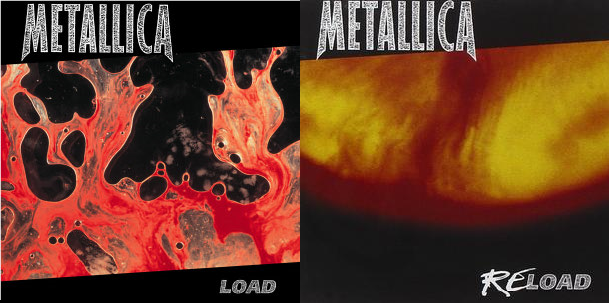
Metallica’s "Load" at 25


This year, June 4 marks 25 years of the release of Metallica’s controversial album “Load”. Although it was a huge seller at the time, it drove an ideological wedge through the band’s fanbase, and even between band members. The story is a rich and complex one, and one that really needs to ask questions of both band and their fans. 

Metal fans are an unforgiving bunch. They know what they want from their favourite band, or so they think. They want the same thing but better than last time. This goes a long way to explaining why a Status Quo record from 2010 sounds a lot like one from 1972. Yet for creative types, musicians especially, it can get tiring retreading the same formula over and over again. The problem is that fans are always the first to tell their heroes “I've followed you from the very beginning, but what you’re doing now is a travesty, man”. 

It reminds me of that scene in the Simpsons where Bart and Lisa are persuaded to participate in the focus group about cartoon show Itchy and Scratchy, and their responses lead creator Roger Meyers Jr to snap at them “you kids don’t know what you like!” 


Herein lies the problem. How can Metallica, one of the most influential metal bands of the late 20th century, a band who were one of the defining acts of a new genre called “Thrash Metal”, diversify and try something new, still keep their muse intact, and yet keep their fans happy? If they go one way, they’ll be hammered for doing the same thing as they’ve always done and this time it sounds boring. If they move too far away from their “signature sound”, they’ll be criticised for sounding nothing like they used to. Metallica fans had already been asked to relax their standards to accept the new glistening and streamlined sound on the band’s 1991 self titled album, after the band explained that the complex arrangements of the songs on their 1988 album “...And Justice for All” were too complex to pull off successfully on stage. 

As music fans, we don’t know what we want, really. 

And let’s face it. We didn’t know we needed Metallica, or Nirvana or the Beatles or ANYONE of any of the millions of artists and musicians in our lives until we heard them for the first time, right? So how do we know if any new record by any band is worth listening to? 

And is “Load” any good, after all this time and listening to it again with fresh ears? 

Well it depends on what your metric for evaluation of it is. 

                Does it stand up against the band’s classic works that came before? 

                And does it hang together as a body of songs unto itself? 

On both fronts, “Load” is found wanting. 

“Load” was never going to hold a candle to “Master of Puppets” or “Ride the Lightning”.  Nor could it - as musicians and as people, the members of Metallica had changed. They were never going to write those sorts of songs again. Change is inevitable, but rarely is it accepted by metal fans who just want loud and heavy. As a work that explores new horizons, it is admirable and brave, but it misses all the aspects of Metallica that make them unique. Instead of incorporating new directions into their sound, they spend too much time trying to sound like other bands. Bands like Clutch, Kyuss and Gov’t Mule, who were likely influenced by Metallica originally, and bands who do this kind of groove-heavy sound better. 

As a body of songs? Well...the band have put all their stock in the riffs and forgotten to write melodies to most of these songs. And the riffs themselves aren’t terribly interesting. Standard blues rock fare that has been done a million times before, with a leaden backbeat that doesn’t know how to swing. 

Knowing what Metallica’s fanbase is like, it takes some balls to put out a song like “Mama Said”, with its loose country twang and lap steel guitars on it. It also takes some guts to put out “Until It Sleeps” which was so clearly influenced by grunge that it sounds like an outtake from a Smashing Pumpkins album. They get credit for being daring in the face of audience expectations, but it doesn’t make them highlights. 

If there is a jewel anywhere in this rusty crown of a record, it is “Hero of the Day”, which has a gorgeous heartbroken melody and good use of swelling dynamics. A highlight on an overlong album with very few of them. At 79 minutes long, the album has a lot of noise but is short on clever configurations of it. I should be thankful that it’s not a longer album. The final track “The Outlaw Torn” had to be trimmed of 50 seconds in order for the album to fit on one CD. 

Most, if not all of the hair metal bands who survived the grunge explosion of 1991 were given a bit of a kick up the butt from the younger upstarts of the new scene, leading many to evolve and change their look and sound. Metallica did the same, cutting their hair (Shock! Horror!) and trying to move in new directions. The first fruits of these changes are on “Load” and despite spending 12 months recording it, Metallica still came up with something that is less than the sum of its parts. 

In a strange way, the harbinger for the disastrous few years to come after the release of this album was when singer James Hetfield and bassist Jason Newstead made a trip to Australia in person to appear on Triple J’s Request Fest in May 1996 to premiere the album’s lead single “Until it Sleeps”. They played the song twice and Hetfield and Newstead took talkback from the fans, who largely panned it. This led to many callers getting a serve from Newstead, being told they weren’t real fans because they couldn’t understand where they were coming from. “Load” then only sold about a quarter of what their previous self-titled album sold. And then the Napster thing happened. Then things turned into a full blown crisis when it came to record what eventually became the “St Anger” album, with the band hiring a “personal enhancement coach” to counsel the band and to sort out their personal issues before a record could be made, as seen in the film “Some Kind of Monster”. 

To the credit of the band, they have managed to stave off the heat of criticism by keeping a steady stream of fan club only releases of live sets from the “golden” era, keeping fans happy while trying out new things on their albums, including a highly controversial duet project with Lou Reed, but that’s for another time…

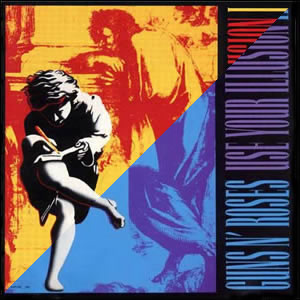
Guns n' Roses' Use Your Illusion at 30

September 17, 2021 marks 30 years since Guns ‘N’ Roses made the most audacious step of their career up to that point, and released two new albums of all new material on the same day - Use Your Illusion 1 and Use Your Illusion 2.

Guns and Roses sprung up out of the LA hard rock and metal scene, lumped in with bands like Motley Crue and Poison, with their long hair and leather clothes. However, GnR were far more street-wise and dirty. Their image was less about being made up and coiffured; theirs was “lived in” - from the squalor and grime of the city’s seedy underbelly. This made them far more threatening to the parents of suburban middle American teens, and it meant that their records sold by the truckload. Their debut album “Appetite for Destruction” was a slow burner upon release in 1987, but when the now-iconic ballad “Sweet Child O’Mine” was released after the record was in stores for almost a year, the band’s success took off like a rocket.

In Australia, Guns n Roses were the preserve of the metalhead community. At the time, the cool surfie kids at my high school didn’t listen to that sort of music - they were all into Midnight Oil and INXS. Only the socially awkward types who wore black jeans and flannelette shirts listened to heavy metal. “Appetite for Destruction” was the album I played at low volume or in headphones, lest my mum heard the swearing in it, and confiscated the tape.

Something happened between the release of “Appetite...” and “Use Your Illusion..” though. There seemed to be a cross pollination of the tastes of each of the sub-groups at school and all of a sudden the surfies are now listening to Metallica. This meant that expectation for a new GnR album, which felt like forever since their last album, was at fever pitch.

When the Use Your Illusion albums were released in 1991, it seemed like an over-correction of sorts. The band essentially copped out on a proper followup to “Appetite for Destruction” with what really amounts to little more than a double EP - a reissue of their debut “Live *?@! Like a Suicide” on side 1 with 4 new acoustic songs on side 2, a record called “G’n’R Lies”.

What we were treated to, after nearly three years of hype, rumour and scuttlebutt, was 150 minutes of new music, which also included a couple of songs that were drip fed to the public as part of film soundtracks (“Knockin’ on Heaven’s Door” was in Days of Thunder, while “You Could Be Mine” was the signature tune attached to Terminator 2: Judgement Day). They were never intended as a double album, however their titles and artwork almost beg you to treat them as one complete piece.

Collectively, the two albums run the gamut of styles, from pounding punk rock, to country, blues, sneering vitriol, multi-part epics, heartfelt ballads, and an ill-advised attempt at rap music. No fewer than six tracks clock in at over 7 minutes long, the longest being “Coma” at over 10 minutes long, which comes complete with a defibrillator solo.

Most record stores were offering deals and discounts to customers to buy both records together, as my local store did and therefore, upon release, both albums hit the top of the ARIA album charts at the same time. Although, there is only room for one title at the #1 spot, and so UYI 2 scored that spot, with UYI 1 at number 2. For the next 18 months, both albums were rarely out of the Australian top 50 album charts, although Use Your Illusion 1 seemed to hang around longer.

Thirty years on, with the band about to tour Australia again in November (pandemic permitting), have the albums stood the test of time?

History shows us that being self indulgent enough to release two very long albums in one go at that point was a bad idea - with grunge just around the corner, waiting to consign the pomposity of hair metal into the past. That said, what we’re left with is a collection of songs that, when taken together, are as wild and as careering an experience as any of the classic double albums like The Beatles’ “The White Album” or Fleetwood Mac’s “Tusk”. In its own way, like those albums, some songs deserve to be removed, some edited.

There is still no forgiving vocalist Axl Rose’s rant against rock journalists, abusing them by name in “Get In The Ring”. There was no need for the alternate lyric version of “Don’t Cry” on UYI 2 when the original version is perfectly decent. The subtle beauty of Bob Dylan’s “Knockin’ on Heaven’s Door” didn’t need to be bludgeoned to death with Axl’s heavy handed arrangement of it, and times have changed now such that the misogyny of “Back off Bitch” really doesn’t belong here anymore.

The risks the band takes are, more often than not, rewarding. The sprawling, multipart suites of “November Rain” and “Estranged” are still beautiful; the 10 minute total-recall-nightmare of a drug overdose “Coma” is still chilling; and “Civil War” is still poignant. They still sound most at home on the pounding rockers, like “Right Next Door To Hell”, “Shotgun Blues”, “Double Talkin’ Jive”, “Pretty Tied Up”, “Locomotive”, “You Could Be Mine”. Axl’s breathless savagery on “Garden of Eden” is every bit as bracing now as it was then.

Most surprising however, is how comfortable they sound being bluesy and occasionally vulnerable. When Axl relaxes the reins a bit, and lets Izzy Stradlin and Duff McKagan a bit of room to play, you get outstanding tracks like “Dust and Bones” and “14 Years”. When Rose lets his guard down we get songs like “Dead Horse” and “Yesterdays” which show a gift for melody which he is rarely given credit for.

If one is to take the two albums as a unified whole, across 8 sides of vinyl as my copy is, the whole thing runs out of steam on UYI 2, where it feels like things like the overlong country rock experiment “Breakdown” were just thrown in just to make up the numbers. Was a cover of Paul McCartney’s “Live and Let Die” truly necessary? What was the point of the 86-second closing track “My World” where Axl tries on his best Ice T impression and comes off sounding like sour milk?

It is revisionist of me to try and edit these albums down to a single album. There’s more wheat than chaff on this record. However it's up to each listener to determine that. We have Spotify and Apple Music now, we can all make our own playlist of the highlights and make our own perfect version of the album. As it stands, its a perfect example of the decadence and excess of the time, just before it all came crashing down.

Oh well, whatever, nevermind…

Saturday, 30 August 2014

Albert Productions turns 50


Australian Independent record label Albert Productions is celebrating their 50th Anniversary currently, with a lavishly produced 5 CD boxed set and a reissue program of sorts to follow.

Albert Productions was the brainchild of 4th generation music publisher Ted Albert, of music publishing firm J. Albert and Sons. Their stock in trade was largely sheet music sales but Ted saw a future in recordings, and so put pressure on his father to let him start a label in the family name in 1964.


What followed was a legacy rich in great (and some not so great) records that have made more than their fair share of impact on music both locally in Australia and around the world. As such Albert Productions is rightly regarded as one of Australia's most seminal record labels.


Their first signing was the fledgling Billy Thorpe and the Aztecs, who had just had a number one single, "Poison Ivy" on a tiny indie label "Linda Lee" in early 1964. From there, Ted signed a group who started in the Villawood migrant hostel who went by the name of the Easybeats.

They also handled some hardcore R&B and Beat groups that other labels wouldn't touch, like the Missing Links and the Throb. In the late 1960s and 1970s, the label churned out records of heavy boogie and rock by the likes of the Ted Mulry Gang, Dallimore, and Newcastle band The Heroes (the band playing on stage the night of the Star Hotel Riot in 1979). However, the label's biggest success were in a few bands whom, as per tradition, no-one else would touch: Rose Tattoo, The Angels, and a little band whom no-one thought would do any good...AC/DC.

They also gave a start to the Choirboys and Dallas Crane, and issued later career albums for Knievel and The Cruel Sea.

From 1970 onwards, former Easybeats George Young and Harry Vanda had a major role in shaping the label's catalog. They wrote many songs for the label's young solo artists and, from 1973, started producing artists on the label, including the two comeback albums for former Easybeats singer Stevie Wright.

Alberts were a canny label, inasmuch as they were clever enough to keep one foot in the heavy rock camp, while keeping one firmly in the teen pop/top 40 camp with artists like Alison McCallum and William Shakespeare. During the 1970s, one of the label's major successes was a big seller to teenage girls: one John Paul Young, whose 1978 single "Love Is In The Air" (written by Vanda and Young) is well known around the world thanks to its inclusion in a Baz Luhrmann movie.

By the 1980s most of the stalwarts of the label had jumped ship or split up. AC/DC being the only major constant. Aside from them, the labels releases hardly troubled the charts during the 1990s, with a couple of pop releases from the likes of soapie star Daniel Amalm towards the end of the decade making any real waves. The label hit back in a big way with Knievel and Dallas Crane in the 2000s.


It is interesting to chart the ups and downs of the label and the new 5 CD box does that nicely. It is effectively a replacement article for the 1988 release "Good Times: 25 Years of Australian Hits", including all but two of the 34 tracks on that release. Some of the mastering sounds to me like it has some in-built digital distortion to it, as is the case with most modern album releases. The digital remastering still leaves behind a lot of the tape hiss and certain tracks do sound a little bit digitally over-processed, leaving a few strange artifacts. However, it is great to see not only the label's most well known tracks, but plenty of rare tracks on CDs 4 and 5, with certain EP tracks and B-sides making their first appearance on CD. For $40, you really can't go wrong with this.

Happy 50th Albert Productions. May you stay around for another 50, and then some.