This is an archive piece written and posted on LiveJournal in 2006, albeit slightly edited and re-published in 2013:
How high's the water mama?
I watched the Johnny Cash biopic last night entitled "Walk The Line" and that song didn't even make an appearance: "Five Feet High and Rising".
I didn't know that June Carter was such a tough nut to crack - she didn't want to have a bar of poor old Johnny for ages! I have to applaud him for his tenacity. I would have given up ages ago if it was me, no matter how great the girl was.
The thing that struck me though was, and like the Ray Charles biopic I saw last week, is how clueless record company execs can be. Columbia Records didn't see any merit in Johnny recording a live album at a prison. The "Live at Folsom Prison LP" turned out to be his biggest selling record ever, closely followed by its sequel "Johnny Cash at San Quentin". These are the same people who didn't see any faith in releasing Dave Brubeck's landmark 1959 LP "Time Out" because it wasn't "commercial" enough. Those bean-counters were eating their words when that album became the first ever jazz LP to chart in Billboard top 40 LPs and the first jazz album to spawn a hit single ("Take Five"). Go figure.
History is littered with stories like these. Around the same time as Johnny was arguing with Columbia's record execs, they passed on signing Frank Zappa and the Mothers.
We all know the story of the Beatles being snubbed by Decca in London in 1962. They were so annoyed with their decision they signed the Rolling Stones immediately after hearing their demo.
Ray Charles had the same problem. Atlantic didn't want to release "What'd I Say" as a single because it was over 6 minutes long. When they did, it was a massive hit - the biggest in the company's history.
Same deal with James Brown and his landmark album "Live at the Apollo" - the record company vetoed the idea. James funded the recording himself and it was the biggest selling LP record of his career (and it still is).
I wonder if these experiences have hardened the record company people now so that they don't take any risks on new talent or new ideas. Maybe that's why a lot of modern music on the radio sucks and all the good stuff is on the internet or on indie labels that get no media coverage.
Or maybe i'm a curmudgeon. I dunno. Meh. Bah humbug. Turn the record over...

Showing posts with label Brubeck. Show all posts
Showing posts with label Brubeck. Show all posts
Wednesday, 27 February 2013

Saturday, 5 January 2013
December 2012 Playlist

Here now, for your listening pleasure, is the December 2012 Sound and the Fury playlist. I apologise for being tardy, but it's the holidays! It's summer and I've been in the water having fun.
Anyway, it's a shorter playlist than normal - only 130 songs - but as usual it's a fairly colourful mix.
We lost Dave Brubeck, Ravi Shankar and Fontella Bass during the month, and so there is a track from each of them in the mix.
The Mayans, or more specifically those who were stupid enough not to know when the Mayans celebrate the new year, thought the world was going to end, but we're still here, so we have some armageddon music on here too from REM and Europe.
Plus, school finished in December, not to start again until February, and so it was obligatory that Alice Cooper's immortal "School's Out" is on the list.
There's a whole bunch more to enjoy so crank it up and get into it.
Cheers!
Thursday, 6 December 2012
R.I.P. Dave Brubeck

It is with a heavy heart that today I reflect on the genius that was Dave Brubeck. One day away from his 92nd birthday, he passed away of heart failure on the 5th December 2012. The man had a good innings, to make 91, but it is still sad to think that one of the greats is no longer making music.
Before the hyperbole gets overpowering, let's look at Dave's accomplishments. Probably his biggest accomplishment is that he introduced jazz to many generations of audiences who previously would never have listened to a jazz album. There are a lot of people who know of only one jazz piece and can hum the first few bars flawlessly: that piece is "Take Five".
Dave was derided for most of his early career as being a white-bread version of the real (read: "African American") thing we know as Jazz. He was derided by classical musicians in conservatories for playing Jazz. And yet, he developed a grass-roots following among hip college students by playing ceaseless shows on college campuses. Some colleges went as far as locking up their hallowed grand pianos as they dare not let the fingers of a frivolous jazzman touch the instrument, and they let him have an out-of-tune upright to play on instead. Regardless, his famous Quartet wowed the audiences wherever they played.
Dave also introduced the concept of odd time signatures into Jazz, which was something that had never happened before. Most jazz is played in common time (4/4) or waltz time (3/4). Dave turned a swinging tune in 5/4 ("Take Five") into a top 10 pop hit and a standard in the hearts and minds of people all over the world. He paved the way for later sonic adventurists like The Mahavishnu Orchestra and Return To Forever to try playing in ambitious time signatures.
He also introduced harmonic and rhythmic ideas from other cultures into his work, thus creating a form of "World Music" before such a term was invented. The classic "Blue Rondo a la Turk" borrows a tune from Mozart and applies a Turkish rhythmic pattern in 9/8 before retreating into a swinging 4/4 section and then back to the hectic rhythms of the first section. It is, to this day, compelling, exciting music that still gives me goosebumps some 20 years after I'd first heard it.
Prior to Brubeck, my image of jazz was of four or five blokes at a market day or a community festival, all dressed identically in straw botas and red-and-white striped shirts all bashing out bland and faceless trad-jazz with no invention to it. Either that, or it was the big-band swing of Benny Goodman or Glenn Miller. Brubeck showed me that jazz was so much more than the done-to-death stylings of Glenn Miller's "In The Mood".
I'd heard "Unsquare Dance" on a retrospective chart-hits style radio show once when I was about 13. I had never anything like it. It's a piece in 7/4, but the rhythmic idea of the piece is so straight forward that it hooks you in immediately. These days pretty much every music student in high school listens to this piece to learn about time signatures, but my first hearing was outside of that environment and it blew my little teenaged mind. Brubeck became the standard by which I'd heard jazz from then on. Anything I could find that had a Brubeck song on it I relentlessly pursued. The more of his work I heard, the more I felt that Jazz was a music worth listening to, and that one just had to find the right strain of it. In my case West Coast Cool, small ensemble, jazz-rock fusion and post-bop were my styles.
I have collected many Brubeck records and all of them are great listens. Not one sounds the same as the next. "Time Out" is obviously the go-to record for anyone curious about his music, but its explicit sequel "Time Further Out" is equally as worthy, and I would advise not listening to one without the other. He has made many other great albums in the form of genre experiments such as:
- "Dave Digs Disney" where he takes on pieces like "Someday My Prince Will Come"
- "Gone With The Wind" where he tackles classics from the deep south such as "Camptown Races", "Short'nin Bread" and "Ol' Man River"
- "Brubeck Plays Brubeck" which is a solo piano album of improvisations around various themes - no doubt this was a major inspiration to the work of Keith Jarrett.


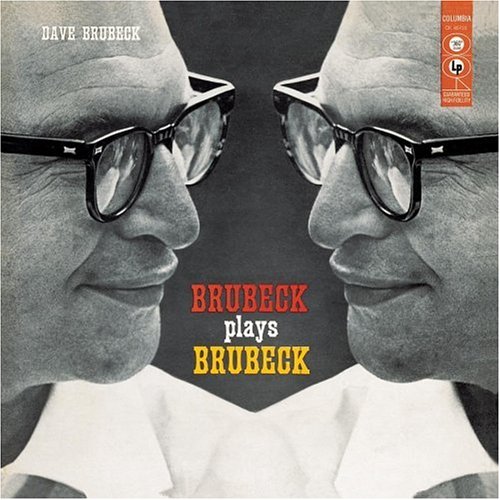
and culture studies on albums such as:
- "Jazz Impressions of Japan"
- "Jazz Impressions of Eurasia"
- "Jazz Impressions of New York"


as well as the copious live albums on college campuses and other odd locations, such as the late 1967 LP "Jackpot" which was recorded with a dubiously tuned piano among the poker machines in a Casino.

Whether I want to be musically stimulated and challenged, or whether I want to be entertained or I want to chill out, Brubeck's work is perfect. There is so much to gain from listening to his work. The world of music, and indeed planet Earth in general, is a better place for his contributions.
Thanks for the music, Dave. May you rest in peace.
Subscribe to:
Posts (Atom)