Pages

Monday, 1 November 2021

The Beatles reissue and remix "Let It Be"


For the last few years, The Beatles have been reissuing remixed versions of their most treasured albums: Sgt Pepper, The White Album, Abbey Road, and my original thought has been "why?" I love those albums, but really, the only reason I can think of for remixing them is to do away with the dodgy 60s sounding stereo mixes. The engineers of the time didn't spend too much time on them (they spent all their energies perfecting the mono mix), so the panning of instruments sounds a bit odd to modern ears.  

And so it comes around to Let It Be in 2021. It too received the remix treatment, and again, why? Paul McCartney has already issued "Let It Be: Naked" in 2003. So let's dig into the what's here and why. 

Let It Be was a contentious project from the get go. Morale in the band was at an all time low, and trying to flesh out an idea for a project to re-ignite enthusiasm was difficult. The idea was to work up new material and play live again, but they owed their film company another picture - Yellow Submarine still was a way off yet. 

The Apple Corps project was a way to keep ownership of more of their money and intellectual property, so they formed a label and a publishing company, a recording studio, an electronics R&D centre, and a fashion boutique. Largely, it was a disaster. The Apple Boutique was a haven for shoplifters and lost money hand over foot, Magic Alex, in charge of electronic R&D was a shyster who squandered loads of cash and achieved nothing, and the record label was short lived and only moderately successful. It all went downhill from there. 

Get Back, as the project was originally coined, was designed as a circuit breaker, to get back to basics and work together as a band creating music, as opposed to in isolation as it was for most of the White Album. They also decided to film the creative process, but more on that later. 

Over the course of January 1969 they set about working up material, and also loosely jamming on old songs and vintage favourites. The filming took place on a sound stage at a film studio, but that was fraught with tension too. The live concert idea went through many iterations and ideas and they ended up just jamming on the roof of their offices in Saville Row, London. 

The project was shelved ultimately after no one could agree on a final product. A single was released from the project, "Get Back"/"Don't Bring Me Down" but nothing else surfaced. 

Glyn Johns, an engineer who would soon go on to engineer some of The Who's major triumphs, like "Who's Next" had a crack at making an album of the tapes, but the Beatles shelved his version. The only part that saw the light of day from Johns' mixes was the "Get Back" single. The tapes were handed over to Phil Spector, for him to tamper with, and provide the album we've all loved since 1970. 

Spector's production was notorious, because he added massed choirs, reverb and overblown orchestrations to the mix and to some listeners (and especially Paul McCartney), it killed the music with kindness. That's why Paul remixed and reissued Let It Be in the "Naked" format in 2003 - the way he wanted it to sound. 

This new boxed set was particularly anticipated by me, as I do love the music on this album, but as there has already been a revisionist version previously issued, plus outtakes on the Beatles Anthology and a number of bootlegs of this material, what is there that could be exhumed from the vaults that would be interesting?

As it turns out, this box included the official release of the Glyn Johns mix, although that has been doing the rounds on the internet as a bootleg for years now. The rest of the alternate takes are works in progress, that are reasonably sloppy and don't add much to the picture of the album's creation. There are some demos of songs that would end up on post Beatles solo albums, like Teddy Boy and Gimme Some Truth, and some rehearsals for songs that ended up on Abbey Road, however, a lot of that stuff was also on Anthology 3. 

The real revelations are the jams with Billy Preston, like "Without a Song", and a band rehearsal of "All Things Must Pass" that was rejected as a Beatles song (which is unthinkable knowing what we know now!).

The real money, in my view, is the fact that director Peter Jackson has been through the 50 hours of video footage and is creating a 6-hour documentary from the remaining footage that wasn't issued in the original 1970 film. There promises to be some seriously fascinating things uncovered in that, and for that I cannot wait. 

Monday, 27 September 2021

Review: The Cast, by Michael Waugh

Michael Waugh - “The Cast”  


Michael Waugh has released his new record entitled “The Cast”. I’ve reviewed his previous albums before, and I've said in the past his albums are pretty much a trademark of quality. They’re all beautifully produced and accompanied by Shane Nicholson. The songs are interesting and heart-wrenching. This fourth album is no different. 

This isn’t trying to sound dismissive. Quite the opposite, in fact. However, it would make for a boring review if that was all you could say about the record. The fact is, with each new release, Michael is in fact becoming braver as a storyteller. Each subsequent album has taken bigger and bolder steps in directions other country performers, nay ANY modern performers, fear to tread. 

 What makes “The Cast” so compelling is that this is, quite simply, “dangerous” music. Dangerous to every bloke, simply because it dares to challenge and question the very core of masculinity we all grew up with. The core beliefs that boys from the 1980s and older all carry with them (I know, because I’m one of them). It dares to point out that all the crap we grew up believing we had to be, in order to be a “real man” is exactly that - crap. These are songs that dare to shoot holes in the facade that we’re all guilty of wearing. 

 And what’s more, songs like “He Taught Me” and “The Cast” also are textbook examples of something that us “real men” are terrified of: being vulnerable. Real men can’t be vulnerable. Boys don’t cry, or some shit. Being vulnerable is when the hunter becomes the hunted. It’s where you become less than you hold yourself to be. 

Michael Waugh’s music reminds me that this model of masculinity needs to change - for the good of men everywhere, our partners, our kids, and for society at large. These songs remind me that I have feelings too - as much as I don’t want to admit that I do. And bloody hell, they don't half hit me deeply. 

Speaking of dangerous, the album opener “Swollen” dares to call us fellas all out for being - complacent at best, ignorant at worst, about our battles with food, the struggle to stay healthy as we age, the battle to lose weight and stupid backhanded jokes we throw at each other when we plump up a bit. “You look like you’ve been in a good paddock, mate”. 

While we’re at it, “Dark” looks at alcohol-fueled blokes and the danger they can be for unsuspecting women on a night out. A big topic to be discussed, and one we try hard to avoid, and one we cannot escape now. 

During the writing and recording process of this album, two of Michael’s biggest influences - his mum and dad - both passed away. There are beautiful tributes to them in the form of “He Taught Me” and “Hold On To The Ones You Love”. “Too Many Drawers”, in honour of his late mother, is made all the more poignant because it features Felicity Urquhart, herself a legend in Australian Country circles, and an artist that was a favourite of Michael’s mum. 

This is an album of music with its heart on its sleeve, and blood and guts on its boots. It’s a rare artist who finds new ways to move me to tears with each new album. It’s almost as if he has looked into my soul at my deepest and darkest memories and fears, grabbed half a dozen of them and turned them into songs powerful enough to tear down the rugged macho shell I’ve spent my entire life building around myself. Come album number 5 in a couple of years time, no doubt he’ll do it all again. But for now, “The Cast” has given me cause to stop, pause and reflect on who I am and what needs to change. If a few more of us can do that as a result of listening to this album, Michael will have changed the world. If only a little bit.

Wednesday, 15 September 2021

The Sound and the Fury Podcast Season Three

 The Sound and the Fury Podcast

Season Three

What is the Sound and the Fury Podcast?
It’s a series of short programs about music. This is my story, of a socially awkward kid, growing up in rural parts of the NSW Hunter Valley, trying to find a culture in a place of blandness and mediocrity. Trying to find something meaningful to hang on to, in a place where heroes are hard to find. Fortunately there was music to fill the void, and i found it in unlikely places and from unlikely sources.

Season Three looks at some of the music that is near and dear to me, and the often obscure places I found it.

Using Safari on an iPhone or iPad and can't see any media players below? Click here for how to show them.

The Sound and the Fury Podcast Season Two

The Sound and the Fury Podcast

Season Two 

What is the Sound and the Fury Podcast?
It’s a series of short programs about music. This is my story, of a socially awkward kid, growing up in rural parts of the NSW Hunter Valley, trying to find a culture in a place of blandness and mediocrity. Trying to find something meaningful to hang on to, in a place where heroes are hard to find. Fortunately there was music to fill the void, and i found it in unlikely places and from unlikely sources.

Season Two looks at my earliest musical development, from my first steps at learning an instrument, to navigating my way through music education and then onto pub stages in my home town as a fan, roadie and band member.   

Using Safari on an iPhone or iPad and can't see any media players below? Click here for how to show them.

Episode 13

Wednesday, 8 September 2021

The Sound and the Fury Podcast Season One

The Sound and the Fury Podcast

Season One

What is the Sound and the Fury Podcast?
It’s a series of short programs about music. This is my story, of a socially awkward kid, growing up in rural parts of the NSW Hunter Valley, trying to find a culture in a place of blandness and mediocrity. Trying to find something meaningful to hang on to, in a place where heroes are hard to find. Fortunately there was music to fill the void, and i found it in unlikely places and from unlikely sources.

Season One looks at my earliest recollections of the music that had a major impact on me. 

Using Safari on an iPhone or iPad and can't see any media players below? Click here for how to show them.

The Sound and the Fury Podcast Returns...

 The Sound and the Fury Podcast returns...

...with an actual podcast!

This podcast has been in the works for a while now and it makes sense to post the shows here instead of the mess that is my Mixcloud page. I'm still at a loss as to whether this is good enough to be uploaded to Spotify yet, and as such I have kept it purely to Mixcloud. 

The Sound and the Fury Podcast, the show, is an autobiographical show that tells a little bit about me but also explains how my life has been shaped by the biggest love of my life: music. It looks into the cultural aspects of New South Wales in the 1980s where I grew up, in particular around the Newcastle area, and it tries to make sense of where I've come from. 

It is available here on Mixcloud


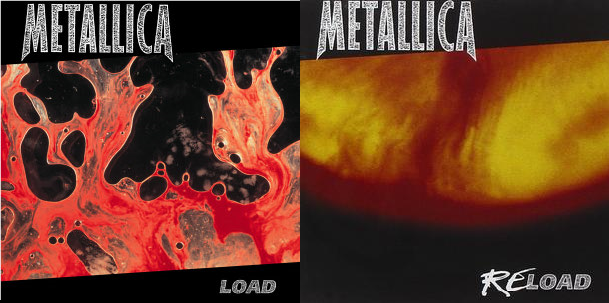
Metallica’s "Load" at 25


This year, June 4 marks 25 years of the release of Metallica’s controversial album “Load”. Although it was a huge seller at the time, it drove an ideological wedge through the band’s fanbase, and even between band members. The story is a rich and complex one, and one that really needs to ask questions of both band and their fans. 

Metal fans are an unforgiving bunch. They know what they want from their favourite band, or so they think. They want the same thing but better than last time. This goes a long way to explaining why a Status Quo record from 2010 sounds a lot like one from 1972. Yet for creative types, musicians especially, it can get tiring retreading the same formula over and over again. The problem is that fans are always the first to tell their heroes “I've followed you from the very beginning, but what you’re doing now is a travesty, man”. 

It reminds me of that scene in the Simpsons where Bart and Lisa are persuaded to participate in the focus group about cartoon show Itchy and Scratchy, and their responses lead creator Roger Meyers Jr to snap at them “you kids don’t know what you like!” 


Herein lies the problem. How can Metallica, one of the most influential metal bands of the late 20th century, a band who were one of the defining acts of a new genre called “Thrash Metal”, diversify and try something new, still keep their muse intact, and yet keep their fans happy? If they go one way, they’ll be hammered for doing the same thing as they’ve always done and this time it sounds boring. If they move too far away from their “signature sound”, they’ll be criticised for sounding nothing like they used to. Metallica fans had already been asked to relax their standards to accept the new glistening and streamlined sound on the band’s 1991 self titled album, after the band explained that the complex arrangements of the songs on their 1988 album “...And Justice for All” were too complex to pull off successfully on stage. 

As music fans, we don’t know what we want, really. 

And let’s face it. We didn’t know we needed Metallica, or Nirvana or the Beatles or ANYONE of any of the millions of artists and musicians in our lives until we heard them for the first time, right? So how do we know if any new record by any band is worth listening to? 

And is “Load” any good, after all this time and listening to it again with fresh ears? 

Well it depends on what your metric for evaluation of it is. 

                Does it stand up against the band’s classic works that came before? 

                And does it hang together as a body of songs unto itself? 

On both fronts, “Load” is found wanting. 

“Load” was never going to hold a candle to “Master of Puppets” or “Ride the Lightning”.  Nor could it - as musicians and as people, the members of Metallica had changed. They were never going to write those sorts of songs again. Change is inevitable, but rarely is it accepted by metal fans who just want loud and heavy. As a work that explores new horizons, it is admirable and brave, but it misses all the aspects of Metallica that make them unique. Instead of incorporating new directions into their sound, they spend too much time trying to sound like other bands. Bands like Clutch, Kyuss and Gov’t Mule, who were likely influenced by Metallica originally, and bands who do this kind of groove-heavy sound better. 

As a body of songs? Well...the band have put all their stock in the riffs and forgotten to write melodies to most of these songs. And the riffs themselves aren’t terribly interesting. Standard blues rock fare that has been done a million times before, with a leaden backbeat that doesn’t know how to swing. 

Knowing what Metallica’s fanbase is like, it takes some balls to put out a song like “Mama Said”, with its loose country twang and lap steel guitars on it. It also takes some guts to put out “Until It Sleeps” which was so clearly influenced by grunge that it sounds like an outtake from a Smashing Pumpkins album. They get credit for being daring in the face of audience expectations, but it doesn’t make them highlights. 

If there is a jewel anywhere in this rusty crown of a record, it is “Hero of the Day”, which has a gorgeous heartbroken melody and good use of swelling dynamics. A highlight on an overlong album with very few of them. At 79 minutes long, the album has a lot of noise but is short on clever configurations of it. I should be thankful that it’s not a longer album. The final track “The Outlaw Torn” had to be trimmed of 50 seconds in order for the album to fit on one CD. 

Most, if not all of the hair metal bands who survived the grunge explosion of 1991 were given a bit of a kick up the butt from the younger upstarts of the new scene, leading many to evolve and change their look and sound. Metallica did the same, cutting their hair (Shock! Horror!) and trying to move in new directions. The first fruits of these changes are on “Load” and despite spending 12 months recording it, Metallica still came up with something that is less than the sum of its parts. 

In a strange way, the harbinger for the disastrous few years to come after the release of this album was when singer James Hetfield and bassist Jason Newstead made a trip to Australia in person to appear on Triple J’s Request Fest in May 1996 to premiere the album’s lead single “Until it Sleeps”. They played the song twice and Hetfield and Newstead took talkback from the fans, who largely panned it. This led to many callers getting a serve from Newstead, being told they weren’t real fans because they couldn’t understand where they were coming from. “Load” then only sold about a quarter of what their previous self-titled album sold. And then the Napster thing happened. Then things turned into a full blown crisis when it came to record what eventually became the “St Anger” album, with the band hiring a “personal enhancement coach” to counsel the band and to sort out their personal issues before a record could be made, as seen in the film “Some Kind of Monster”. 

To the credit of the band, they have managed to stave off the heat of criticism by keeping a steady stream of fan club only releases of live sets from the “golden” era, keeping fans happy while trying out new things on their albums, including a highly controversial duet project with Lou Reed, but that’s for another time…